


What TOG Sleeping Bag for a Newborn?
That 2am moment when you touch your newborn’s neck and wonder whether they’re too warm, too cool, or perfectly comfortable is familiar to almost every parent. If you’re asking what tog sleeping bag for newborn is right, the answer usually comes down to one thing - the temperature of the room, not the season on the calendar.
A baby sleeping bag can take some of the guesswork out of bedtime. It stays in place better than loose blankets, helps create a consistent sleep set-up, and makes night-time changes that bit simpler.
But TOG ratings can still feel surprisingly technical when you are already trying to decode wake windows, feeds and bedtime cues.
What tog sleeping bag for newborn depends on
TOG is simply a measure of thermal resistance - in other words, how warm a fabric is. The higher the TOG, the warmer the sleeping bag. For newborns, the right choice depends on your nursery temperature, what your baby is wearing underneath, and how your particular baby tends to run temperature-wise.
As a general guide in UK homes,
a 2.5 TOG sleeping bag is often the everyday choice for standard room temperatures, usually around 16 to 20°C.
A 1.0 TOG sleeping bag suits warmer rooms, often around 20 to 24°C.
A 3.5 TOG sleeping bag is designed for colder rooms, typically below 16°C.
That said, these ranges are a starting point rather than a rule carved in stone. Homes vary, heating fluctuates overnight, and loft conversions do not behave like ground-floor bedrooms in January. The best decision is always based on the actual room temperature where your baby sleeps.
A simple newborn TOG guide by room temperature
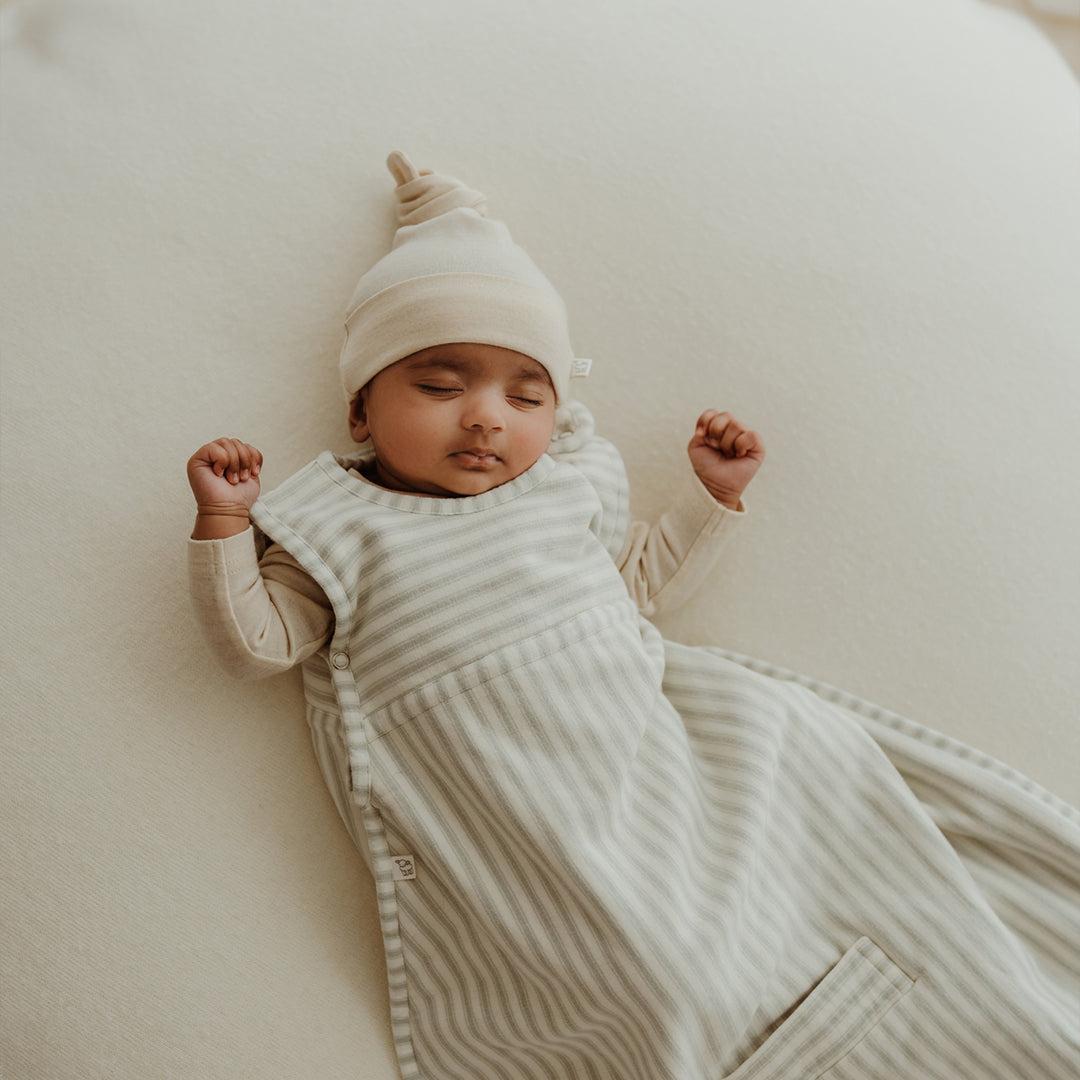
If your baby’s room is between 16 and 20°C, a 2.5 TOG sleeping bag is usually the best place to start. This is the most versatile option for many UK nurseries and often works across much of autumn, winter and spring.
If the room sits between 20 and 24°C, a 1.0 TOG sleeping bag is usually more suitable. This can be especially useful during summer, in newer homes that hold heat well, or in bedrooms that naturally run warm.
If the nursery drops below 16°C, a 3.5 TOG sleeping bag may be appropriate. This is more of a cold-weather specialist and tends to suit older properties or particularly chilly rooms.
If the room is above 24°C, many brands recommend a very lightweight sleeping bag, often 0.5 TOG, or sometimes no sleeping bag at all, depending on the guidance provided with the product. In hotter weather, keeping sleepwear light matters just as much as choosing the bag itself.
Why the room thermometer matters more than the weather app
It is easy to dress your baby for a cold evening forecast and then realise the nursery is actually a steady 21°C because the heating has kicked in. Equally, a sunny day does not always mean a warm bedroom by bedtime.
A room thermometer gives you a much clearer read on what your newborn needs. For many parents, this is the easiest way to buy correctly the first time. Instead of building a sleep set-up around assumptions, you are matching your sleeping bag to your baby’s real environment.
What should a newborn wear under a sleeping bag?
This is where TOG ratings and layering work together. A warmer sleeping bag needs fewer layers underneath, while a lighter TOG often needs slightly more. The aim is a comfortable, steady temperature - not a heavily bundled baby.
- In a 16 to 20°C room with a 2.5 TOG sleeping bag, many parents use a long-sleeved bodysuit or a sleepsuit.
- In a 20 to 24°C room with a 1.0 TOG bag, a short-sleeved bodysuit or lightweight sleepsuit is often enough.
- In colder rooms with a 3.5 TOG bag, a long-sleeved bodysuit and sleepsuit may be suitable.
This is where brand guidance really matters, because fabric weights differ. Organic cotton, quilted designs and performance blends can all feel different against the skin. Always check the care and temperature guidance that comes with the individual sleeping bag.
Avoid over-layering
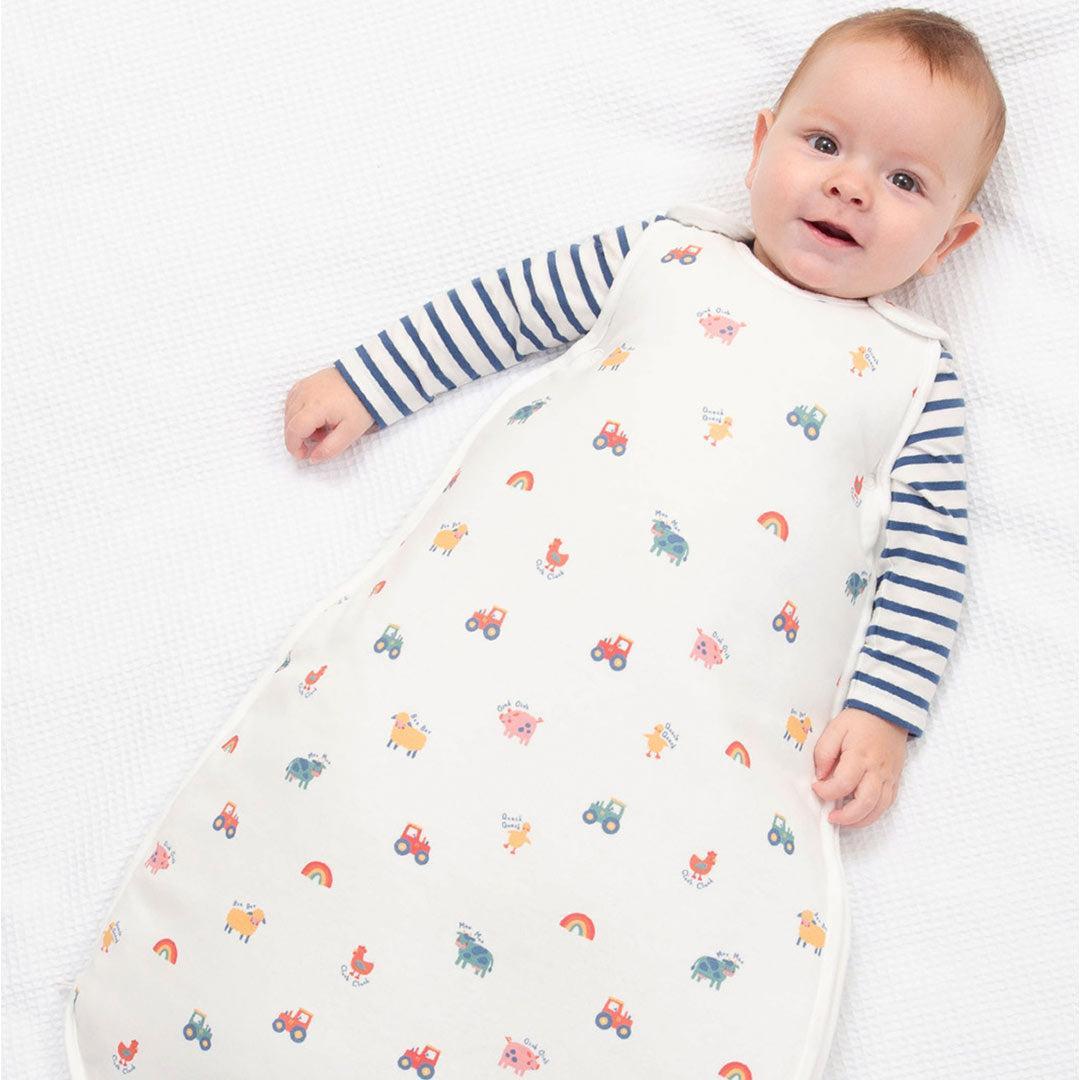
Newborns do not need hats indoors for sleep, and they should not sleep with loose blankets tucked around them if they are already in a sleeping bag.
It can be tempting to add “just one extra layer”, especially in winter, but overheating is a genuine concern. Safer sleep is about balance, not bulk. A good rule of thumb is to feel your baby’s chest or the back of their neck rather than their hands or feet, which are often cooler anyway. If their skin feels clammy, sweaty or very warm, they may be overdressed.
Are sleeping bags safe for newborns?
They can be, as long as the sleeping bag is the right size and suitable from birth or from your baby’s weight and age. This is one area where fit matters just as much as TOG. A newborn sleeping bag should fit securely around the neck and armholes so your baby cannot slip down inside it. If it is too large, it is not the right option yet.
Many brands clearly state the minimum weight, age range and length guidance, and that information is there for good reason. Some newborns start in swaddles or blankets used according to safer sleep guidance, then move into a sleeping bag once they are big enough.
Others go straight into a newborn-sized sleeping bag from the beginning. It depends on the product and your baby’s size.
How many TOG ratings do you really need?
If you are building your newborn sleep set-up, it is easy to feel you need one of everything. In reality, most families do well with two TOG options rather than a whole collection.
For year-round use in the UK, many parents start with a 2.5 TOG for everyday use and add a 1.0 TOG for warm spells or summer.
If your home tends to run cold, a 3.5 TOG might be worth considering, but it is not essential for every nursery. This is one of those decisions where your home matters more than trends.
A modern flat with steady heating may barely need a heavy winter bag, while a draughty period property might. Buying with your room temperature in mind is more useful than buying by season alone.
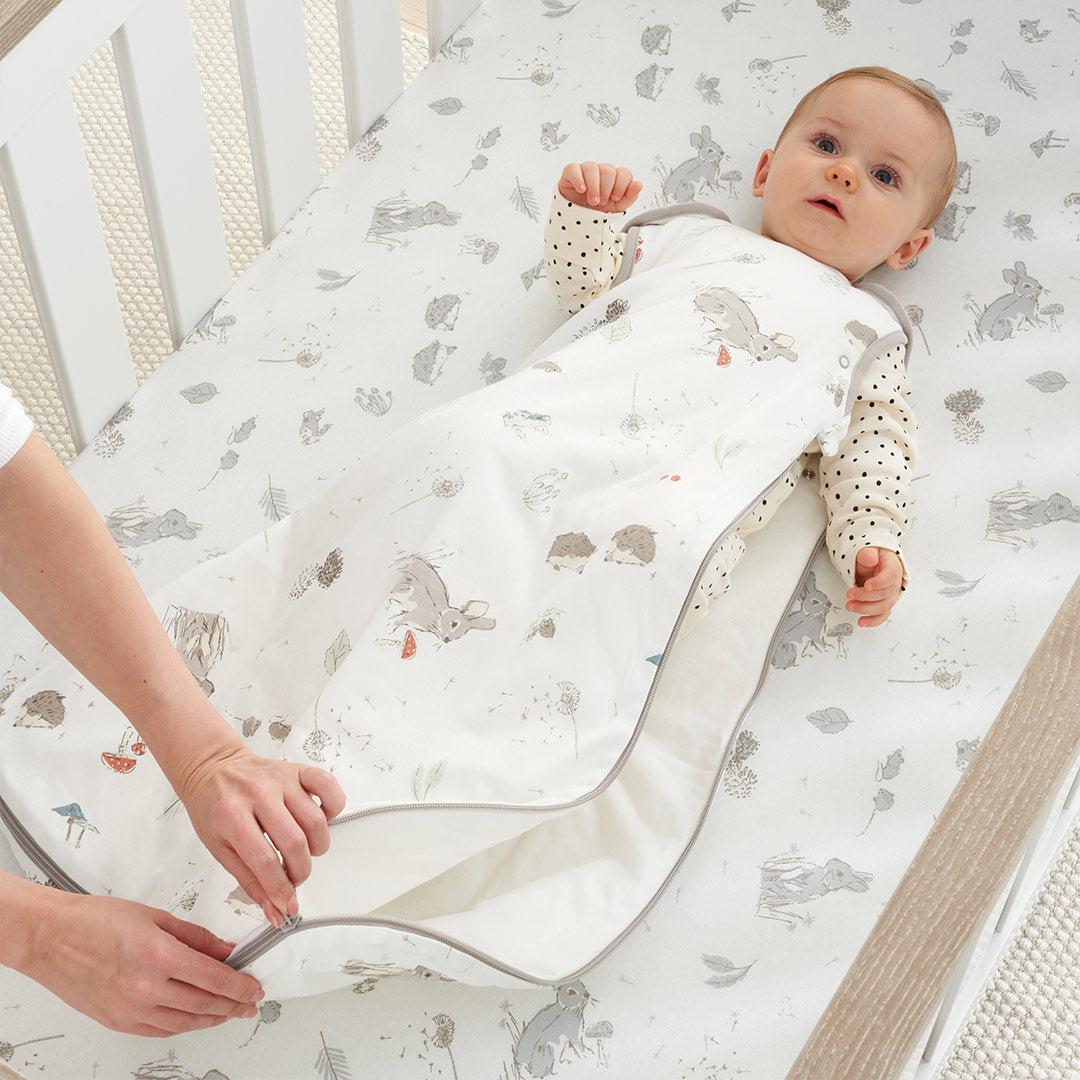
What tog sleeping bag for newborn in summer and winter?
Parents often want a seasonal answer, but seasons can be misleading. A winter nursery with central heating can be warmer overnight than a spring bedroom with the window open.
In summer, a 1.0 TOG is often the most practical option, and during heatwaves, a 0.5 TOG or lighter sleepwear may be the better choice.
In winter, a 2.5 TOG is often enough for many UK homes, with a 3.5 TOG reserved for genuinely cooler rooms.
The key trade-off is this: a higher TOG sounds reassuring in cold weather, but too much insulation in a heated home can leave your baby too warm. Lower TOG bags offer more flexibility if your nursery temperature changes often.
Small details that make a big difference
Fabric can influence comfort as much as the TOG label. Breathable natural fibres such as cotton are a popular choice for newborn sleep, especially for parents looking for soft, gentle materials against delicate skin.
Premium finishes, well-placed zips and easy-change openings also matter more than they might seem at first - particularly in those early weeks when every bedtime product earns its place. It is also worth having at least two sleeping bags in your chosen TOG.
Night-time leaks, reflux and frequent washing are part of newborn life, and a spare means you are not caught out at bedtime. If you are curating a sleep set-up from scratch, think of the sleeping bag as one part of the bigger picture. The room temperature, mattress, fitted sheet, sleepwear and monitor all work together to create a calm, comfortable sleep space.
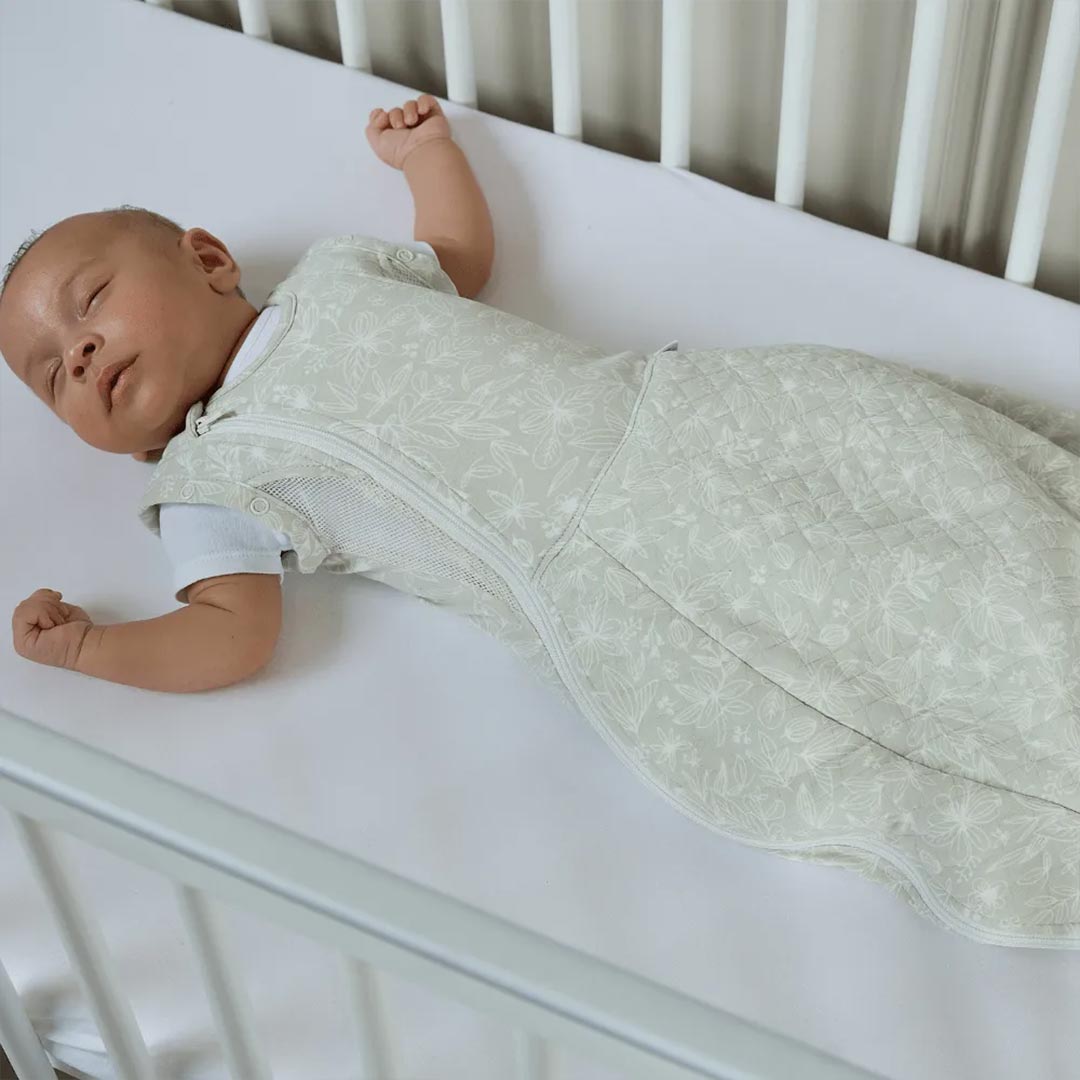
When to change your baby’s TOG
You do not need to switch TOG every time the weather changes, but you should reassess when the room temperature regularly shifts. A spell of warmer nights, moving your baby into a different room, or changing the heating settings can all be signs it is time to move up or down a TOG.
If your baby often wakes sweaty, seems unsettled until layers are removed, or feels unusually warm at the neck, their current set-up may be too hot. If they seem comfortable, sleep well and feel warm but not clammy, you are probably on the right track.
There is reassurance in remembering that this is not about getting it perfect every single night. It is about making a considered choice, checking your baby, and adjusting as needed. For most newborns, the best first step is simple: check the nursery temperature, choose the TOG to match, and keep layers light and sensible.
A well-chosen sleeping bag should make bedtime feel less like guesswork and more like one of those small, steady routines that helps everyone settle.


