


10 Best Teething Toys Parents Love

Some teething toys get chewed once and forgotten in the changing bag. Others become the one thing you reach for at 5am, in the pram, or halfway through a fussy feed.
When you are choosing the best baby teething toys UK parents genuinely rely on, the difference usually comes down to material, shape and how well a toy fits real daily life.
Teething can start earlier than many parents expect, often around four to seven months, though every baby has their own timeline. You may notice more dribbling, flushed cheeks, a sudden need to chew everything in sight, or a baby who seems unsettled for no obvious reason.
A well-chosen teether will not make teething disappear, but it can give sore gums something safe, soothing and satisfying to work against.
What makes the best baby teething toys?
The best options are safe, easy to hold, simple to clean and made from materials you feel good about bringing into your home. For many families, that means favouring food-grade silicone, natural rubber, organic cotton details or sustainably sourced wood, depending on the design.
Premium matters here, not because teething toys need to be extravagant, but because babies use them intensely and repeatedly.
Shape is just as important as material. Some babies do best with a slim teether they can grip from the middle. Others prefer a ring shape, a textured surface or a toy with different edges that can reach the front and back gums.
If a teether is beautiful but awkward for little hands, it tends to spend more time on the floor than in use. It is also worth thinking about where you will use it. A lightweight silicone teether is ideal for the nappy bag and buggy. A fabric comforter with teething corners may work well for naps or quiet cuddles at home. A water-filled or chilled style can feel especially soothing during a difficult patch, but that convenience has to be balanced with storage space and cleaning.

10 styles worth considering
1. Food-grade silicone ring teethers
If you want an easy place to start, silicone ring teethers are often the most versatile. They are soft on sore gums, light enough for younger babies to lift and usually simple to rinse or sterilise according to the maker's instructions.
Look for gentle textures rather than anything overly busy. The most useful designs have enough variation to keep babies interested without becoming awkward to grip.
2. Natural rubber animal teethers
Natural rubber remains a favourite for parents who want a softer, flexible feel with a more traditional look. These toys often have multiple chew points, which helps as discomfort shifts around the mouth. They can also feel a little more substantial in the hand.
If sustainability is high on your list, this style often fits well with a more conscious product choice, though it is still important to check care instructions carefully.
3. Wooden and silicone combination teethers
This is a strong option if you want something practical that also feels design-led. The contrast between smooth wood and soft silicone gives babies different textures to explore.
From a style point of view, these often sit neatly with a more curated nursery aesthetic. The trade-off is that they can need a little more care than an all-silicone option, particularly when it comes to washing and drying.
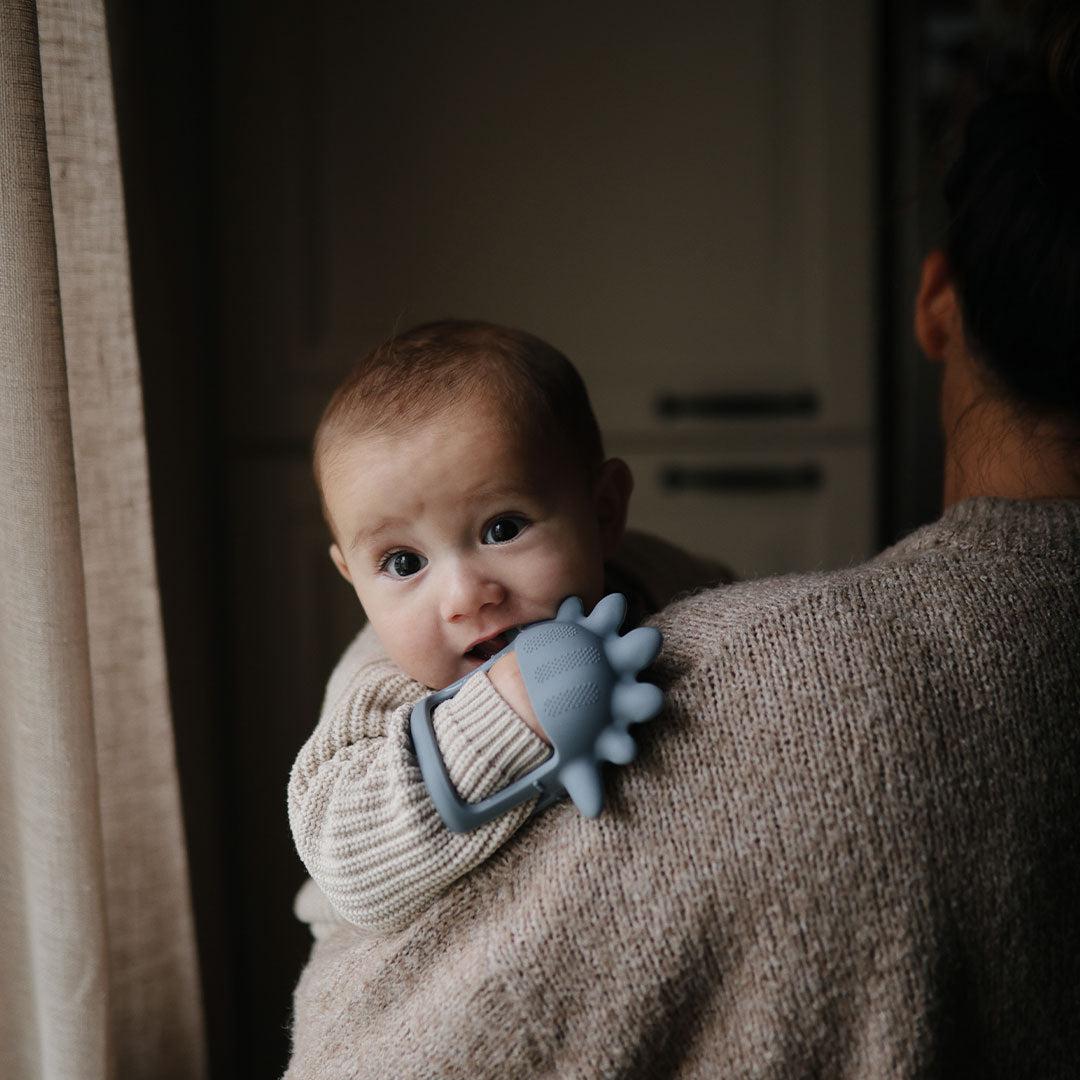
4. Teething mitts
For babies who have not yet mastered holding a toy, teething mitts can be surprisingly useful. Because they attach to the hand, they are harder to drop and easier to bring to the mouth.
They can be especially handy in the earlier stages, when a baby wants constant gum pressure but lacks the coordination for a classic teether. Not every baby enjoys wearing one, so this is a category where personality really matters.
5. Comforters with teething corners
A teether does not always need to look like a teether. Soft comforters with silicone or textured corners combine soothing touch with oral relief, which can work beautifully for babies who are clingier while teething.
They are not the best fit for every outing, especially if you want something compact, but they can become a favourite at home or in the cot during supervised settling time.
6. Sensory teething toys with multiple textures
Some of the best baby teething toys UK parents choose are really sensory toys first and teethers second. Raised bumps, ridges and looped sections give babies more to explore, which can help extend interest beyond a few minutes.
These are useful if your baby is in the stage of mouthing everything and wants more stimulation than a very simple ring can offer.
7. Chilled teethers
A cool teether can feel especially comforting when gums seem hot and inflamed. The key word is chilled, not frozen. Overly cold teethers can be too harsh for sensitive mouths, so always follow the brand's guidance.
These are often best used as part of a rotation rather than your only option, since they need a bit more planning and are less convenient when you are out for the day.
8. Bracelet or bangle-style teethers
These are designed for easy gripping and often work well for younger babies still developing hand control. The open shape makes them simple to lift, turn and mouth from different angles. They also tend to be very portable.
If you are building a practical teething edit for everyday use, this style earns its place.

9. Character-shaped teethers
There is a reason these stay popular. Babies are drawn to familiar shapes, and character designs can make a teether feel more like a toy than a soothing aid.
They are often giftable too, which matters if you are buying for a baby shower or first milestone. Just make sure the design still works functionally - too many decorative elements can make chewing less intuitive.
10. Clip-on teething toys for travel
For days out, a teether that can attach to the pushchair or changing bag saves a lot of repeated washing. This style is less about a specific material and more about convenience.
It is a smart addition if your baby drops everything constantly or if you are often on the move. Practical details like this can make a bigger difference than parents expect.
How to choose the right teether for your baby
Start with age and grip. A younger baby usually needs something very light, soft and easy to hold with both hands. As coordination improves, babies tend to enjoy more textured designs and toys with multiple chew points. If teeth are cutting through at the front, a flatter edge may be enough.
If discomfort seems further back, a longer shape can be more useful. Think about your baby's preferences too. Some babies want firm resistance, while others seem to prefer something softer and more flexible. If your little one rejects one teether, that does not mean all teethers are a waste of money. Often it simply means the shape or texture is wrong for that stage.
For many families, the best approach is a small rotation rather than one perfect product. A lightweight everyday teether, a cooler option for more difficult moments and a comfort-led style for home tends to cover most situations without overbuying.

Safety points worth paying attention to
Teething toys should always be used as intended and checked regularly for wear. If a toy has cracks, tears, loose parts or any change in texture, it is time to replace it. Premium materials still need routine inspection, especially once a baby has started chewing with more force.
Look for clear age guidance, straightforward cleaning instructions and a design without small detachable pieces. If a teether includes wood, fabric or mixed materials, make sure you are comfortable with the upkeep before buying. A beautiful toy is only useful if it fits your real routine.
It is also sensible to avoid overcomplicating things. Heavily scented products, awkward fastenings or hard-to-clean crevices usually create more frustration than relief. Teething is messy enough already.
Easy-care choices for busy days
Cleaning matters because teethers end up everywhere - the floor, the footmuff, under the pram seat, then straight back into your baby's mouth if you are not quick enough. All-silicone styles are often the easiest choice for everyday life because they can usually be washed quickly and thoroughly.
Fabric-based teethers can be lovely, but they do ask a bit more of you. This is often where curated shopping makes life easier.
When you are choosing from a premium edit rather than scrolling through endless options, it becomes much simpler to spot the products that combine safe materials, thoughtful design and straightforward care. That is usually what makes a teething toy feel worth bringing home.

When a teether is not enough
Even the best teether has limits. Some babies chew happily and carry on. Others still need extra comfort, more cuddles, changes in feeding rhythm or support from age-appropriate teething remedies recommended by a health professional. If your baby seems unusually distressed, has a high temperature, or you are unsure whether teething is really the cause, it is always worth checking in with your GP or health visitor.
There is no single winner that suits every baby, which is why the best baby teething toys UK families come back to are usually the ones that balance safety, texture, ease and everyday practicality.
Choose for your baby's stage, keep materials and cleaning in mind, and trust what actually works once it is in their hands. Often the right teether is not the trendiest one - it is the one that earns a permanent spot in your changing bag.


