


Pushchair or Stroller for Travel?
Pushchair or Stroller for Travel?
The moment you start planning a trip with a baby, one question tends to move straight to the top of the list: should you choose a pushchair or stroller for travel? It sounds simple until you picture airport queues, uneven pavements, nap schedules and a boot already full of baby essentials.
The right choice depends less on labels and more on how, where and how often you travel. In the UK, many parents use pushchair and stroller interchangeably, but in practice they often suggest slightly different things.
A pushchair usually brings to mind a more full-featured design with better suspension, a roomier seat and a sturdier frame.
A stroller tends to suggest something lighter, simpler and easier to fold for days on the go. For travel, that difference matters.
How to choose a pushchair or stroller for travel
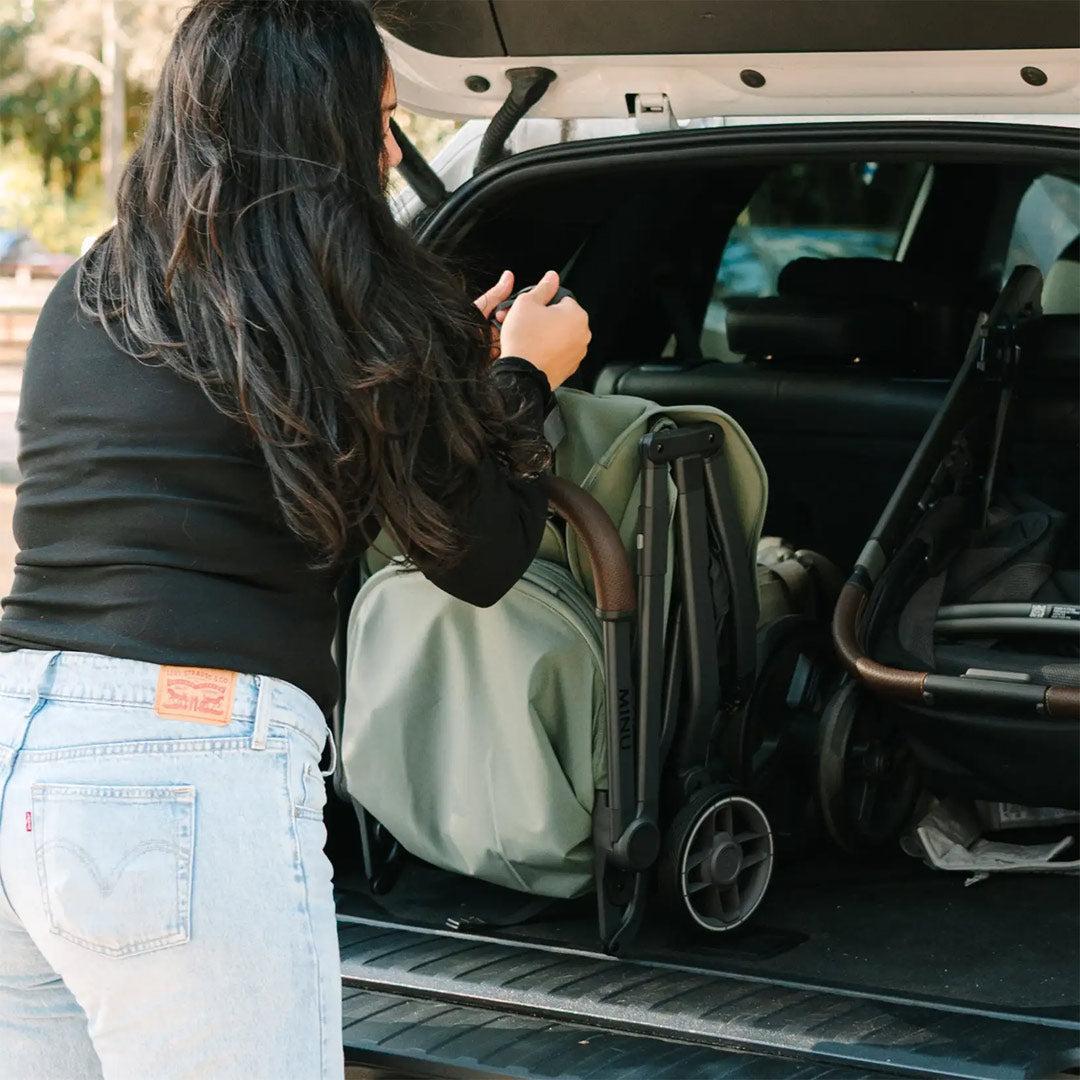
If your trips are mostly city breaks, train journeys and airport transfers, a lightweight stroller often makes the strongest case. It is easier to carry one-handed, quicker to fold at security and far less awkward when you need to lift it onto public transport. For parents navigating narrow pavements, busy terminals or restaurants with very little storage space, compactness is not just convenient - it can shape the whole experience.
That said, lighter is not always better. If your baby is very young, naps regularly on the move or needs a more supportive lie-flat seat, a travel pushchair with better recline and comfort may be the more practical option. A holiday can involve more time in the seat than your everyday routine, especially if you are out sightseeing for long stretches. In that case, extra padding, a decent hood and smoother handling start to feel less like nice extras and more like essentials.
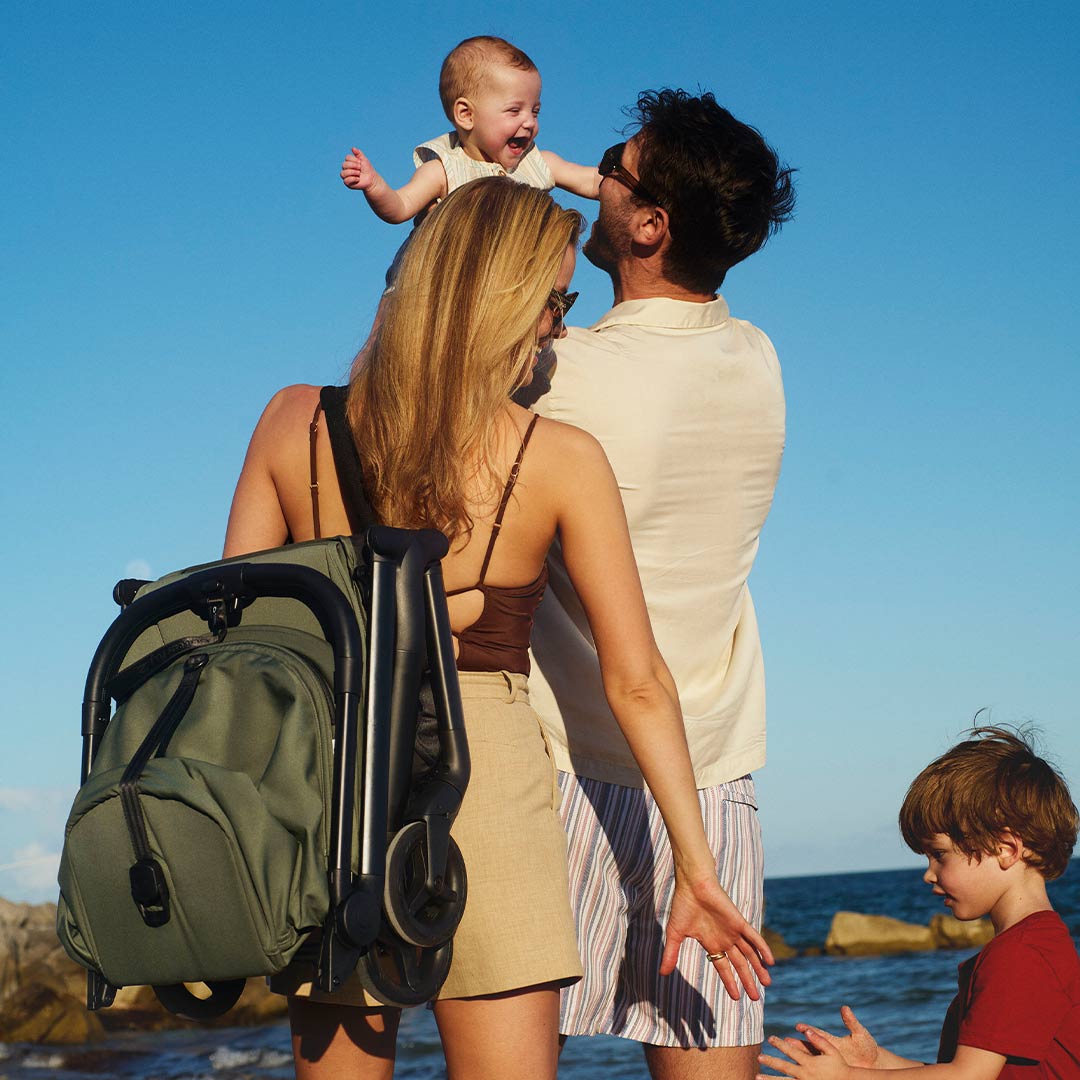
The most useful way to decide is to look at your actual itinerary. A stroller that feels perfect for a weekend in London may not be the best match for a rural cottage stay with gravel paths and muddy lanes.
Equally, a larger pushchair can feel luxurious until you are carrying it up a station staircase while your toddler insists on being held.
What matters most when travelling with baby
Fold size is usually the first feature parents check, and with good reason. A compact fold makes a real difference in car boots, hotel rooms and overhead storage situations where every centimetre counts. But fold size should not be looked at in isolation. Some pushchairs fold small but remain fiddly, while others have a slightly larger fold yet feel much easier to use because the mechanism is quick and intuitive.
Weight comes next, particularly if you travel by air or use public transport regularly. A light stroller can save your back, but it should still feel stable once your child is seated and the basket is loaded. An ultra-light model may look ideal online, yet feel less reassuring on kerbs, cobbles or windy promenades.
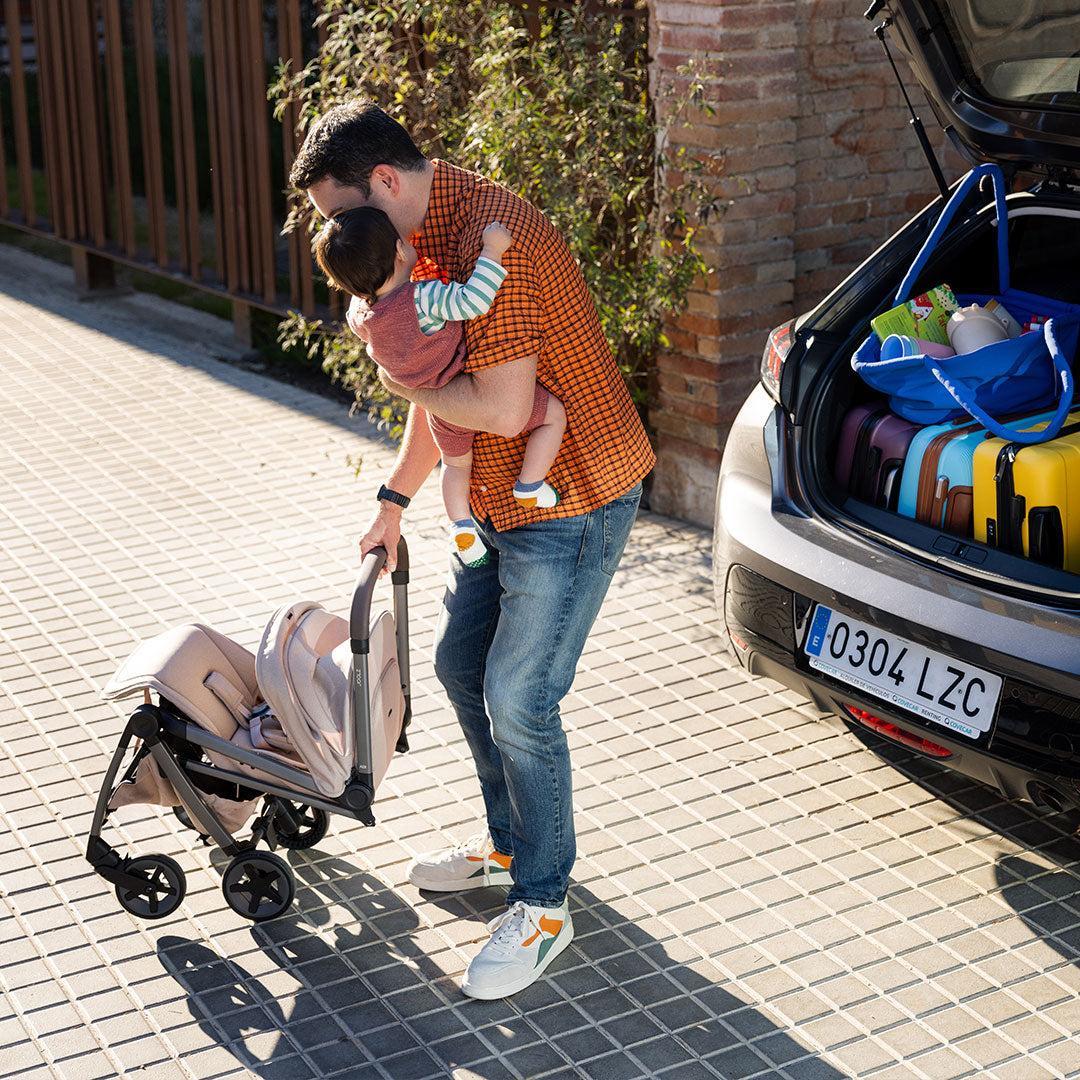
A little extra weight can sometimes bring far better balance and longevity. Recline is another feature worth taking seriously.
For newborns, a fully lie-flat seat or compatible carrycot option is often the deciding factor.
For older babies and toddlers, a deep and supportive recline helps protect nap time while you are out exploring. If your child only sleeps comfortably in a very upright seat or a very flat one, that preference is worth factoring in before you buy.
Storage matters more on holiday too. You may be carrying snacks, muslins, a raincover, spare layers, sun cream and the inevitable collection of small things that seem to multiply by lunchtime. A tiny basket can quickly become frustrating. The same goes for canopy coverage. A generous hood is useful in bright sun, light rain and overstimulating environments when your little one needs a calmer space.
Airport-friendly features worth looking for
Not every travel buggy is equally suited to flights. If flying is part of your plans, look for a model that folds quickly, locks securely and is easy to carry.
A built-in shoulder strap or travel bag can be genuinely helpful rather than gimmicky. Smooth steering is also worth prioritising because airports involve long distances and frequent direction changes.
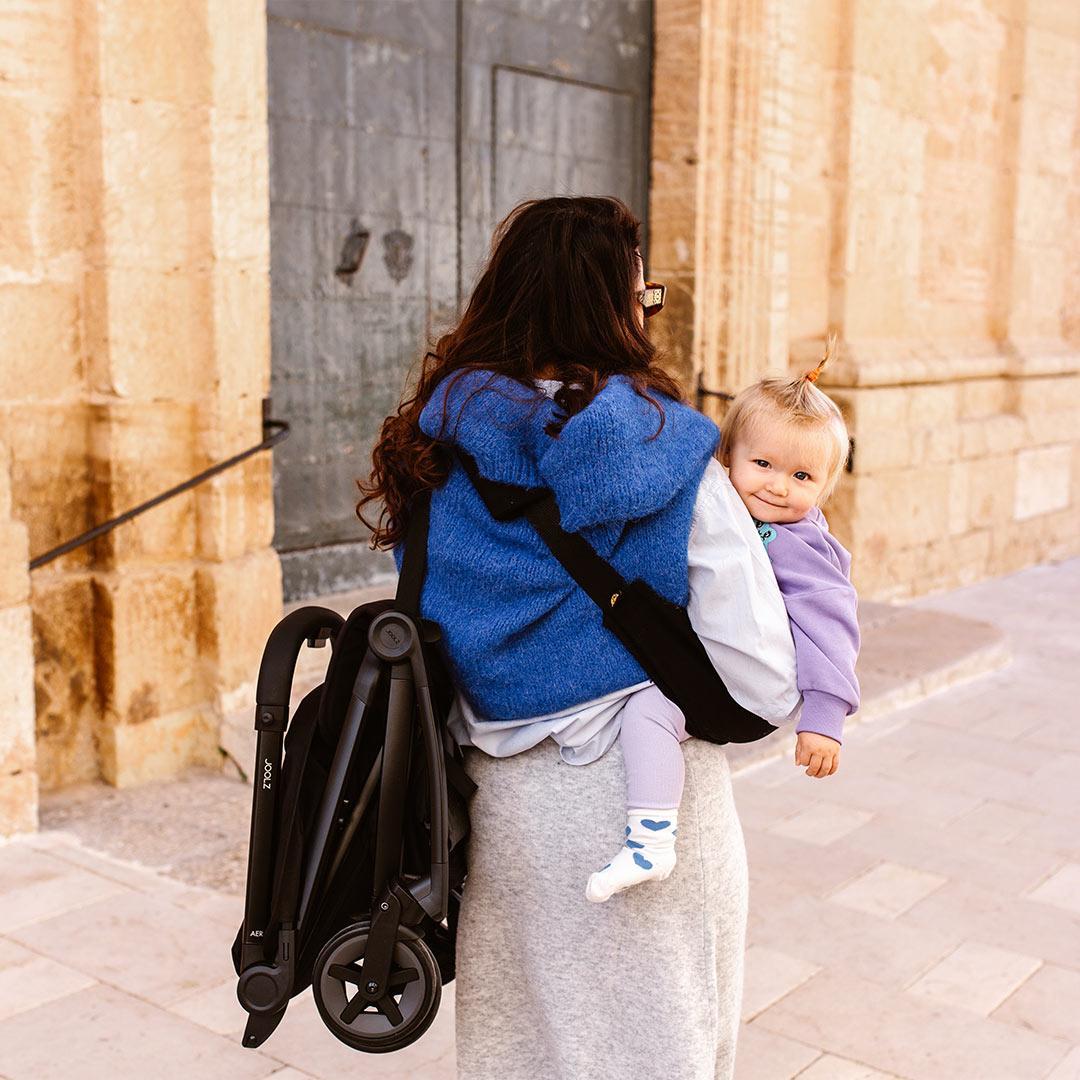
You may also want to check whether the stroller stands when folded. It sounds minor, but it helps in queues, at check-in and when you are juggling passports, changing bags and coffee you will almost certainly not get to drink while it is still hot.
When a travel pushchair is the better choice
There is a tendency to assume that every holiday calls for the smallest stroller possible. In reality, some families are better served by a more capable pushchair, especially if they are travelling with one child for a longer period or using the trip as a near-total replacement for their usual routine.
A well-designed pushchair can bring better suspension, a more generous seat, a sturdier handlebar and larger wheels that cope far more comfortably with mixed terrain. If your plans include coastal paths, old town streets, parks or destinations where pavements are inconsistent, this added capability is worth considering.
It may also be the smarter buy if you want one model to work both at home and away, rather than owning a separate lightweight travel stroller.
For younger babies, travel systems can also make journeys easier. Being able to move from car to pushchair without too much disruption can be invaluable on day trips or after long drives. The trade-off is that these setups are usually bulkier, so they suit families travelling by car more naturally than those flying frequently.
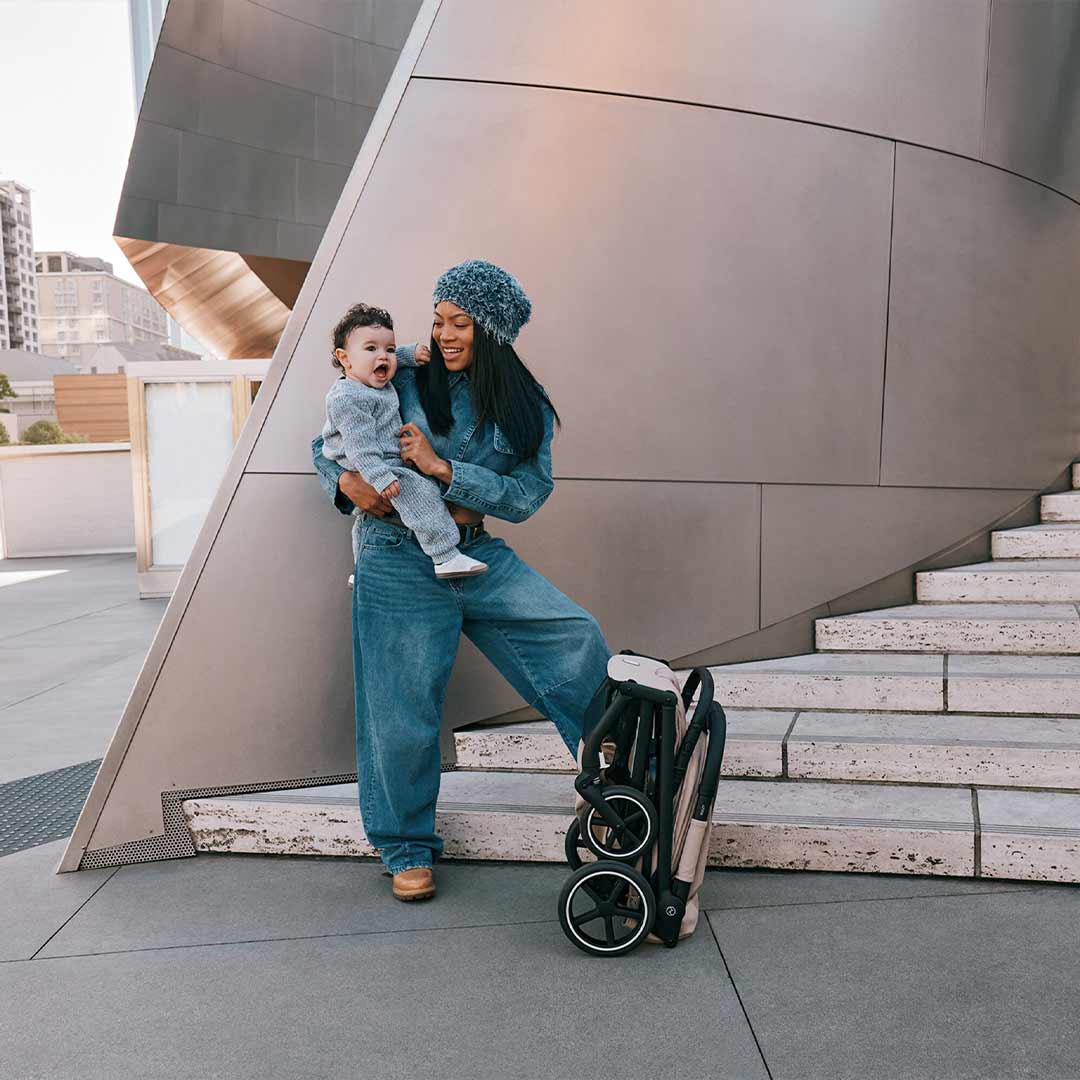
The age of your child changes the answer
For newborns, comfort and support tend to lead the decision. A tiny compact stroller may tick the box for portability but fall short on lie-flat positioning or weather protection. In those first months, many parents prefer a travel-ready pushchair that offers more cocooning comfort.
For babies around six months and over, the balance often shifts. Once they are sitting comfortably and spending less time fully reclined, a lighter stroller becomes much more appealing.
For toddlers, it often comes down to whether they still nap reliably in the buggy and how much walking you expect from them. Some toddlers barely use a stroller at home but need one every day on holiday.
Style, sustainability and buying well the first time
Travel gear is a practical purchase, but for many families it is also part of a bigger decision about quality, longevity and everyday living. A travel stroller that only works for one short season may not feel like the best value, even if the initial price is lower. A premium design that folds neatly, wears well and suits both daily errands and weekends away may prove far more useful over time.
Sustainability often sits within that same conversation. Durable materials, thoughtful engineering and the ability to use a pushchair for more than one stage or more than one child all matter. So does resisting the urge to buy twice. If a model genuinely supports your lifestyle now and next year, it is usually the better choice than something trend-led but limited.
This is where a curated retailer can make the process easier. Rather than comparing endless options that look similar on the surface, it helps to focus on the features that actually change day-to-day use: fold, weight, recline, wheels, basket and age suitability. The best decision is rarely the one with the longest feature list. It is the one that suits your family with the fewest compromises.
Common mistakes when choosing a pushchair or stroller for travel
One of the most common missteps is buying solely for the flight. The airport is only one part of the trip. If the buggy is brilliant in the terminal but uncomfortable for six hours of daily use at your destination, it may not be the right fit. Another is underestimating terrain. Smooth showroom flooring tells you very little about how a stroller will handle cobbles, kerbs or wet grass.
If your travel plans are varied, wheel quality and suspension deserve more attention than they usually get. It is also easy to overlook fold speed. Parents often focus on the final folded size but not how many steps it takes to get there. On travel days, especially with a child in one arm, simple matters.
Finally, think honestly about storage at home. A travel pushchair that fits neatly in a holiday flat but is awkward in your hallway or car boot may not serve you well for long. The smartest travel buys tend to be the ones that make ordinary days easier too. If you are deciding between a pushchair and a stroller for travel, try to picture the moments around the journey, not just the journey itself - the sleepy transfer from airport to hotel, the quick fold outside a café, the unexpected detour over rough ground, the afternoon nap on the move. Those are the details that turn a good-looking buggy into the right one.


