


When Can Your Baby Use a High Chair?

A high chair can quickly become one of the most-used pieces in your home - a front-row seat for first tastes, gloriously messy lunches and family suppers. But when can a baby use a high chair safely?
It is less about reaching a particular birthday and more about whether your baby has the physical control to sit securely while they eat. For most babies, this point arrives at around six months, when solid foods are usually introduced.
Every baby develops at their own pace, though, and a high chair should only be used for feeding once they can hold a safe, stable position with the chair’s support.
When can a baby use a high chair?
Many families start using a high chair at about six months old. At this stage, babies are often ready to begin exploring food alongside their usual breast milk or formula feeds. Yet age alone is not a green light.
A five-month-old with excellent head control may still be too young to start solids, while a baby approaching seven months may need a little more time to become steady enough for a high chair. Look for a combination of developmental signs. Your baby should be able to hold their head upright consistently, keep their head and neck steady while sitting, and show good control through their body rather than slumping or folding forward.
They should also be able to stay in an upright seated position with the high chair’s support and be interested in food. The aim is not for your baby to sit completely independently on the floor. Most babies cannot do that at the beginning of weaning. The key is that, once correctly positioned in their chair, they can remain upright and stable enough to swallow safely and use their hands to explore food. If your baby was born prematurely, their corrected age and individual development may be more useful than their calendar age.
Your health visitor or GP can offer tailored guidance if you are unsure about starting solids or using a high chair.
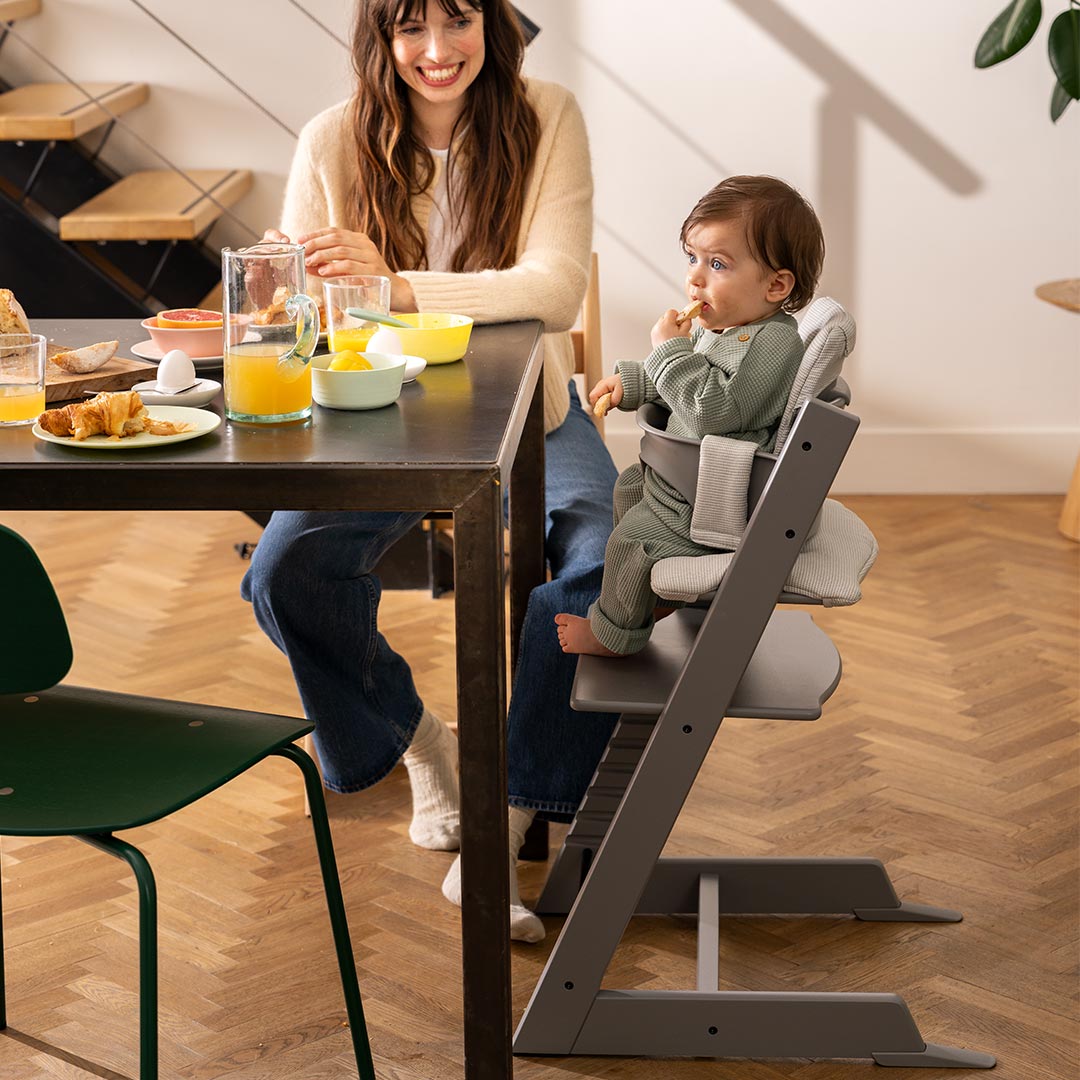
Readiness matters more than the calendar
There is a tempting rush to bring baby to the table, especially when they are watching every forkful with wide-eyed interest. Still, a high chair is not the right place for a baby who cannot yet manage their head and trunk position.
A reclined bouncer or car seat is not a substitute for upright feeding either, as it can make swallowing more difficult. Signs that it may be worth waiting include a head that falls forward or to one side, frequent sliding down in the seat, a rounded posture that cannot be improved through adjustment, or a baby who seems distressed when positioned upright.
These are useful signals, not failures. A few more weeks can make a real difference to comfort, confidence and mealtimes. Once your baby is ready, an adjustable high chair can grow with them from early weaning through to toddler meals. This is particularly useful for families choosing a design-led piece of nursery furniture that will be part of daily life for years, rather than a short-term purchase tucked away after the first birthday.
How should a baby sit in a high chair?
A good position helps your baby concentrate on eating, tasting and learning. Ideally, their hips, knees and ankles should each be bent at roughly 90 degrees, with their back supported and feet resting on a firm footrest. Their tray or table should sit close enough to reach comfortably, without forcing them to lean forward. Foot support is often overlooked, but it matters.
When feet dangle, babies may wriggle, push away from the tray or lose stability through their middle. A height-adjustable footrest gives them something solid to press against, creating a calmer, more supported position for meals. For younger babies, the seat should provide a snug fit around the hips and sides without compressing them.
Some high chairs include a newborn attachment or reclined seat for supervised family time. That feature can be lovely for bringing a younger baby to the table, but it is separate from being ready to eat solids. Feeding should wait until they can sit upright safely. Avoid adding loose cushions, rolled towels or homemade inserts to make a chair fit. They can shift during use and compromise your baby’s position. If an insert is needed, use only one designed and approved for that specific high-chair model.
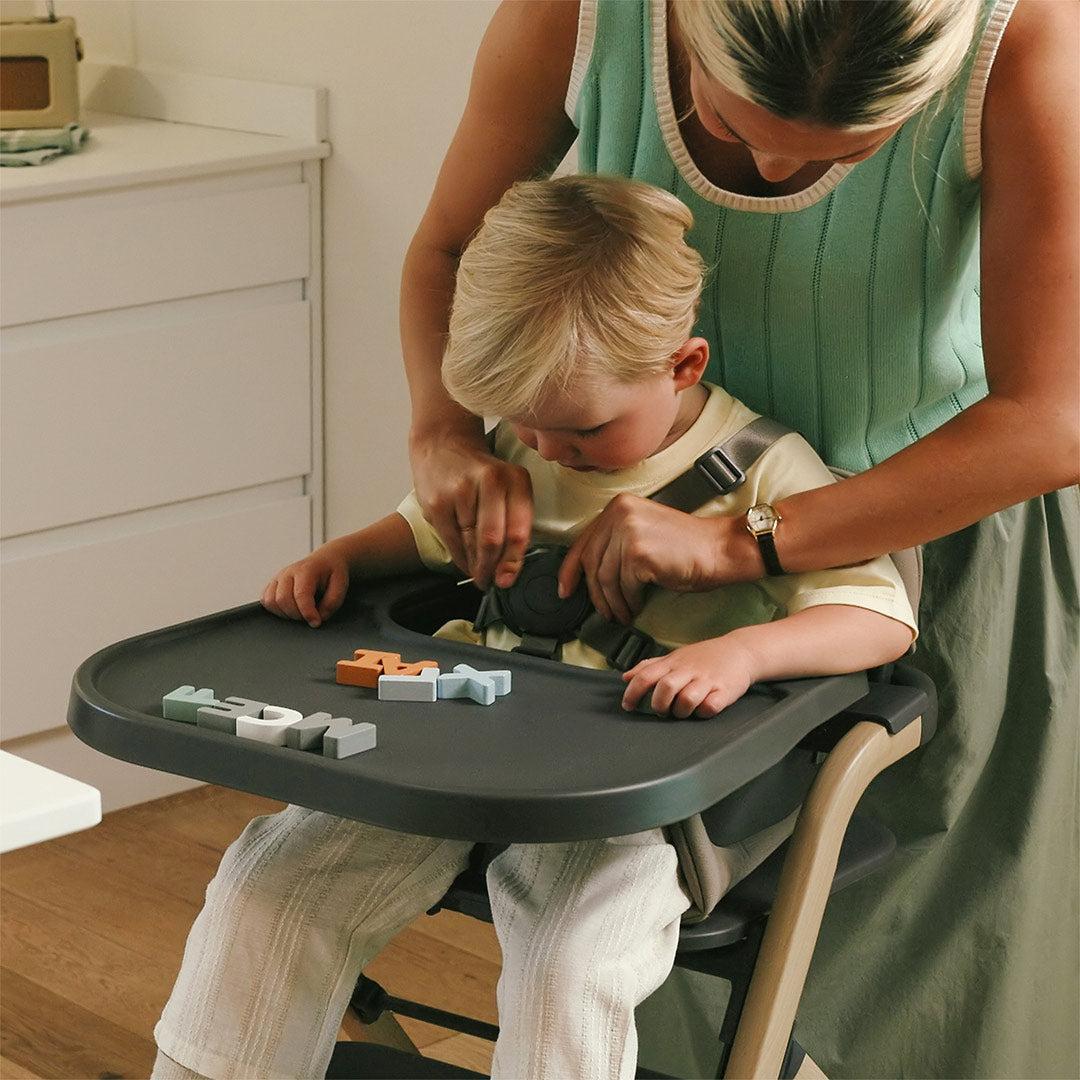
High chair safety checks for every meal
A premium high chair should feel reassuringly stable, be straightforward to clean and suit your space, but safe daily use is just as important as the product itself. Build a quick check into every meal, particularly as babies become more mobile and determined to investigate everything within reach.
Before sitting your baby down, make sure the chair is on a level floor and away from worktops, tables, walls, windows and anything they could push against or pull over. Check that the harness is correctly fastened each time. Even a young baby can make a surprising move when reaching for a spoon.
Use the harness exactly as the manufacturer instructs, including the crotch restraint where provided. The tray is useful for containing crumbs and offering a practical eating surface, but it is never a safety restraint. Keep your baby within arm’s reach throughout the meal, and do not leave them unattended while they are strapped in - not even for a quick trip to answer the door.
As your baby grows, revisit the adjustments. Raise or lower the footrest, alter the seat position where possible, and check that straps are neither loose nor digging in over clothing. Wipe the chair down after each use, paying attention to joins, harnesses and undersides where food can collect. A removable tray and machine-washable fabrics can make everyday life far easier.
Starting solids in the high chair
Whether you begin with smooth purées, soft finger foods or a combination of both, the same rule applies: start with small amounts and let your baby set the pace. Their first meals are about experience as much as nutrition.
They are learning new tastes, textures, movements and the social rhythm of eating together. Offer food when your baby is alert and reasonably content, rather than overtired or desperately hungry. Sit with them and model calm eating. You may find that breakfast works brilliantly one week, while an early evening meal is easier the next. There is no need to make every meal picture-perfect.
For finger foods, choose pieces that are soft enough to squash between finger and thumb and cut or shaped in a way your baby can manage. Stay close and learn the difference between gagging, which can be a normal protective response while babies learn, and choking, which needs immediate action.
It is wise for every caregiver to know basic infant first aid before solids begin. Keep milk feeds central during the early months of weaning. Food gradually becomes more important over time, while breast milk or first infant formula continues to provide much of your baby’s nutrition through their first year.
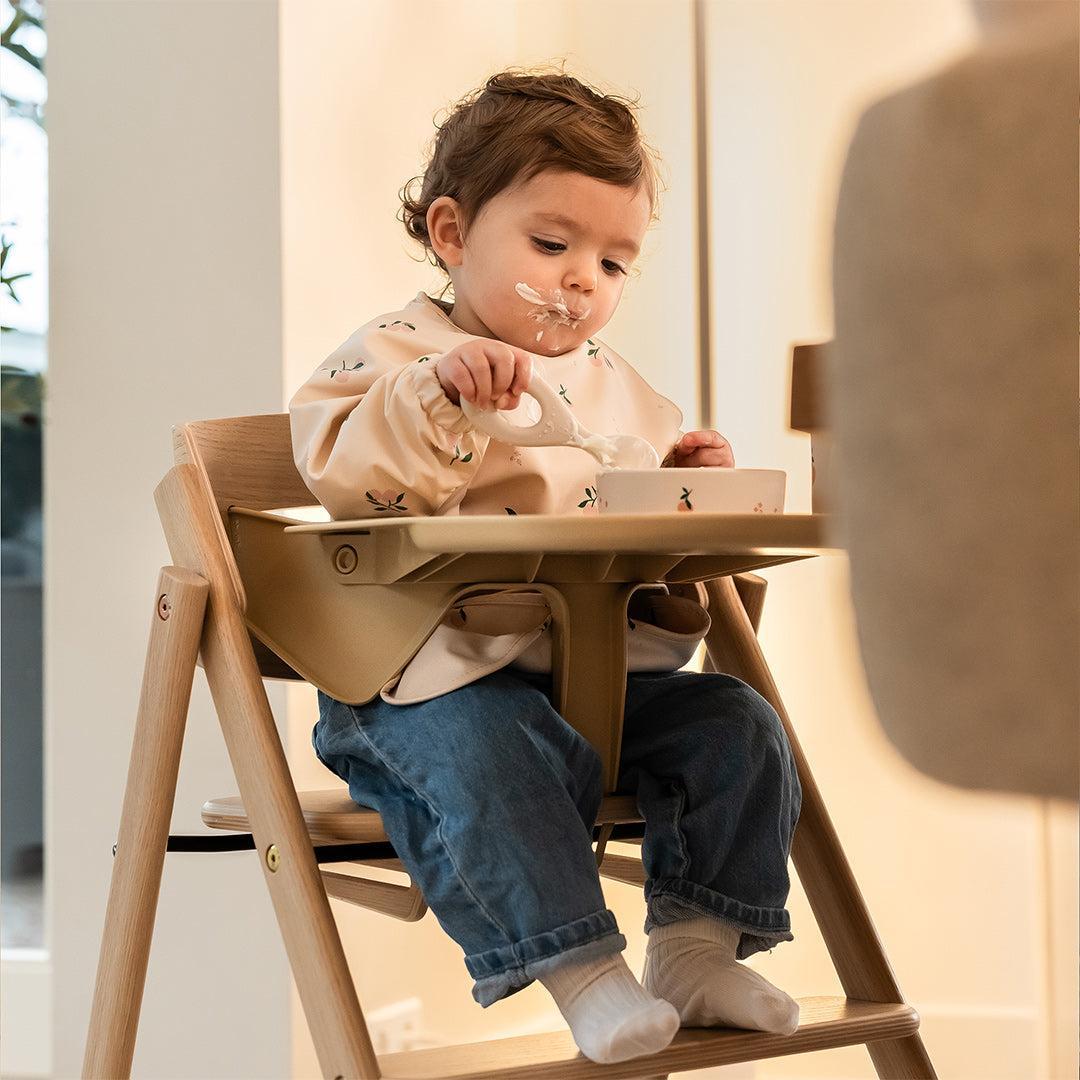
Choosing a high chair that works beyond weaning
The best high chair for your family is one you can use confidently at least once, and often three times, a day. Consider the footprint in your kitchen or dining area, how easily it moves, whether it folds, and how well it fits your table. A chair that looks beautiful but is awkward to clean may feel less practical after a week of avocado, porridge and pasta sauce.
For longevity, look for adjustable seat and footrest positions, a secure five-point harness, a stable base and materials that are built for regular wiping. Wooden high chairs can bring warmth to a dining space and often offer an enduring, furniture-like feel. Lightweight designs may suit smaller homes or grandparents’ houses, while models with removable trays offer flexibility as your child begins joining the table directly.
For parents making considered purchases, durability is also a sustainability consideration. A well-made chair that adapts from babyhood into toddlerhood, can be passed to a sibling or chosen pre-loved, has a lighter long-term story than a short-lived alternative.
A seat for the moments in between
The high chair stage is rarely tidy, and it is not meant to be. It is where your baby discovers strawberries, drops spoons to test gravity and begins to recognise the comfort of gathering around the table. Wait for those steady readiness signs, set the chair up carefully, and let the everyday mess become part of the memory.


