


What Size Sleeping Bag Should You Have For Baby?
That first bedtime switch can catch many parents off guard. You have the nursery set up, the cot sheets washed, and then one very practical question lands - what size sleeping bag baby actually needs.
The answer is not just about age on the label. It comes down to fit, stage, and making sure your baby is both comfortable and safe through the night. A baby sleeping bag should feel reassuringly simple, but sizing is where many parents hesitate.
Too small and it can restrict movement.
Too large and it can create a safety risk, especially around the neck and armholes.
If you are choosing one for a newborn, moving up a size, or buying ahead for the next season, a little guidance makes the whole sleep category much easier to shop.
What size sleeping bag baby should use
The best size sleeping bag for baby is the one that matches their current height and weight, not just their age. Most brands give an age guide such as 0-6 months, 6-18 months, or 18-36 months, but these ranges are only a starting point.
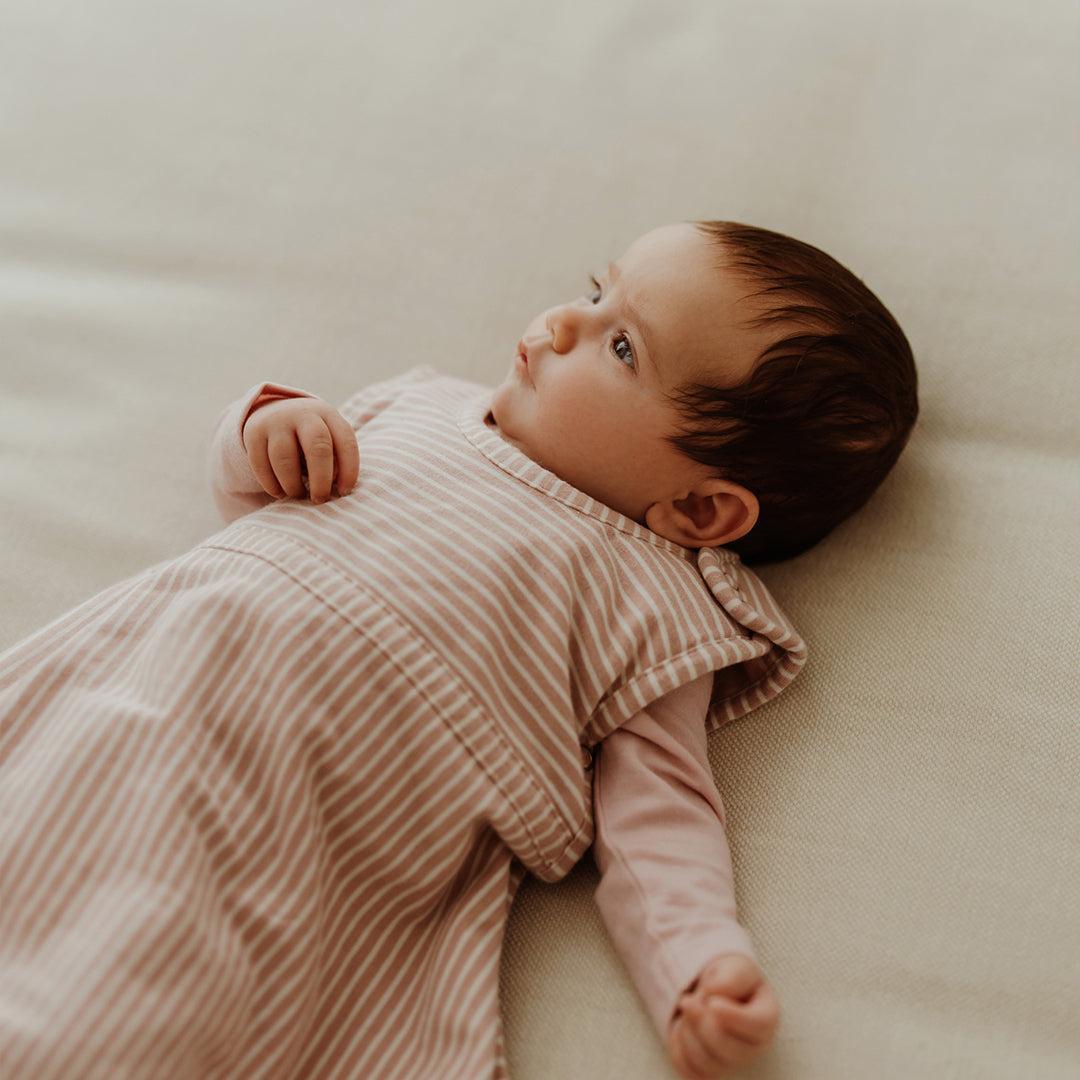
Babies grow at different rates, and two babies of the same age can need completely different sizes. In practice, the safest way to choose is to check three things: your baby's height, the brand's sizing chart, and the fit around the neckline and armholes. A sleeping bag should sit neatly on the shoulders without your baby being able to wriggle down inside it.
There should be enough room for natural leg movement, but not so much extra space that the bag feels oversized. For most newborns, this means resisting the temptation to size up for longer wear. It can feel economical in the moment, especially when babies outgrow clothing so quickly, but sleepwear is one of those categories where fit matters more than getting extra months out of a purchase.
Why age labels are only a guide
Age-based sizing is useful for browsing, but it is not the whole picture. Some babies are long and lean, others are shorter with a broader build, and both can be perfectly healthy. A 4-month-old might still fit comfortably in a newborn or 0-6 month sleeping bag, while another baby may already need the next stage.
This is why premium sleep brands usually include maximum height recommendations. These are often more helpful than age ranges because they tell you how much room your baby has to stretch and kick.
If your little one is approaching the height limit, it is usually time to move up. There is also a seasonal element. In winter, parents sometimes layer more underneath and assume they need a larger sleeping bag.
Usually, you do not. The sleeping bag should still fit correctly over normal sleepwear. Warmth is managed through tog rating and layers, not by buying a bigger size.
How a baby sleeping bag should fit
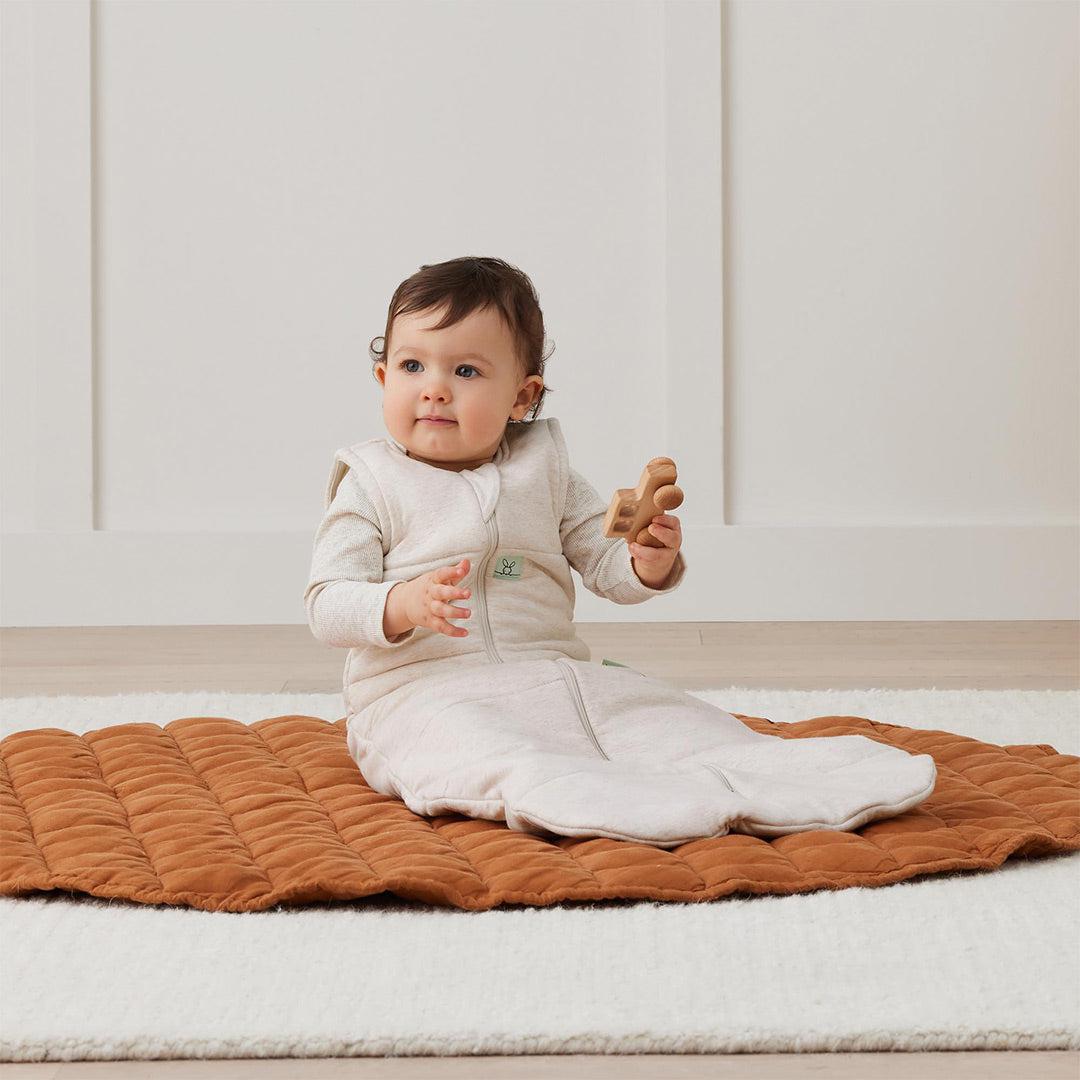
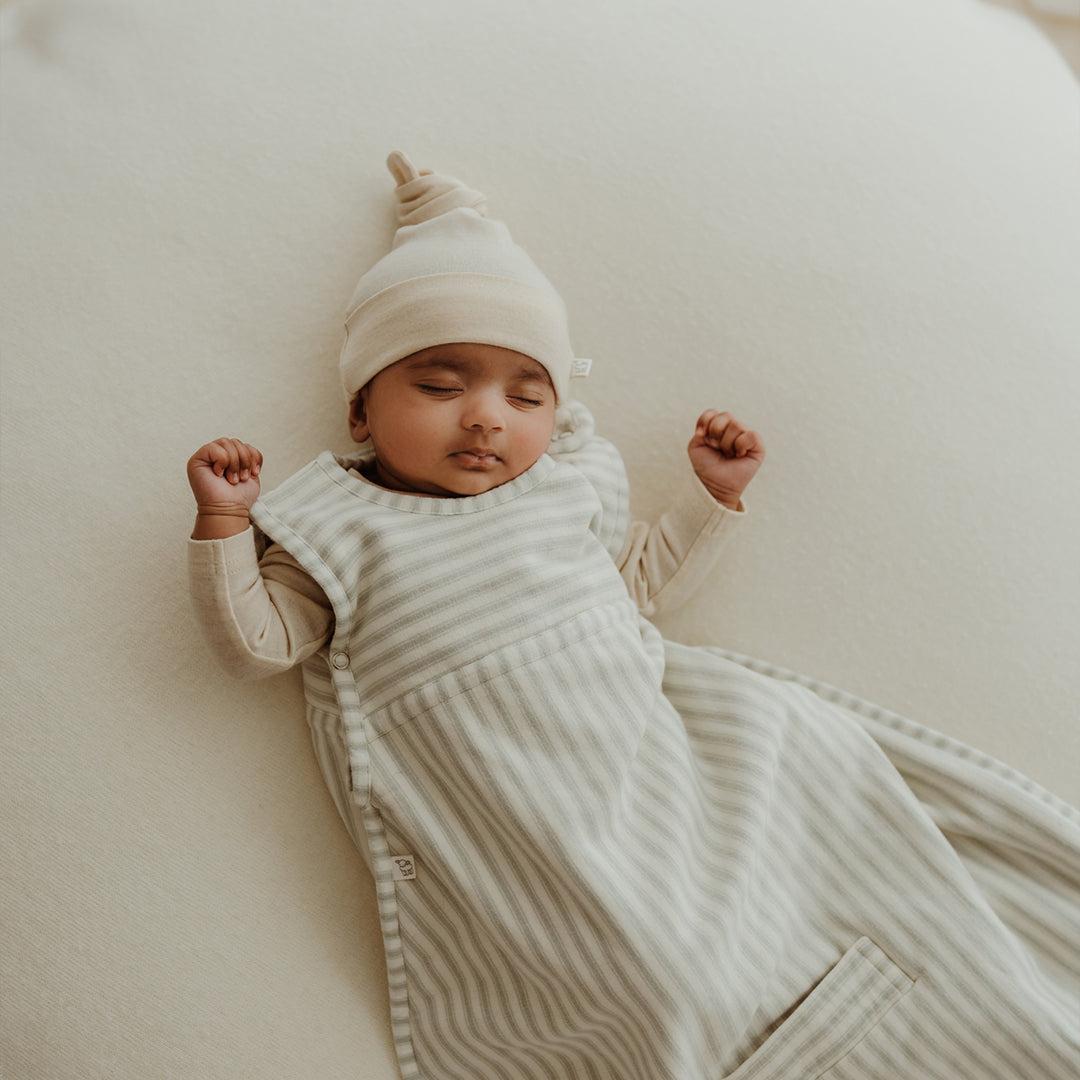
A well-fitting sleeping bag should be snug at the top and roomy at the bottom. The neck opening should not gape, and the armholes should not be so loose that your baby could pull their arms inside the bag unless the design is specifically made for that stage.
Look for a fit where the shoulders stay in place when your baby wriggles. If the top shifts easily or rides up, the bag may be too large. At the same time, your baby should be able to bend their legs into a natural froggy position and kick freely. Hip-healthy designs with a wider lower section are especially helpful here, as they support comfortable movement without compromising fit at the top.
Fastenings matter too. Poppers at the shoulders and a secure zip can make sizing feel more adaptable, but they should not be used to compensate for a bag that is clearly the wrong size. If you are between sizes, the safer choice is usually to wait until your baby properly fits the next one.
Newborn sizing and the earliest months
Newborn sleep can be a category where less is more. Not every newborn is ready for a sleeping bag from day one, and some parents begin with swaddles or other sleepwear before transitioning later.
If you are choosing a sleeping bag for a young baby, check the manufacturer's minimum weight and age guidance carefully. Many sleeping bags are not suitable for very small newborns. Even if the age label says 0-6 months, there can be a minimum weight requirement to ensure the neckline sits safely.
For babies at the smaller end of the scale, it can be worth waiting until they are large enough for a secure fit rather than starting too soon. Once your baby is ready, a newborn-size sleeping bag should look neat rather than generous. It may seem small when laid flat, but that is often exactly what gives the correct and safe fit.
Moving up a size
Parents often ask when to size up, and the clearest sign is fit rather than fussiness at bedtime. If your baby is close to the brand's maximum height, if the bag looks short when they stretch, or if fastening it feels noticeably snug across the chest, it is time to look at the next size.
What does not usually signal a need to size up is a baby who wakes often, kicks in their sleep, or seems active overnight. That is normal infant sleep behaviour. A larger sleeping bag will not necessarily improve sleep, and if it creates extra room at the top, it can do more harm than good.
There is an understandable urge to buy the next size in advance, particularly when shopping seasonal edits or preparing for colder weather. That can work well if you are organised, but it is still worth checking your baby's measurements close to the time of use.
A sleeping bag bought for winter in September may fit very differently by November than you expected.
What size sleeping bag baby needs by stage
At the earliest stage, many parents look at 0-6 month sleeping bags, but that only works if the minimum size guidance is met. For older babies, 6-18 month options are common and often cover the period when babies become more mobile in the cot.
Toddler sizes such as 18-36 months give more length and are useful for children who still prefer the comfort and consistency of a sleeping bag.
The key is not to treat these stages as fixed rules. They are shopping shortcuts, not safety checks. Always go back to the brand chart and your child's current measurements. This is also where well-curated sleep ranges can make life easier.
Rather than comparing endless options, look for collections that clearly set out age, tog, and fit details so you can build the right sleep set-up for the season and your child's stage.
Common sizing mistakes to avoid
The most common mistake is buying too big. It is easy to do, especially if you are thinking ahead or trying to get better value from a premium product. But sleeping bags are not like coats or jumpers where a little extra room is harmless.
Another mistake is relying only on clothing size. Your baby may wear 6-9 month vests but still need a smaller or larger sleeping bag depending on their length and build. Sleepwear sizing follows its own logic. It is also worth avoiding hand-me-down assumptions.
Different brands cut differently, and even the same labelled size can vary. One 6-18 month sleeping bag may have a much narrower shoulder fit than another. Finally, remember that tog and size are separate decisions.
Parents sometimes solve a warmth concern by sizing up, but the better route is choosing the correct tog for the room temperature and pairing it with appropriate sleepwear underneath.
A smarter way to choose
If you want to buy correctly the first time, start with your baby's current height and weight, then compare that with the brand guidance. After that, think about season and tog, then fabric preference.
Soft organic cotton, breathable blends, and thoughtfully designed shapes can all make bedtime feel that bit easier, but only after the size is right. For many families, it also helps to keep one principle in mind: fit first, longevity second.
A sleeping bag that fits beautifully now is the better choice than one your baby might grow into later. It supports safer sleep and usually gives a more settled bedtime routine too.
If you are still deciding what size sleeping bag baby should have, trust the measurements over the label on the hanger. It is the simplest way to cut through the noise and choose something that feels as good in practice as it does in the nursery drawer.
The right sleeping bag should make bedtime feel calmer, not more complicated - and when the fit is right, everything else tends to fall into place.


