



How to a Pack Changing Bag Without Overpacking
You only realise how much a changing bag matters when you are halfway through a nappy change with one wipe left, no spare vest and a baby who has chosen that exact moment to need a full outfit swap.
Knowing how to pack changing bag essentials properly is less about fitting in everything you own and more about making everyday outings feel easier, lighter and far less frantic.
The best-packed changing bags strike a careful balance. Too little, and a short trip turns stressful. Too much, and you are carrying half the nursery for a coffee run. For most parents, the sweet spot is somewhere in the middle - organised, practical and ready for the usual surprises without becoming bulky or impossible to carry.
How to pack a changing bag for real life
A well-packed bag should cover three things: changing, feeding and comfort. That sounds simple, but what goes in each category depends on your baby’s age, how long you will be out, and whether you are popping to the shops or heading off for a full day.
Start with nappies. A good rule is one for every two hours you expect to be out, plus two extras. Newborns tend to need more frequent changes, so if you are in those early weeks, pack generously. Add a travel pack of wipes and a foldable changing mat, even if your bag includes one. A spare mat liner or muslin can also help if you end up changing baby somewhere less than ideal.
Clothing is where many parents overpack. You do not usually need three full spare outfits for a quick outing. One complete change of clothes is often enough for short trips, while longer days may call for two. Think in layers rather than whole wardrobes - a clean vest, sleepsuit or leggings, and socks can cover most situations. If your baby is very young or prone to reflux, an extra muslin is often more useful than another cardigan.
For feeding, keep it specific to how you feed your baby.
- If you are bottle feeding, take enough sterilised bottles and measured formula for the time you will be out, plus a little contingency.
- If you are breastfeeding, you may need breast pads, a muslin and perhaps a small cover if you prefer one.
- If your baby is on solids, bibs, a spoon, snacks and a compact food pot may earn their place.
There is no single perfect list here - what matters is packing for your routine, not someone else’s.
The essentials worth packing every time
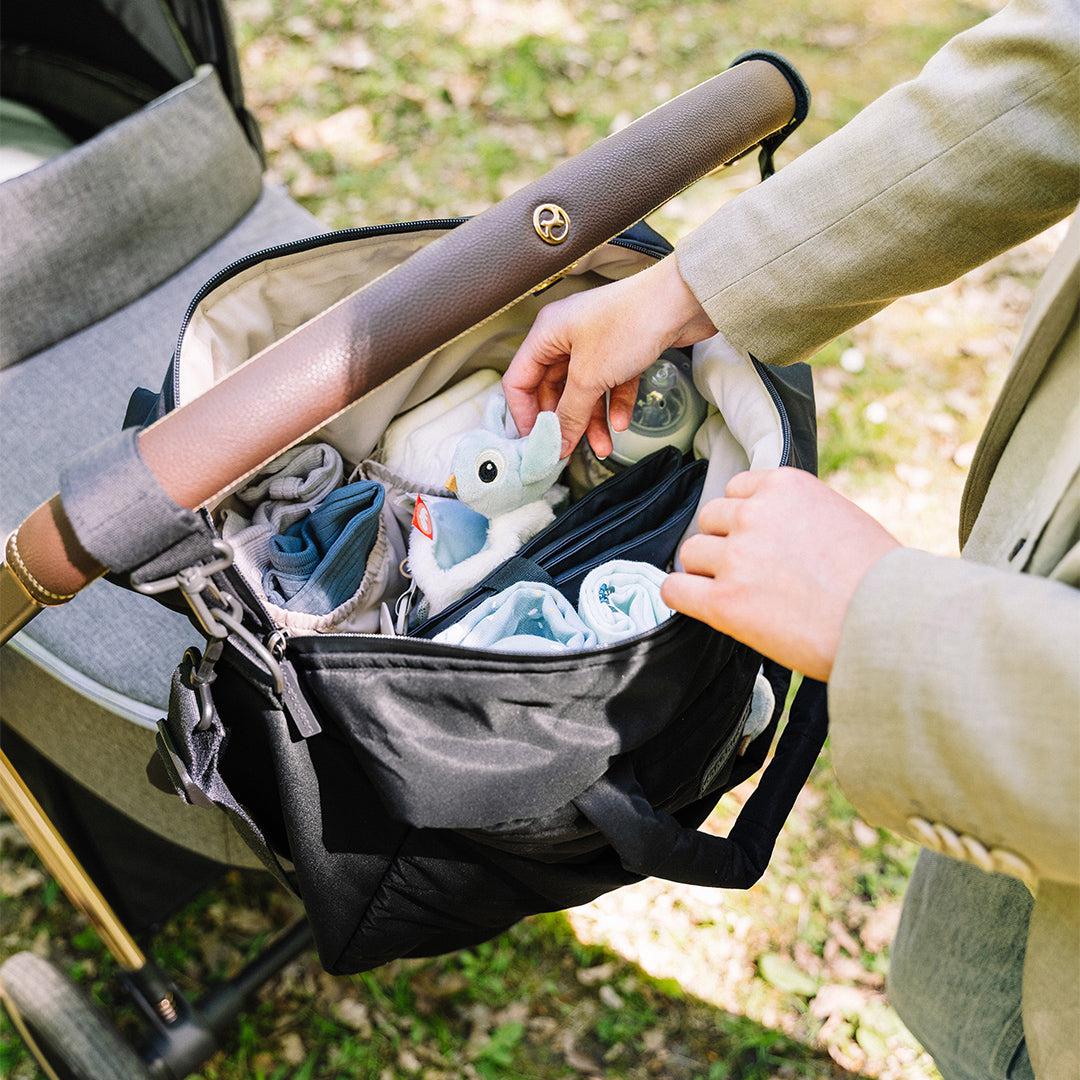
If you want your changing bag to stay tidy and useful, there are a few items that deserve a permanent spot. Nappies, wipes, nappy sacks, a changing mat and spare clothes are the obvious foundation. After that, it helps to think about the smaller things that save time when your hands are full. Hand sanitiser is one of them. So is a small pack of tissues.
Nappy cream can be useful, but decanting a little into a smaller pot often makes more sense than carrying a full-size tube. A wet bag for soiled clothes is another quiet hero - especially on days when leaks arrive in pairs. A muslin cloth earns its keep over and over again. It can catch spit-up, act as a makeshift changing surface, wipe up a dribble of milk or provide a bit of shade in the pram when needed.
If you are trying to pack smarter, choose pieces that do more than one job. Then there are your essentials. Your keys, phone, purse and reusable water bottle should be easy to reach without rummaging past nappies. A changing bag works best when it supports the parent too.
If you constantly have to unpack it to find your card holder or house keys, the layout is not working hard enough.
How to organise a changing bag so it stays usable
Packing well is only half the job. Organisation matters just as much, because a changing bag is usually opened one-handed, in a hurry, while distracting a baby with your elbow.
The easiest way to organise it is by grouping items into small pouches. Keep changing items together, feeding items together, and clothing in a separate zip pouch or packing cube. That way, you are pulling out one section rather than unpacking the whole bag onto a café chair or the boot of the car. Put the things you reach for most at the top or in outside pockets. Wipes, nappies and nappy sacks should be quick to grab. Spare clothes can sit lower down, because you will need them less often.
If your bag has insulated bottle pockets, use them. If it has multiple compartments, assign each one a purpose and stick to it. This is also where size matters. A larger changing bag can feel reassuring at first, but if it encourages you to keep adding just in case items, it may become heavy very quickly.
A more compact style often forces better decisions. The right bag is not necessarily the biggest one - it is the one that fits your usual day.
What changes by age and stage
How to pack changing bag essentials will look different at six weeks than it does at ten months. In the newborn stage, you will probably prioritise frequent nappy changes, muslins, spare layers and feeding support. Babies this small can get through clothes surprisingly quickly, so practicality matters more than packing light.
Once you are past the early weeks, the bag often becomes less about constant outfit changes and more about movement, snacks and distraction. Teething toys, a bib for dribble, a small comforter or a favourite toy may become more useful than that second spare sleepsuit.
If your baby is eating solids, spills become part of the picture, and a simple clean-up kit can be more valuable than extra clothing alone.
For toddlers, the changing bag may start to overlap with a day bag. Fewer nappies perhaps, but more snacks, wipes and entertainment. The principle stays the same - pack for the stage you are actually in, not the stage you are worried about.
Avoiding the common overpacking trap
Most overpacking comes from good intentions. Parents pack for every possible scenario because no one wants to be caught short. But there is a trade-off. A bag that is too full is harder to carry, harder to search and easier to forget to restock properly.
A useful test is this: if you have not used an item in the past three or four outings, does it still need to live in the bag? Some things deserve a permanent place, but plenty do not.
Travel-sized products, slimmer pouches and seasonal edits can make a real difference. Weather is a good example. In winter, you might want an extra layer or weather cover. In summer, you may swap that for sun cream, a sun hat and extra water for yourself. Packing should feel curated, not fixed. The best changing bags evolve with the day, the destination and the time of year.
A simple reset before every outing
One of the easiest habits to build is a quick bag check before you leave. It only takes a minute and prevents most of the classic problems. Refill nappies and wipes, replace used muslins, check whether the spare outfit still fits, and remove yesterday’s receipts, wrappers or empty snack pots. This matters even more if more than one adult uses the same bag.
A quick reset keeps everything consistent, whether you are heading out together or handing the bag over on the go. It also helps stop the slow build-up of unnecessary extras that turn a useful bag into a heavy one. If you like being especially prepared, keep a few backup items in the car or under the pram instead of carrying them all the time. That can be a smart middle ground - ready when needed, but not weighing you down on every trip.
Choosing style and practicality together
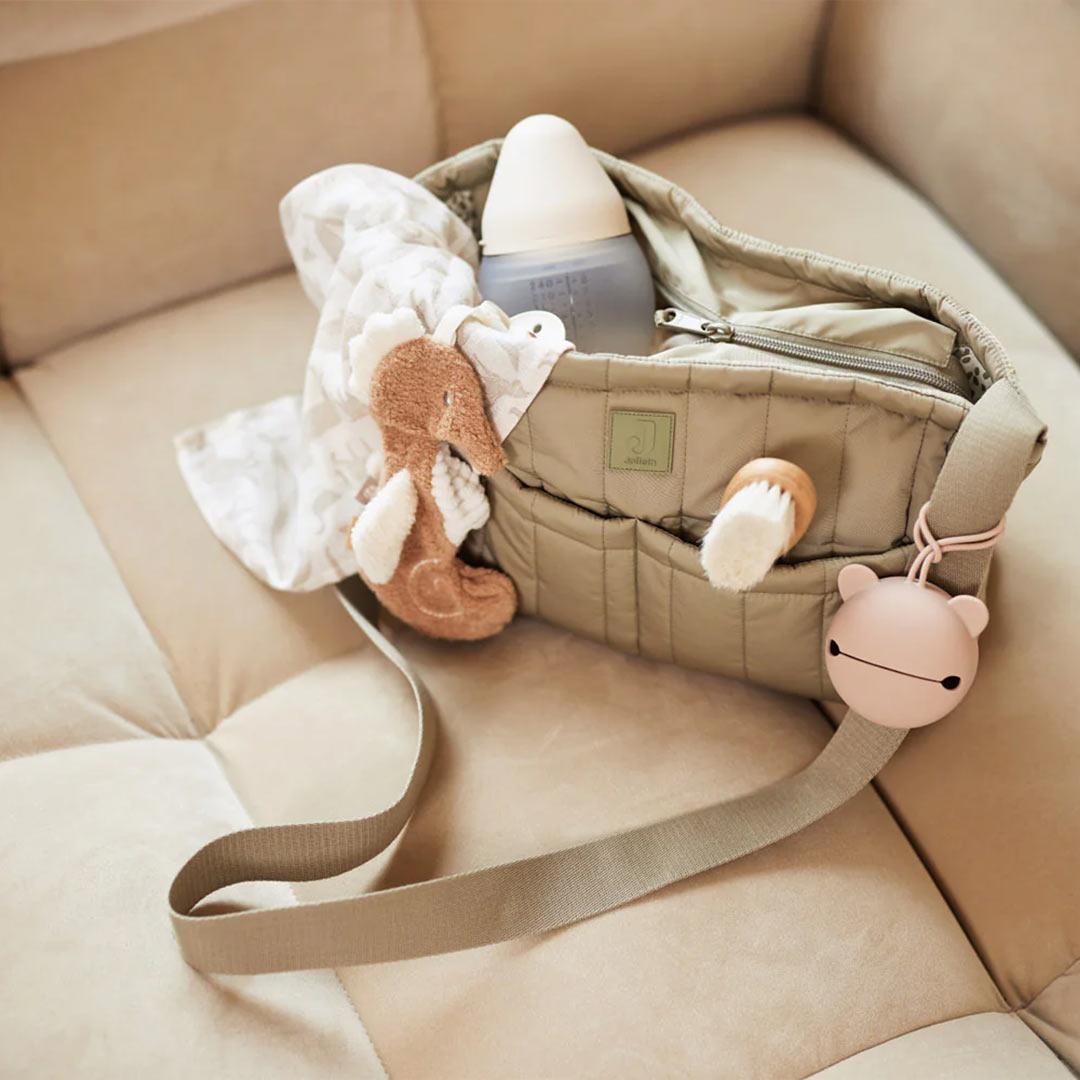
A changing bag is one of those everyday essentials you will use constantly, so it should feel good to carry as well as work hard. Premium design, durable fabrics and thoughtful compartments are not just nice details - they make daily routines smoother.
This is where many parents now look for a more considered option: something that suits their style, works with their pushchair and still offers the practical details that matter when life gets messy.
Sustainability can come into that decision too, whether that means choosing better-made materials, investing in a bag that lasts beyond the baby stage, or simply buying more intentionally.
At Natural Baby Shower, that balance of design and practicality is exactly what many families are looking for. A changing bag does not need to look purely functional to be brilliantly useful. The best bag is not the one packed for every possibility. It is the one that lets you leave the house feeling calm, covered and ready for whatever the day brings.


