


How to Choose Teething Toys for Babies

You usually notice teething before you see the tooth. There is more dribbling, more hand-chewing, and a sudden determination to gnaw the corner of a muslin or the strap on the pram.
That is when teething toys for babies move from nice-to-have to genuinely useful. The right one can offer comfort, keep little hands busy, and give parents one less thing to second-guess.
Not every teether works for every baby, though, and that is where choice matters. Some babies want firm pressure on the gums, while others prefer something softer and easier to hold. Some are happiest with a simple silicone ring, and others get on better with a textured toy they can mouth from different angles.
A well-chosen teether should feel safe, practical and easy to live with, not just attractive on the shelf.
Why teething toys for babies are worth choosing carefully
Teething can start from around six months, although it often begins earlier or later. The experience also varies more than many first-time parents expect. One baby might sail through with rosy cheeks and a little extra chewing, while another seems unsettled for weeks at a time.
A teething toy is not a cure for every difficult day, but it can make a real difference. It gives your baby something safe to bite, helps apply gentle counter-pressure to sore gums, and can redirect them from chewing fingers, clothing or whatever happens to be within reach. It also becomes part of daily life quite quickly - tucked into the changing bag, clipped onto the pushchair, or handed over in the car seat when patience is running thin.
Because babies use teethers so often, materials, shape and care instructions matter. This is one of those small baby essentials that gets a lot of close contact, so it is worth buying with the same care you would give to feeding or sleep products.

What to look for in teething toys for babies
The best place to start is with material. Food-grade silicone is a popular choice because it is durable, easy to clean and gives a satisfying chew without being too hard. Natural rubber can also work beautifully, especially for parents who prefer more natural materials and a softer feel.
Wooden elements can be appealing too, particularly in design-led toys, but they do need a little more thought around cleaning and finish. Texture is just as important as material. Raised ridges, bobbles and varied surfaces can help massage sore gums, especially once your baby starts seeking out different levels of pressure. A completely smooth teether may suit some babies, but many seem to prefer a mix of textures they can explore.
Size and shape often get overlooked. A teether needs to be easy for small hands to grip and manoeuvre towards the mouth. If it is too bulky, too heavy or awkwardly shaped, your baby may lose interest even if the material itself is lovely. Lightweight styles with open handles, rings or flexible sections are often easier for younger babies to manage.
Then there is practicality. Some teethers look beautiful but are fiddly to clean, easy to drop, or not especially convenient for outings. In real life, the best teething toy is often the one you can rinse quickly, pack easily and hand over without fuss.
Soft or firm - which is better?
It depends on your baby. Softer teethers can feel gentler for babies at the beginning of teething, especially when gums are tender and they are still learning how to mouth objects properly.
Firmer options can be more satisfying once babies want to bite down with purpose. This is why many parents end up with two or three different styles rather than one perfect teether. That is not overbuying - it is simply realistic. Babies are not especially consistent customers.
Should you choose a cooling teether?
Cooling can be soothing, but only if the teether is designed for it. Some can be chilled in the fridge, which may help calm inflamed gums. That said, icy or overly cold products can be uncomfortable, and not every baby enjoys that sensation.
For most families, a teether that can be safely cooled in the fridge is a useful option rather than an essential one. It is best seen as part of the toolkit, not the answer to every teething spell.
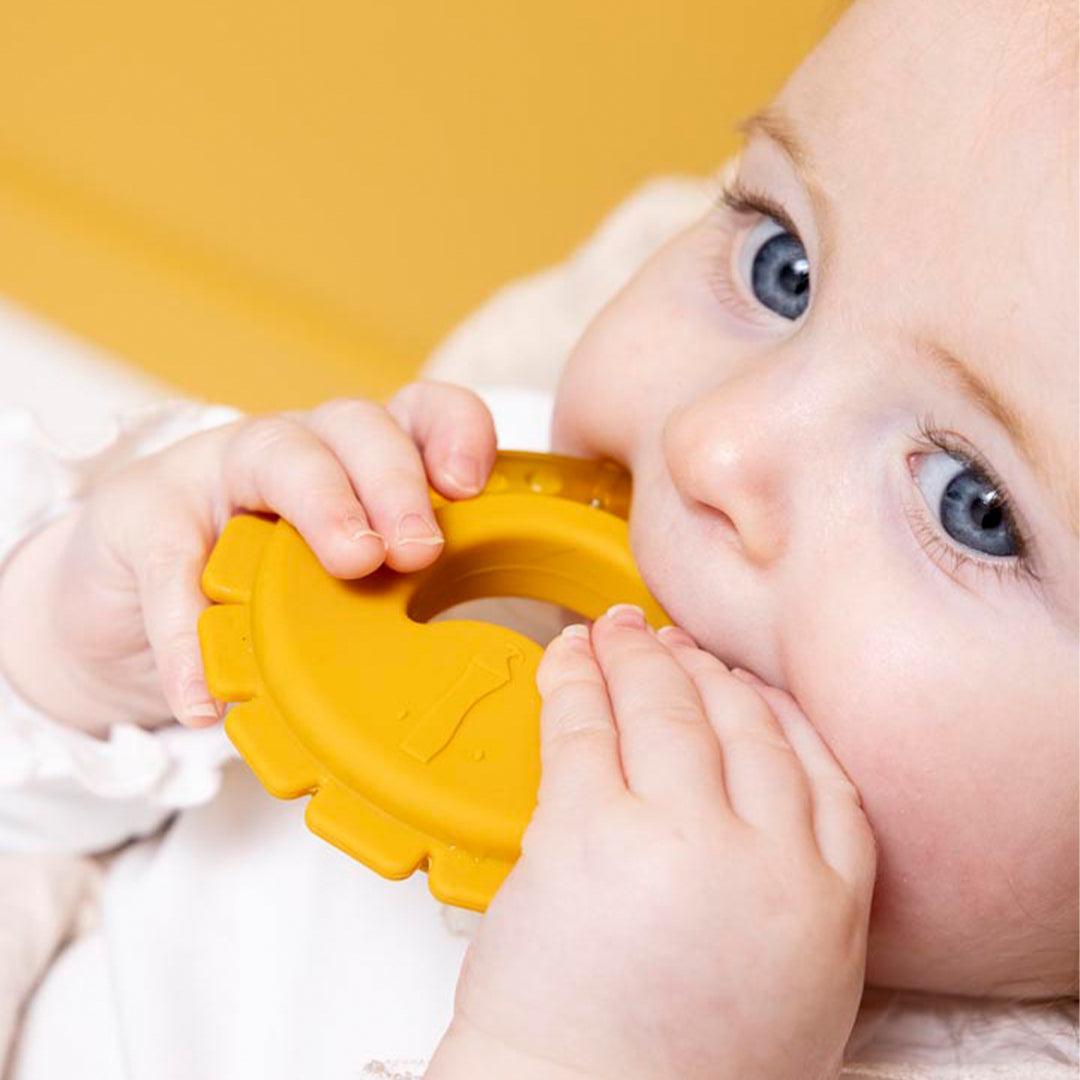
Materials that suit a modern family home
For many parents, buying a teether is not only about soothing gums. It is also about choosing something that aligns with how they shop more broadly - prioritising quality, longevity and considered materials over impulse buys.
Silicone tends to be the easiest all-rounder. It is low-fuss, modern in look and feel, and works well in minimalist, design-conscious homes where baby products still need to earn their place.
Natural rubber appeals for similar reasons, particularly if you are drawn to softer materials and more consciously sourced choices. If aesthetics matter to you, there is no need to pretend otherwise. A well-designed teether that complements your nursery or changing bag is still practical, provided it performs well and meets safety standards.
The sweet spot is a toy that feels curated rather than cluttering - useful enough for everyday life, but pleasing enough that you do not mind seeing it in every room.
When to introduce a teething toy
If your baby is showing signs of teething - chewing hands, dribbling more than usual, becoming frustrated during feeds, or wanting to mouth everything - it is reasonable to introduce a teether.
You do not need to wait for a tooth to appear. What matters more is developmental readiness. Your baby needs to be able to hold or mouth the toy safely, and the teether should be age-appropriate according to the manufacturer. Some styles are especially suited to younger babies who are still developing grip strength, while others are better later on when there is more coordinated chewing.
This is where a small, curated collection can help. One easy-grip teether for early months, one textured option for more active chewing, and perhaps one for cooling can cover most situations without filling drawers with products you do not use.
How many teething toys do you actually need?
Usually fewer than you think, but probably more than one. One often lives in the nursery, one ends up in the changing bag, and one is either being cleaned or mysteriously missing under the sofa.
Having a couple in rotation is practical, especially as frequent washing is part of the routine. It also helps to have different shapes for different moments. A compact ring may be ideal for travel, while a larger textured toy works better at home during playtime. Rather than building a huge collection, it makes more sense to choose a few thoughtfully. That approach tends to suit families who prefer less clutter and better-quality essentials.
Cleaning and care matter more than you think
Teethers spend a remarkable amount of time on floors, under buggies and in the bottom of changing bags. That means easy cleaning is not a bonus - it is part of what makes a toy usable. Silicone is often popular for exactly this reason. Many options can be washed quickly in warm soapy water, and some are suitable for sterilising or dishwasher cleaning depending on the product guidance.
Natural materials may need gentler care, so it is always worth checking instructions before first use. It is also sensible to inspect teething toys regularly. If there are signs of wear, splitting or damage, it is time to replace them. Premium baby products should feel built for daily use, but any item that is chewed often needs a little monitoring.
A few shopping cues that make decision-making easier
If you are choosing between several styles, start with the basics: safe materials, an easy grip, simple cleaning and a texture your baby is likely to enjoy. After that, think about where it will be used most. At home, on walks, in the car, or tucked into a changing bag for everywhere in between.
It can also help to think seasonally. During warmer months, a fridge-safe teether may get more use. During periods of heavy travelling or family visits, lightweight and portable styles tend to earn their keep. This is where a more curated approach feels helpful - buying for real routines rather than buying on volume.
For parents building a baby essentials list, teethers sit in that sweet spot between practical purchase and thoughtful gift. They are useful, relatively compact, and often one of the first toys a baby genuinely interacts with every day.
At Natural Baby Shower, that blend of function, design and considered materials is exactly what makes the category worth shopping well. There is no single best teether for every baby, and that is actually reassuring. A good choice is simply one that suits your child, fits your routine and feels easy to trust each time you hand it over.


