


How to Choose a Rotating Car Seat

That first bend into the car with a newborn can make even a short journey feel surprisingly awkward. A rotating car seat is designed to bring your child towards the door, so you can lift, buckle and settle them without leaning as far across the vehicle.
But when you are working out how to choose rotating car seat options, the smoothest spin is only one part of a much bigger safety decision.
The right choice is the one that fits your child, your vehicle and the way your family actually travels. It should feel reassuringly simple on the nursery run, practical when grandparents are helping, and secure every time it is installed.
Start with your child’s stage, not the seat’s style
Rotating seats are available across several stages. Some are infant carriers that rotate on a separate base, usually used from birth until around 12 to 15 months, depending on your baby’s height and the model’s limit.
Others are rotating seats designed to last from birth to approximately four years, while a smaller number offer longer-lasting use into the toddler years. For a newborn, look closely at the seat’s stated minimum height and weight, as well as the quality of its newborn insert.
The insert should support a smaller baby naturally, rather than leaving their head unsupported or their body sitting too upright. A recline position can be particularly useful in the early months, but always follow the manufacturer’s guidance on which recline settings are safe for travelling.
A seat with a broader age range may offer excellent value and reduce the need to buy again soon. The trade-off is that it will remain fitted in the car rather than being carried indoors like an infant carrier. If you regularly transfer a sleeping baby from car to home, or use a travel system for quick errands, a rotating infant carrier may suit your routine better.
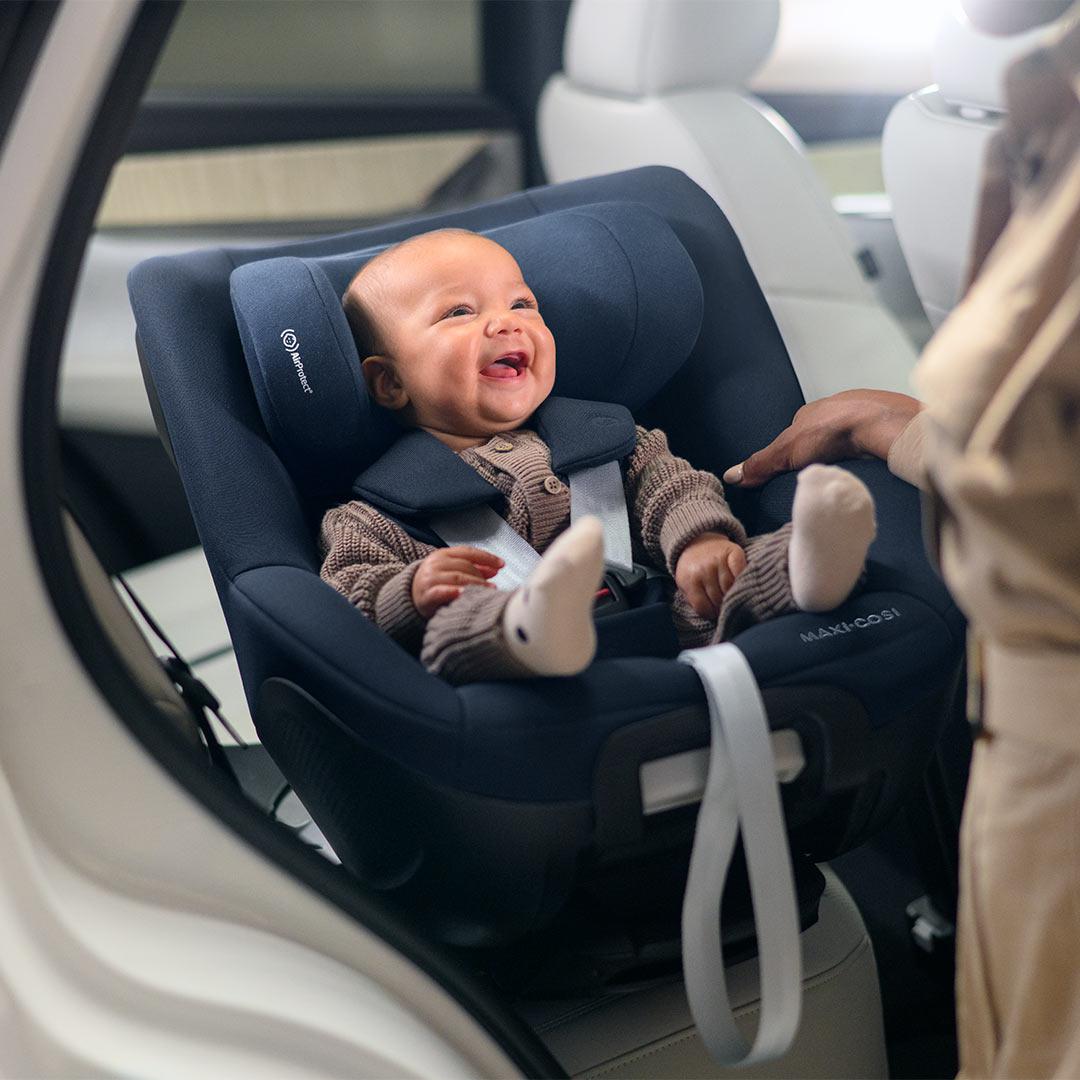
Understand the safety standard and rear-facing limits
In the UK, look for a car seat approved to the current UN R129 regulation, often called i-Size. These seats are selected primarily by your child’s height, making it easier to check when a child has outgrown a seat.
They also include improved side-impact testing requirements. The most valuable feature of many rotating seats is not simply the turn towards the door. It is the ability to keep your child rear-facing for longer.
Rear-facing travel offers strong support for a young child’s head, neck and spine in a collision, so it is worth choosing a model with a generous rear-facing height limit if this works for your family.
Some seats rotate only for loading and remain rear-facing throughout their first stage. Others can rotate into a forward-facing position once your child reaches the relevant minimum age and height. A forward-facing option may sound convenient, but it does not need to be a rush.
Choose a seat that makes extended rear-facing travel straightforward, and review the instructions before changing direction.
Check your car before choosing a rotating car seat
A beautiful, highly rated seat is not the right seat if it cannot be installed correctly in your car. Vehicle fit should be checked before purchase, especially if you drive a compact car, have sculpted rear seats, need room for a front passenger, or are planning to fit more than one child seat.
Most rotating car seats use ISOFIX connectors and a support leg. ISOFIX can make installation more intuitive, while the support leg adds stability by bracing against the vehicle floor.
Check that your car has ISOFIX points in the seating position you intend to use, and that there is no underfloor storage compartment where the support leg will sit unless your vehicle and seat manufacturer specifically permit it. Also consider the front-to-back space.
A seat in its deepest recline can take up more room than expected, particularly when rear-facing. Move the front seat to a comfortable driving position before testing the fit.
If possible, try the seat in your own car or use the manufacturer’s vehicle compatibility checker as a starting point, then confirm any uncertainty with a trained car seat adviser. It is also sensible to think ahead.
Will the seat need to sit alongside another child seat? Do you need the middle rear seat for an occasional adult passenger? Is your family car likely to change during the seat’s lifespan? These practical details can determine whether a wider, longer-lasting model is a brilliant investment or an everyday frustration.
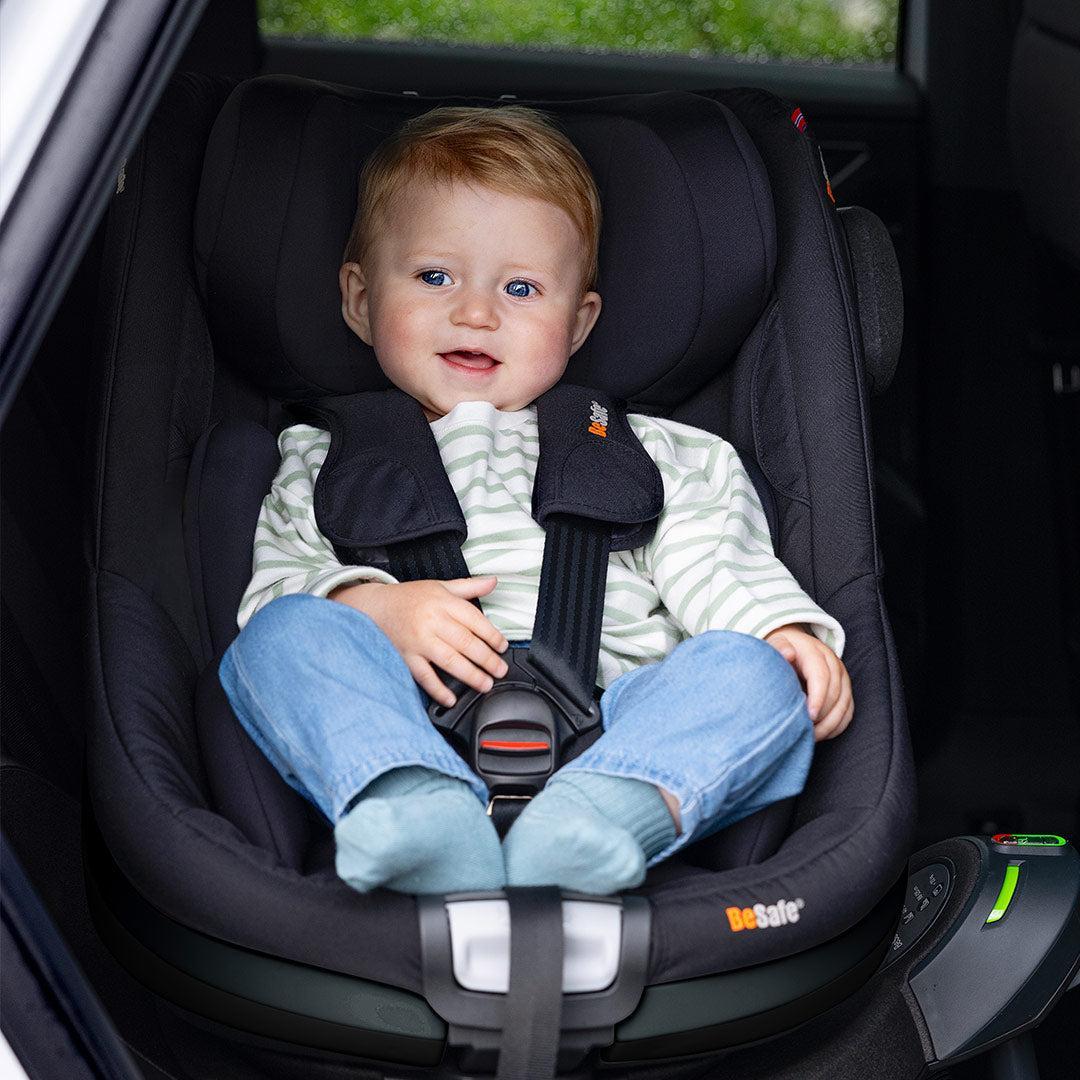
Make sure the rotation works for you
A rotating seat should reduce awkward lifting, not introduce extra steps. Test how easily you can reach the release mechanism, turn the seat and secure it back into its travelling position.
Some seats offer a full 360-degree rotation, while others turn only to the side or in one direction. Neither is automatically better. The useful option is the one that works with your usual parking arrangement and the side of the car you load from. Think about where you park most often.
On a tight driveway, next to a kerb, or in a narrow multi-storey space, having the seat face the door can make a real difference. Yet rotation is most helpful when it is paired with a simple harness. You should be able to loosen, position and tighten the straps without wrestling with bulky padding or hidden buckles.
Remember that the seat must be locked in its approved travel position before every journey. A clear visual indicator or audible click can offer welcome reassurance, but it never replaces checking the instructions and the seat itself.
Look beyond the headline features
Premium car seats often include side-impact protection, multiple recline settings, magnetic harness holders, ventilation panels and washable covers. These details can genuinely improve daily use, but their value depends on your family.
For a baby who sleeps often in the car, recline and breathable fabrics may be high on your list. For a child prone to travel sickness, easy-to-remove and machine-washable covers can matter more than a particularly plush finish. If different adults will use the seat, clear installation indicators and uncomplicated adjustments can prevent avoidable errors. Pay attention to the harness adjustment too.
The headrest and harness should ideally adjust together, so you are not rethreading straps as your child grows. Try the buckle with one hand, feel how accessible the harness release is, and check that the shoulder pads sit comfortably without obscuring the fit.
A rotating car seat can be a considered, longer-term purchase, so it is reasonable to want materials and design that feel made for everyday family life.
At Natural Baby Shower, a curated approach can help narrow a crowded category, but the final decision should still be guided by fit, safety and your own routine rather than appearances alone.

Do not overlook installation and everyday checks
Even an excellent seat cannot perform as intended if it is installed or used incorrectly. Read the manual before your first journey, rather than trying to interpret it with a tired baby waiting in the driveway. If the seat has a support leg, ensure it reaches the vehicle floor firmly and is not resting on a storage-lid edge.
If it uses ISOFIX, check both connectors are fully engaged and any indicators show green. When your child is in the seat, remove bulky coats and snowsuits before fastening the harness. They can compress in a collision, leaving the straps looser than they appeared. Tighten the harness so it sits flat and snug, with no twists, and use lightweight layers or a blanket placed over the harness if extra warmth is needed.
Avoid buying a second-hand car seat unless you can verify its full history, including that it has never been in a collision, has all original parts and labels, and is within the manufacturer’s stated lifespan.
A seat may look immaculate while having damage or missing information that cannot be seen.
A final way to narrow your choice
If several rotating car seats meet the right safety standard and fit your vehicle, bring the decision back to three questions: does it keep your child rear-facing for a period you are comfortable with, can you install it confidently every time, and will the rotation make ordinary journeys easier?
The best seat is not necessarily the one with the longest feature list. It is the one you will use correctly, calmly and consistently as your family grows.


