





When to Start a Cotbed or Single Bed Transition

A suddenly adventurous toddler can make the cotbed or single bed transition feel less like a nursery milestone and more like an urgent overnight decision. If your little one is attempting to climb out, the priority is creating a sleep space that gives them more freedom without introducing new risks.
But if they are sleeping happily and safely where they are, there is rarely a need to rush. The right choice depends on your child, your room and the furniture you already own.
A well-planned move can protect familiar bedtime routines while giving your toddler the confidence to settle in their next sleep space.
Is your toddler ready to leave the cot?
Age offers a useful guide, but it is not the deciding factor. Many children move from a cotbed between around two and three-and-a-half years, particularly when they are toilet training, welcoming a new sibling or have begun trying to climb out. Yet a child who still sleeps soundly in their cot and is not attempting an escape may be more secure staying there a little longer.
Climbing is the clearest sign to act. Once a toddler can get over the sides, a cot is no longer reliably containing them and falls become a concern. Lowering the mattress to its lowest setting may buy some time if it is permitted by your cot’s instructions, but it is not a long-term answer for a determined climber.
It can also be a good time to move if your child is asking for a ‘big bed’, needs easier access to the toilet at night, or is becoming too tall for the cotbed. Watch how they respond to change elsewhere, though. A new home, nursery start or a new baby can be enough adjustment at once. In those moments, keeping bedtime familiar may be the kinder choice where safety allows.
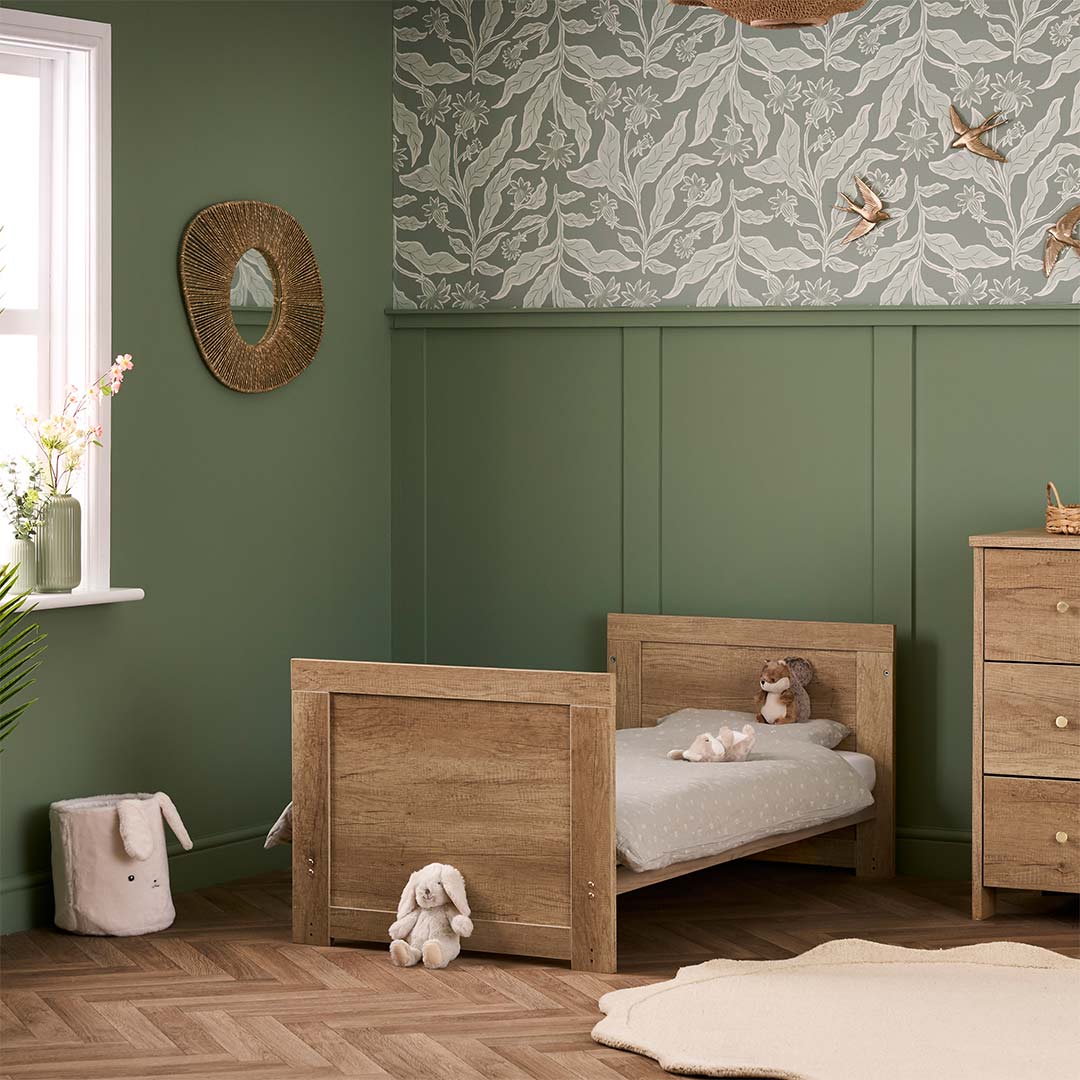
Cotbed or single bed transition: which bed suits your family?
There is no universal best next bed. The most practical option is the one that suits your child’s readiness and your family’s space, budget and plans for the nursery.
Converting a cotbed
A cotbed designed to convert into a toddler bed can make the gentlest transition. The mattress, proportions and much of the bedtime view remain familiar, while removing one side gives your child the independence to climb in and out. It is an especially appealing route for toddlers who are cautious about change or who have slept well in their cotbed.
Check the manufacturer’s conversion instructions before changing the configuration. Use only the recommended parts, make sure all fixings are secure and confirm that the mattress still fits precisely, with no gaps at the edges.
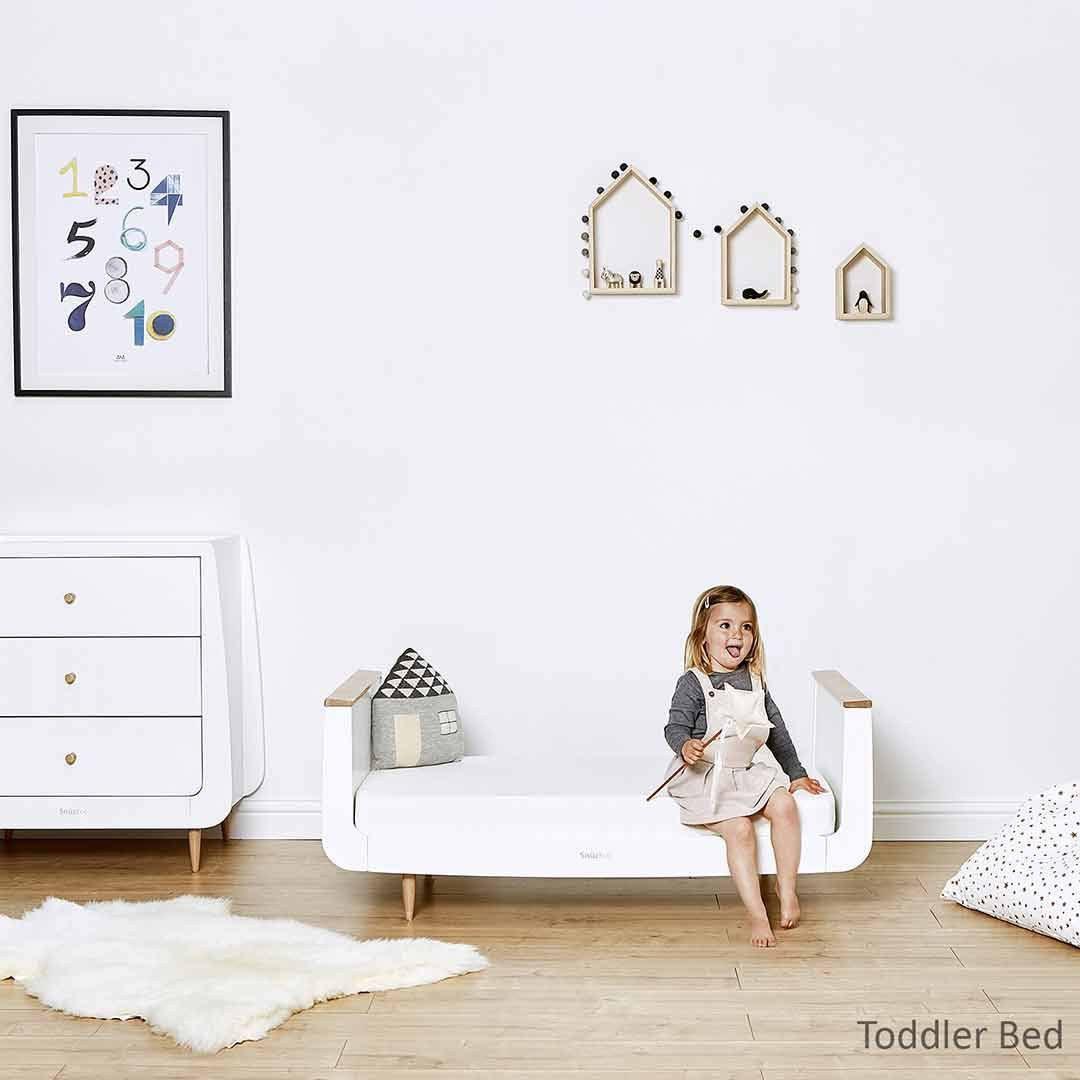
Depending on the model, a toddler bed may carry your child comfortably for a limited period before a larger bed is needed. That makes it a considered, gradual choice rather than always the longest-lasting one.
Moving straight to a single bed
A single bed can be a smart investment if you have the room and want a sleep solution that will last through childhood. It also offers more space for a parent to sit beside a poorly child, read a story or help with a difficult settling period. The trade-off is scale. A single bed can feel vast after a cot, and a very mobile sleeper has further to roll.
Some children love the sense of occasion, especially if they can choose bedding in a favourite print or colour. Others settle better when the larger bed is introduced slowly, perhaps with daytime stories and cuddles there before their first night. Look for a bed frame appropriate for your child’s age and follow its safety guidance carefully.
A low bed can make independent access easier and lessen the distance of a fall. If you use a bedguard, choose one compatible with the mattress and frame, fit it exactly as instructed and check it routinely. Poorly fitted rails and gaps between a mattress, bed frame or wall can create hazards.
Considering a floor bed
A floor bed is another option some families choose for an independent, low-level sleep space. It can be particularly useful in a carefully childproofed bedroom, but it does not remove the need for supervision and room safety.
Your toddler can get up whenever they wish, so the entire room needs to be set up accordingly.
Set up the room for safer new-found freedom
The big change is not simply the bed. It is that your toddler may now explore the room while everyone else is asleep. Before the first night, view the bedroom from their height and treat it as a space they may use independently.
Secure tall furniture to the wall, particularly drawers and wardrobes that could tip if climbed. Keep blind cords out of reach, cover sockets where appropriate, and move lamps, chargers, nappy creams and small objects away from the bedside. Windows should be secure, while doors should be managed in a way that works safely for your household and allows you to respond if needed.
Think about the route from bed to door too. A soft night light can make an unfamiliar room less daunting and help a newly toilet-trained child find their way. Keep the floor clear of toys, baskets and trailing blankets that could cause a trip. If the bed sits against a wall, make certain there is no dangerous gap between the mattress and wall where your child could become trapped.
Your mattress deserves the same care. It should be supportive, clean and correctly sized for the bed frame, with fitted bedding that stays in place. For a cotbed conversion, do not assume a mattress is still suitable just because it has been used before. Check its condition, firmness and fit, and follow the furniture manufacturer’s guidance.
Make the first weeks feel familiar
Toddlers usually cope better with one clear change than a complete bedroom makeover. Keep their usual sleep bag or bedding where suitable for their age and mobility, retain the same comforter, and follow the bedtime pattern they already know. Bath, pyjamas, a story and a cuddle can be reassuring anchors when the bed itself is new. Involve your child in a few manageable choices.
Letting them select new duvet covers, place their favourite soft toy on the pillow or help choose a bedtime book gives the move a positive sense of ownership. Too many choices, however, can turn bedtime into a negotiation, so keep the boundaries calm and clear. For the first few nights, expect some testing.
Your toddler may repeatedly get out of bed because they can, rather than because they are distressed. Respond quietly and consistently: lead them back, use the same short phrase and avoid making the return interesting.
A long conversation, extra play or repeated snacks can accidentally teach them that leaving bed is rewarding. If they are genuinely unsettled, stay close without creating a routine you cannot maintain. Sitting by the bed for a few minutes, then gradually reducing your presence over several evenings, can offer reassurance. Every child is different: some thrive on a confident goodnight at the door, while others need a slower handover.

Time the change around your family, not a deadline
A new sibling often prompts families to free up a cot, but a baby does not usually need it immediately. If possible, avoid presenting the older child’s move as something they must do for the baby.
Frame their new bed as their own exciting next step, and give them time to become comfortable before the nursery changes again. Similarly, do not feel pressured by what friends’ children are doing.
A cotbed that still fits your child safely can be a perfectly good place to sleep. Equally, if climbing has started, a carefully prepared toddler or single bed is safer than holding on to the cot for sentimental reasons.


