


How to Choose the Best Baby Bath Thermometer

A newborn bath can go from peaceful to surprisingly stressful in the time it takes to run the tap. When you are supporting a slippery baby with one hand and trying to judge the water with the other, a clear temperature reading offers welcome reassurance.
The best baby bath thermometer is not necessarily the one with the most features. It is the one that is easy to read, reliable in your everyday routine and gives you confidence before baby goes anywhere near the water.
For most babies, bath water should feel comfortably warm rather than hot, at around 37°C. A bath thermometer helps you check this quickly and consistently, especially when different adults share bathtime or your home’s water temperature varies.
What makes the best baby bath thermometer?
A good thermometer earns its place by making a small but meaningful task simpler. Look first for a clear, accurate digital display that can be read at a glance. During those early evenings, you do not want to lean over the bath, interpret tiny markings or second-guess whether the water has reached the right temperature.
Many designs show an easy-to-understand indicator when the water is too warm or too cool. This can be particularly helpful for grandparents, partners and anyone who is new to bathing a baby.
A visual alert should support, rather than replace, your own checks: always stir the water well, as hot and cool areas can sit in different parts of the bath, then test it with your wrist or elbow before placing baby in the water.
Choose a model made for bath use, with a sealed construction and no sharp edges. It should feel smooth in the hand, sit safely in the water and be straightforward to rinse and dry afterwards.
For a product that will be splashed frequently, a quality finish and dependable battery compartment matter more than novelty extras.
Choose a style that suits your bathtime set-up
There is no single right format. The best choice depends on whether you use a full-size family bath, a newborn bath support, a compact baby bath or a changing-table bath unit.
Floating digital thermometers
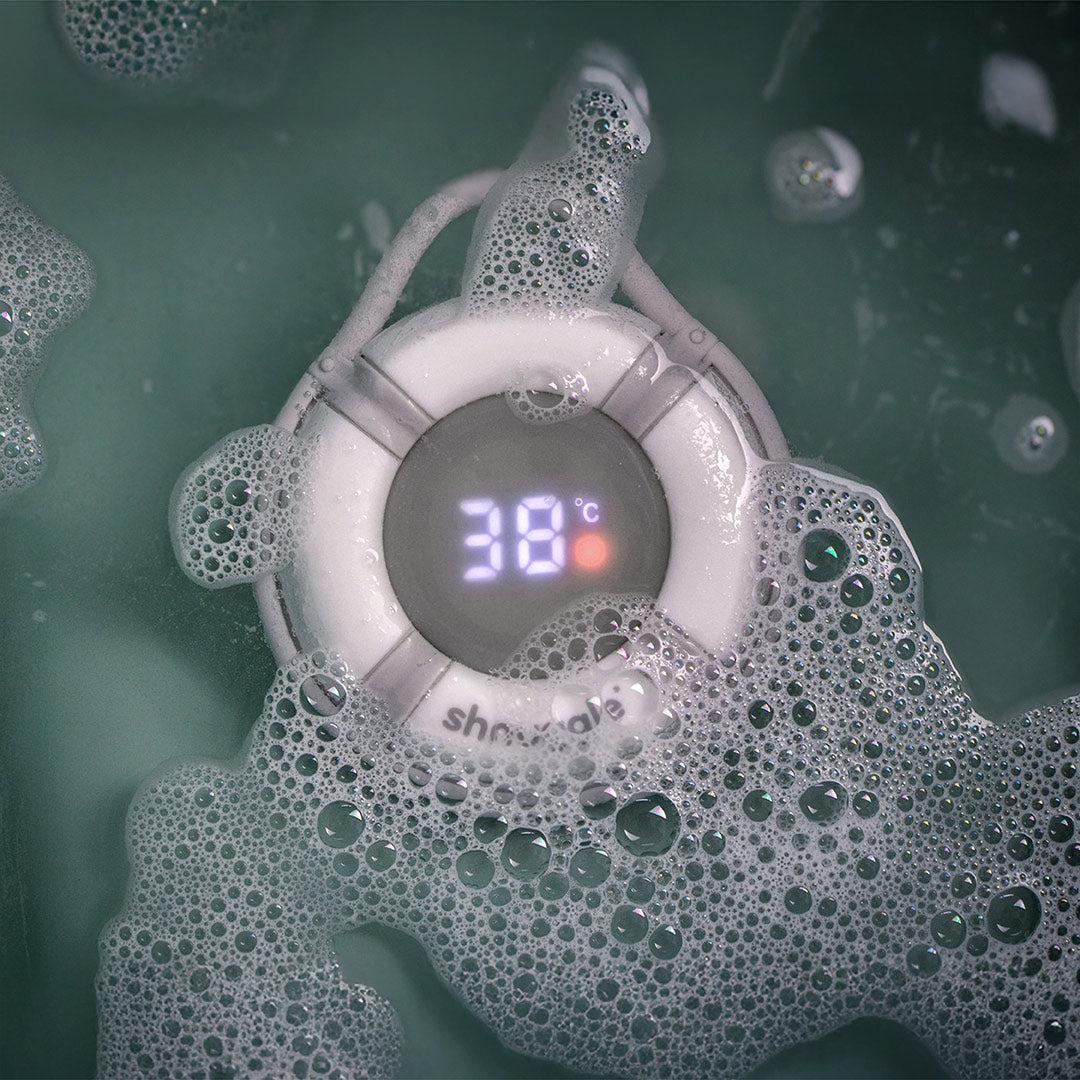
Floating thermometers are a popular all-round option. They stay visible on the surface, so you can check the reading without reaching into the water, and many double as a gentle bath toy as baby gets older.
Animal-shaped designs can make the routine feel more playful, while a simple digital screen keeps the information clear. The trade-off is that a floating thermometer can drift away while you are washing baby.
Choose one with a large display and allow it a moment to settle in the water before relying on the reading.
Thermometers with a room temperature function
Some models measure both bath water and room temperature. This can be useful in a nursery or family bathroom, particularly during colder months, when you are aiming to make the transition from warm water to towel feel comfortable.
A dual-purpose design can reduce the number of baby-care items you need, but it is worth considering where it will live between baths.
If you want a dedicated nursery thermometer, a model that can stand securely on a shelf may be more practical than one designed only to float.
Bath plugs and integrated temperature indicators
A temperature-sensitive bath plug or an indicator built into a baby bath keeps the surface of the water free from extra items. It can be a neat choice for smaller baths or parents who prefer a pared-back set-up.
These options are also less likely to become a distraction once babies are keen to grab and chew everything within reach. Their limitation is position.
Water temperature can differ across the bath if it has not been mixed thoroughly, so use an integrated reading as part of a careful routine rather than assuming one area represents the whole bath.
Simple non-digital options
Traditional strip or analogue thermometers may appeal if you prefer to avoid batteries.
They are often compact and uncomplicated, but they need a clear scale that is easy to read in steamy light.
For bleary-eyed newborn bathtimes, many families find a digital display more reassuring and quicker to use.
The features worth paying for
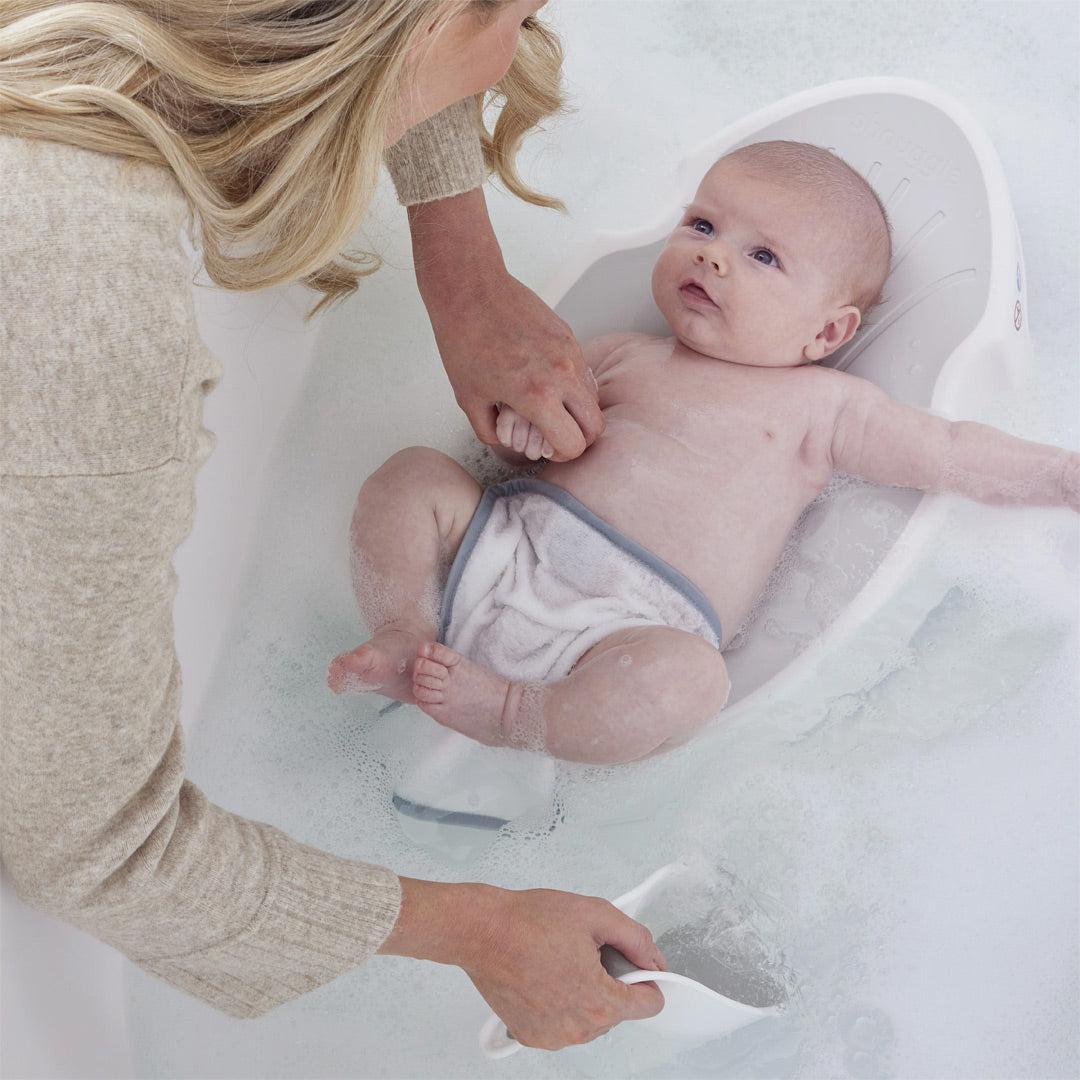
Premium baby essentials should feel considered, not overcomplicated. A few thoughtful details make a real difference at the end of a long day. A high-contrast display is useful in a dim bathroom.
An automatic switch-off function can help preserve battery life, while a low-battery warning reduces the chance of discovering the thermometer needs replacing just as the bath is ready. If you choose a battery-powered model, check that the compartment is securely fastened and inaccessible to little fingers. Some thermometers include a clock or timer.
This is handy if you like to keep newborn baths short and calm, though it is not essential. Your focus should remain on supervising baby at all times, with everything you need - towel, clean nappy, clothes and washcloth - within arm’s reach before you start. Material is another consideration for values-led families.
Look for well-made, durable designs intended to last beyond the newborn stage, rather than a throwaway item used for a few weeks. A thermometer that works for baby baths and later as a room thermometer can be a more thoughtful addition to a carefully chosen bathing collection.
How to use a baby bath thermometer
Run the cold water first, then add warm water, mixing as you go. This is a sensible habit that helps avoid hot water sitting at the base of the bath. Once you have reached the desired level, stir the water thoroughly and place the thermometer in the bath according to its instructions.
Wait until the display has stabilised. Aim for around 37°C, then confirm that the water feels comfortably warm on the inside of your wrist or elbow. If it is too warm, add cold water and mix again before retesting.
Never add hot water while baby is already in the bath. A thermometer is one part of bathtime safety, not a substitute for close supervision. Keep baby within your reach throughout, even if the doorbell rings or you remember something in another room. If you need to step away, wrap baby in a towel and take them with you.
Do you need a bath thermometer for every baby?
Not every parent will use one forever. Once you are familiar with your taps and have established a routine, you may feel confident checking the water by hand.
Yet for many families, a thermometer remains useful because the bathroom can be used by different caregivers, the seasons change, and a baby’s bath may move between homes when visiting family.
It is especially helpful in the newborn weeks, when bathtime can feel like a careful choreography of feeding, soothing and settling. It also makes a practical, giftable addition to a newborn bathing bundle alongside a soft hooded towel, gentle washcloths and a supportive baby bath.
A small essential for calmer evenings
The best baby bath thermometer should fade into the background of your routine: quick to use, clear to read and dependable when you need it.
Choose a style that works with your bath space and the way your family lives, then let it remove one small question from those precious evening moments.
With the water checked and the towel ready, there is more room to enjoy the splashes, smiles and quiet connection that make bathtime special.


