


What Do You Need for Weaning?
What Do You Need for Weaning?
The first time your baby smears broccoli puree across the tray, grabs the spoon, then somehow gets sweet potato in their hair, the question becomes very real: what do you need for weaning?
The good news is not a huge amount.
The better news is that choosing the right essentials early can make weaning feel calmer, cleaner and far more enjoyable for everyone at the table.
Weaning usually starts at around six months, when your baby is showing signs they are ready for solid food. That might include sitting more steadily, showing interest in what you are eating and being able to bring food to their mouth.
Once you are at that stage, a few thoughtfully chosen pieces can help you create a feeding setup that works for your home, your routine and your style of weaning.
What do you need for weaning at the start?
At the beginning, you need a safe place for baby to sit, a few feeding accessories, and a simple approach to food prep and clean-up. There is no need to overbuy. In fact, many parents find that a smaller, better-curated setup works best, especially when every item needs to earn its place in the kitchen.
The core weaning essentials are a supportive highchair, bibs, soft spoons, bowls or plates, cups, and easy-clean items for mealtimes. From there, the extras depend on whether you are leaning towards purees, baby-led weaning, or a mix of both.
A highchair is the one item worth getting right
If there is one purchase that shapes your day-to-day weaning experience, it is the highchair. You want something stable, supportive and easy to wipe down after every meal. A good footrest is often overlooked, but it can make a real difference to posture and comfort, particularly as your baby learns to sit well and self-feed.
Some parents prefer a full-size highchair that stays at the dining table and grows with their child. Others want a more compact seat for smaller homes or occasional use. The trade-off is usually between long-term versatility and saving space.
If you are buying with longevity in mind, an adjustable design can take you well beyond those first weaning months. Look for a secure harness, a tray that is simple to remove or clean, and materials that will cope with frequent wiping. Fabric seat pads can look lovely, but they are not always the easiest choice when food is flying in every direction.
Bibs, splash mats and the reality of mess
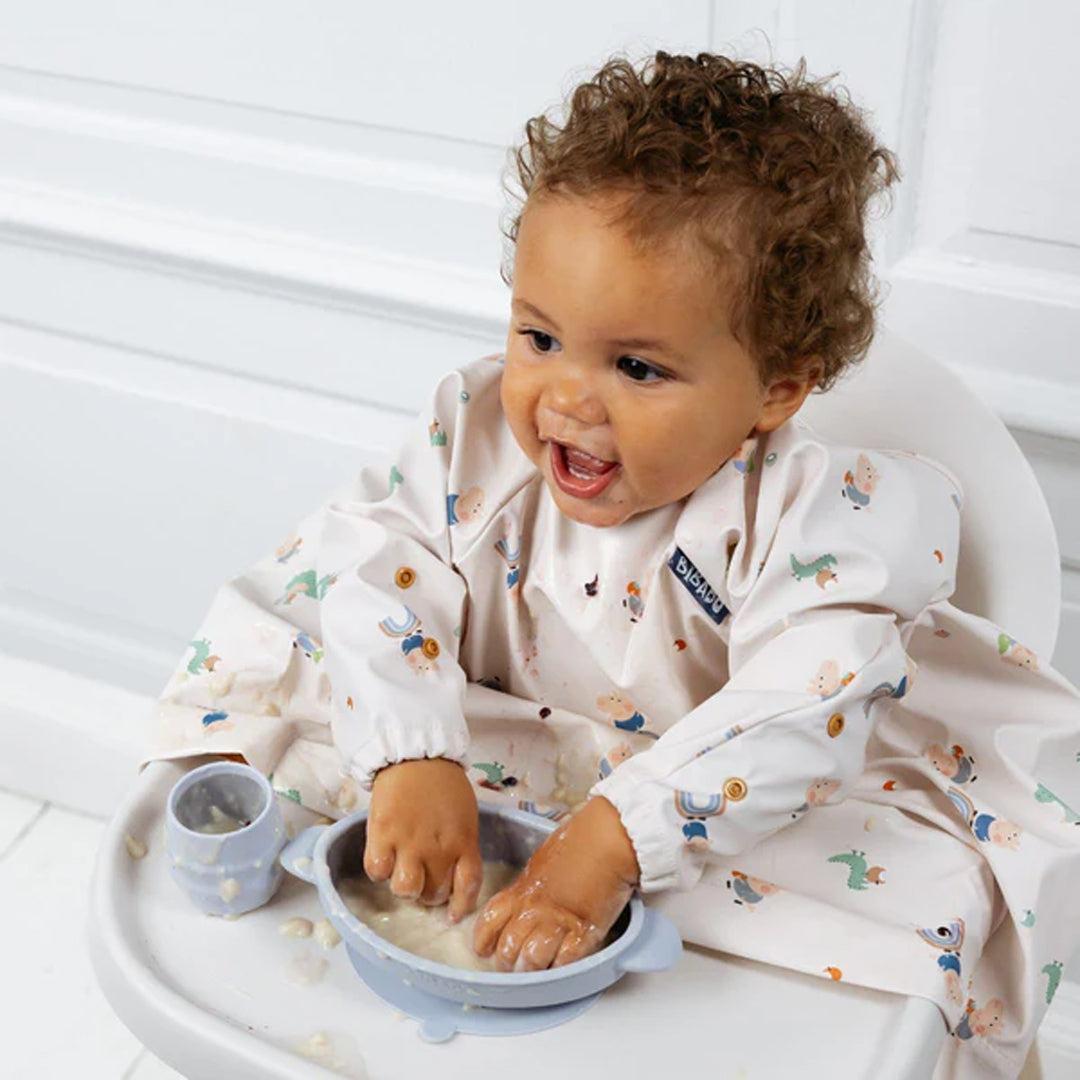
Weaning is messy, even when it is going well. That is not a sign you are doing it wrong. It is part of how babies explore food, texture and independence.
A few different bib styles can be genuinely useful. Soft dribble bibs are not enough on their own once solids begin. For early weaning, most parents do best with wipe-clean bibs that cover the chest and lap, and often catch dropped food too. Long-sleeved bibs are especially handy if your baby is enthusiastic with porridge, yoghurt or anything orange.
A splash mat under the highchair is another practical addition, particularly if you have wood floors, rugs nearby or simply want to make the end-of-meal clean-up quicker.
It is not absolutely essential, but for many families it becomes one of those items they would rather not be without.
Spoons, bowls and plates for first tastes
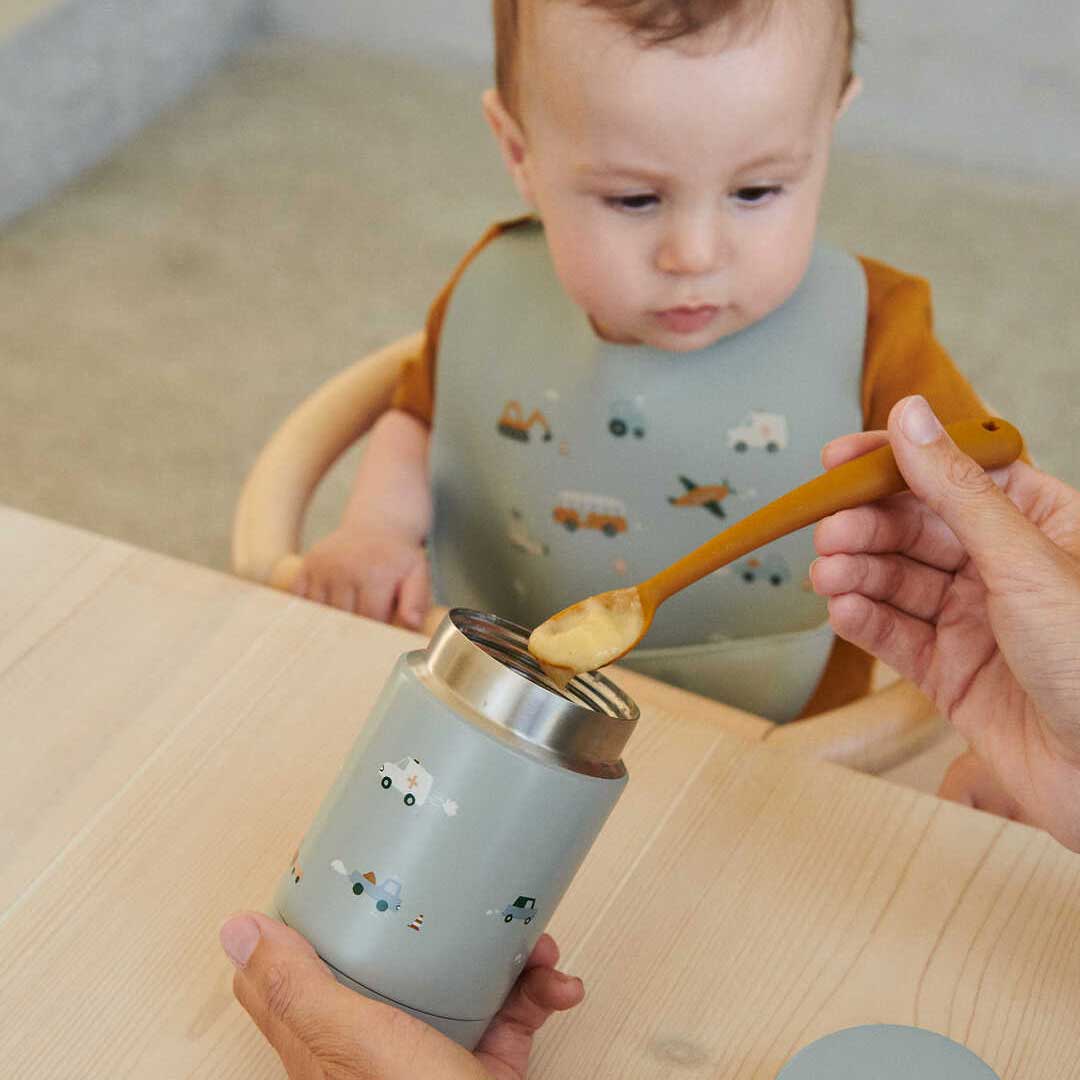
When you are deciding what do you need for weaning, feeding accessories are where it is easiest to overcomplicate things. You do not need a cupboard full of specialist kit. A small set of baby spoons and a couple of bowls or plates is plenty to start. Soft-tipped spoons are gentler on little gums and easier for babies who are just getting used to food from a spoon.
If you are combining spoon-feeding with baby-led weaning, you may also want to offer pre-loaded spoons so your baby can practise bringing them to their mouth independently. Bowls with suction bases can help, although not every suction bowl defeats a determined baby.
Plates with sections can be useful later if you like to serve different foods separately, but in the earliest weeks a simple bowl or small plate is usually enough. Silicone is a popular choice because it is durable, lightweight and generally easy to clean.
Cups matter earlier than many parents expect
Alongside meals, your baby can begin learning to drink small sips of water from around six months. That means a weaning cup is worth having from the start. There is no single best option for every baby.
Open cups are often recommended because they support natural drinking skills, but they can be messy in the early stages. Straw cups can work very well too, especially for babies who take to them quickly.
Some families start with both and see what suits their child.
Sippy cups are widely used, but they are not always the most helpful choice long term if your goal is to move towards open or straw drinking. It is one of those areas where convenience and developmental preference can pull in different directions.
A cup your baby can actually use with confidence is usually the right place to begin.
What you need for weaning if you are making food at home
Not every family makes separate baby food, and you certainly do not have to. Many parents simply adapt parts of the family meal, which can be easier and more economical. Still, a few prep tools can make life simpler if you are offering purees, mashed foods or batch-cooked portions.
A blender or food processor can help if you want smoother textures at the start, though a fork and a bit of patience often do the job for softer foods like avocado, banana or sweet potato.
Small food storage pots are useful for fridge portions or freezing ahead. If you like to stay organised, labels or stackable containers can make batch prep much less chaotic. This is also where materials and longevity may matter to you.
Reusable storage, durable tableware and better-made feeding accessories can fit more naturally into a home where sustainability is part of how you shop.
Choosing fewer, longer-lasting items often feels more manageable than buying a large starter set you only half use.
Baby-led weaning changes the kit slightly
If you are planning to follow baby-led weaning, your essentials list shifts a little. You may rely less on bowls and spoons in the earliest days, and more on easy-grip finger foods, a supportive highchair setup and bibs with serious coverage.
The key thing here is confidence in the seating and mealtime environment. Your baby should be upright, well-supported and supervised throughout. Soft finger foods cut appropriately for their age can then be offered straight on the tray or plate.
Some parents love this approach because it fits naturally around shared family meals. Others prefer the reassurance of spoon-feeding first and moving gradually into self-feeding. Most families land somewhere in the middle.

The nice-to-haves that can help
Once the basics are covered, a few extras can make weaning feel smoother. A second set of bibs for nursery bags or grandparents' houses is often useful. Spare spoons mean less washing up between meals.
A travel bib or snack pot can be handy once you are out and about more often. You may also find that a divided plate, a small insulated food pot or an additional cup becomes helpful as your baby eats more variety.
These are not day-one essentials, but they can be worth adding as your routine develops. The best weaning setup is rarely built all at once. It evolves with your baby.
What do you need for weaning without overbuying?
A simple checklist is often enough: one highchair, a few wipe-clean bibs, two or three baby spoons, a bowl or plate, one cup, and some storage pots if you want to prep food in advance. That covers most families perfectly well in the beginning.
If you are buying for longevity, focus on pieces that are easy to clean, well made and designed to grow with your child where possible. If style matters in your home, that is valid too.
Weaning gear sits in the heart of family life for months, often longer, so it makes sense to choose pieces that feel good to use and look at every day.
For parents who want premium, practical options with a thoughtful edit of feeding essentials, Natural Baby Shower offers a curated range that makes it easier to build a setup without the usual guesswork.
Weaning does not need a perfect plan or a kitchen full of gadgets. What helps most is a calm, safe space to eat, a few reliable essentials and enough flexibility to adjust as your baby finds their rhythm with food.


