


Sustainable Nursery Shopping Guide for Parents
Sustainable Nursery Shopping Guide for Parents
You do not need a nursery filled in one weekend to feel ready for baby. The smartest sustainable nursery shopping guide starts by resisting the pressure to buy everything at once, then choosing the pieces that genuinely support sleep, feeding, changing and everyday life at home.
For many parents, sustainability is not about chasing perfection. It is about buying well, avoiding short-lived purchases and creating a calm, practical space with products that last beyond the newborn stage.
That usually means fewer impulse buys, more thoughtful materials and a sharper eye on what your family will actually use.
What a sustainable nursery shopping guide should help you do
A good nursery plan should reduce decision fatigue, not add to it. Sustainability matters, but so do safety, comfort, ease of use and how a product fits your home. The best choices often sit where those priorities overlap.
That is why a sustainable approach is rarely about buying the cheapest option or the most expensive one. It is about value over time. A well-made cot that converts for later stages, a dresser that works as a changing station, or storage that still looks at home once nappies are gone can be a better choice than trend-led pieces with a very short lifespan.
It also helps to remember that sustainability looks different across categories. In furniture, longevity tends to matter most. In mattresses and sleep accessories, you may prioritise certified materials and care guidance. In textiles, washability, durability and fibre choice all come into play.
Start with the nursery essentials, not the extras
If you are building a nursery from scratch, begin with the core items you are most likely to use daily. For most families, that means a sleep space, a mattress, fitted sheets, changing essentials, storage and some form of lighting for night feeds and nappy changes. This is where overbuying often happens.
Beautiful accessories are tempting, but they are not always the pieces that make the biggest difference. Before adding decorative extras, focus on whether the room works at 2am. Can you reach muslins easily? Is there enough storage to keep clutter down? Will the furniture still be useful in a year or two? This practical lens tends to lead to more sustainable decisions because it favours products with real staying power.
Choose furniture that can grow with your family
Nursery furniture is one of the biggest opportunities to shop more sustainably. Larger pieces use more materials, cost more to replace and often shape the whole room, so longevity matters.
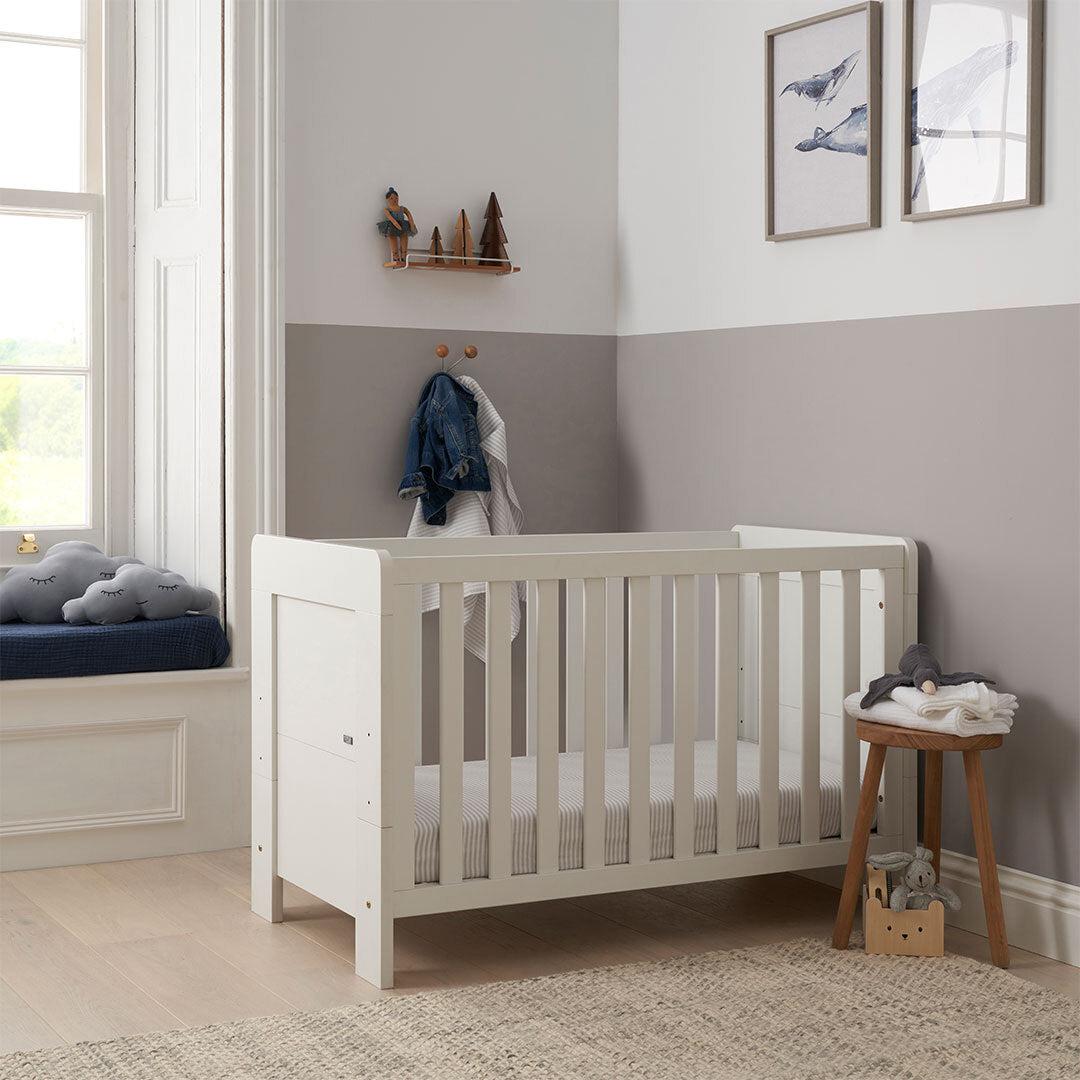
Convertible cots are worth considering if you want to extend use beyond babyhood. Some transition into toddler beds, which can make them a more considered buy than a model designed for a very short window. The same thinking applies to changing units. A dresser with a removable changer top can carry on long after the nappy stage, rather than becoming redundant.
Materials matter too, but context matters just as much. Solid wood can be a strong choice for durability, yet engineered materials may still have a place if the design is well made and built to last.
Look at construction, finishes and whether spare parts are available. Flat-pack is not automatically unsustainable, and premium is not automatically responsible. The better question is whether the piece will still be useful and sturdy in a few years.

The sustainable nursery shopping guide to sleep spaces
Sleep is one category where parents understandably want clarity. Start with the basics: choose a sleep space that meets current safety standards, then look at longevity, materials and practical care.
A cot or crib may suit different stages, so think about timing. If you want a bedside crib for the earliest months, you may still need a cot soon after. Some families are happy with that two-step route because it suits their feeding and sleep setup. Others prefer to buy once where possible.
Neither approach is more virtuous - it depends on your space, routine and budget. For mattresses, focus on safety first, then consider breathable constructions, removable washable covers and quality materials that hold their shape well.
A mattress that performs properly for the full intended lifespan is usually a better investment than one that needs replacing early. Washable protectors and a small rotation of fitted sheets can also reduce wear and make everyday care more manageable.
Be thoughtful with textiles and soft furnishings
Nursery textiles are where style and sustainability can work beautifully together, but they are also easy to over-order. It is worth pausing before buying multiple blankets, cushions and decorative extras that may spend more time folded away than in use. Instead, focus on a smaller edit of well-made essentials.
Organic cotton or other responsibly sourced fibres can be appealing, especially for items against baby’s skin, but softness is only part of the picture. You also want pieces that wash well, keep their shape and still feel good after frequent use. This is also a good area to think seasonally.
A lightweight layer, a warmer option and a couple of practical spares will often do more for everyday life than a drawer packed with rarely used pieces. The nursery feels calmer, and your shopping is more intentional.

Consider pre-loved where it makes sense
A modern sustainable nursery shopping guide should absolutely make room for pre-loved options. Nursery furniture, storage and certain accessories can be excellent second-hand buys, particularly when quality construction means the product has plenty of life left. That said, some categories deserve extra caution.
Mattresses are usually best bought new unless you can be fully confident about condition, storage and hygiene. Safety-led products should always be checked carefully, and if anything shows signs of wear that could affect performance, it is best left behind. Pre-loved shopping works best when you are selective rather than purely bargain-led.
Look for timeless pieces, good brand quality and designs that can sit easily with the rest of your home. Curated pre-loved edits can be especially helpful because they reduce the amount of searching and second-guessing.
Shop Pre-Loved at Natural Baby Shower for all your sustainable nursery needs
Avoid the common traps that create waste
Not all nursery waste comes from obviously poor-quality products. Often it comes from buying too early, duplicating items or choosing something because it photographs well rather than fits real life. One common trap is shopping in categories before you know your routine.
Feeding chairs, organisers and decorative storage all sound useful, but their value depends on your space and habits. Another is buying themed pieces that date quickly or do not adapt as your child grows.
There is also the issue of bundles. They can offer genuine value when the products work together and meet a clear need. But if a bundle includes items you would not have chosen on their own, it is not necessarily the more sustainable option. Curated does not have to mean excessive.
Shop by use, not just by room
The most useful nursery planning tends to follow how you live, not just how the room looks. That means thinking in zones or tasks. Where will you change baby most often? Where will clean clothes live? What needs to be within arm’s reach during the night? This approach helps avoid lovely but impractical purchases.
A sleek storage basket is only a good buy if it fits where you need it and holds what you actually use. A nursing chair is more worthwhile if it supports regular feeds and later story time, rather than becoming an expensive corner feature. For time-poor parents, this is often the most effective way to cut waste.
When you shop by use case, you are less likely to buy duplicates and more likely to choose products that earn their place.

A curated approach usually beats a maximal one
A premium nursery does not need to feel overdone. In fact, the most considered spaces often use fewer, better pieces and let materials, texture and functionality do the work. That might mean a beautifully made cot, a dresser with real staying power, soft neutral textiles that layer easily and a few carefully chosen accessories.
It can still feel design-led and warm, but with less visual clutter and less buying for the sake of it. If you are shopping across multiple categories, using one trusted retailer can also make the process easier.
A curated range with strong brand selection, clear category guidance and options across essentials, offers and pre-loved can help you build a nursery that feels cohesive without spending weeks piecing it together. Natural Baby Shower is one example of that more edited, values-led approach.
How to know you are buying well
Usually, the right nursery product answers three questions clearly. Is it safe and practical for everyday use? Will it last for the stage you need it to cover, ideally longer? And does it suit your home enough that you will want to keep using it? If the answer is yes to all three, you are likely on the right track.
If not, it may be worth pausing, even if the product is trending or currently on offer. Sustainability in the nursery is less about saying no to everything and more about saying yes to the right things, at the right time.
A beautifully considered nursery is not the one with the longest shopping list. It is the one that feels calm, useful and ready to support your family from the very first day home.


