


How to Choose a Pushchair That Fits Your Lifestyle
How to Choose a Pushchair That Fits Your Lifestyle
The wrong pushchair usually reveals itself at the worst possible moment - halfway through a rainy nursery run, on a tight café doorway, or when it will not fit in the boot with the weekly shop.
If you are wondering how to choose a pushchair, the best place to start is not with colour or brand, but with the shape of your everyday life. A beautifully designed pushchair can still be the wrong one if it does not suit your routine. Equally, the most practical model on paper may feel too bulky, too heavy or simply not right for the way you like to move through the day.
The sweet spot is a pushchair that feels considered, comfortable and easy to live with from newborn days through the toddler years.
How to choose a pushchair for your lifestyle
Before comparing features, think about where your pushchair will spend most of its time. A family walking city pavements, popping into shops and lifting the chassis onto trains needs something quite different from parents tackling muddy paths, gravel car parks and countryside walks.
If you mostly use the car, boot space matters just as much as handling. A generous seat and large basket can be brilliant, but not if folding it feels like a workout every time you leave the house. If you live in a flat, weight and folded size become even more important, especially if stairs are involved. And if your pushchair will be used daily by more than one caregiver, an adjustable handlebar and intuitive fold can make a real difference.
This is often where decision fatigue starts, because many models promise to do everything. In reality, there is usually a trade-off.
Lightweight pushchairs can be easier to lift and store, but may feel less planted on rough ground. Larger all-terrain designs can be wonderfully smooth to push, but take up more room at home and in the car. Choosing well means deciding which compromises you are happiest to make.
Start with age and longevity
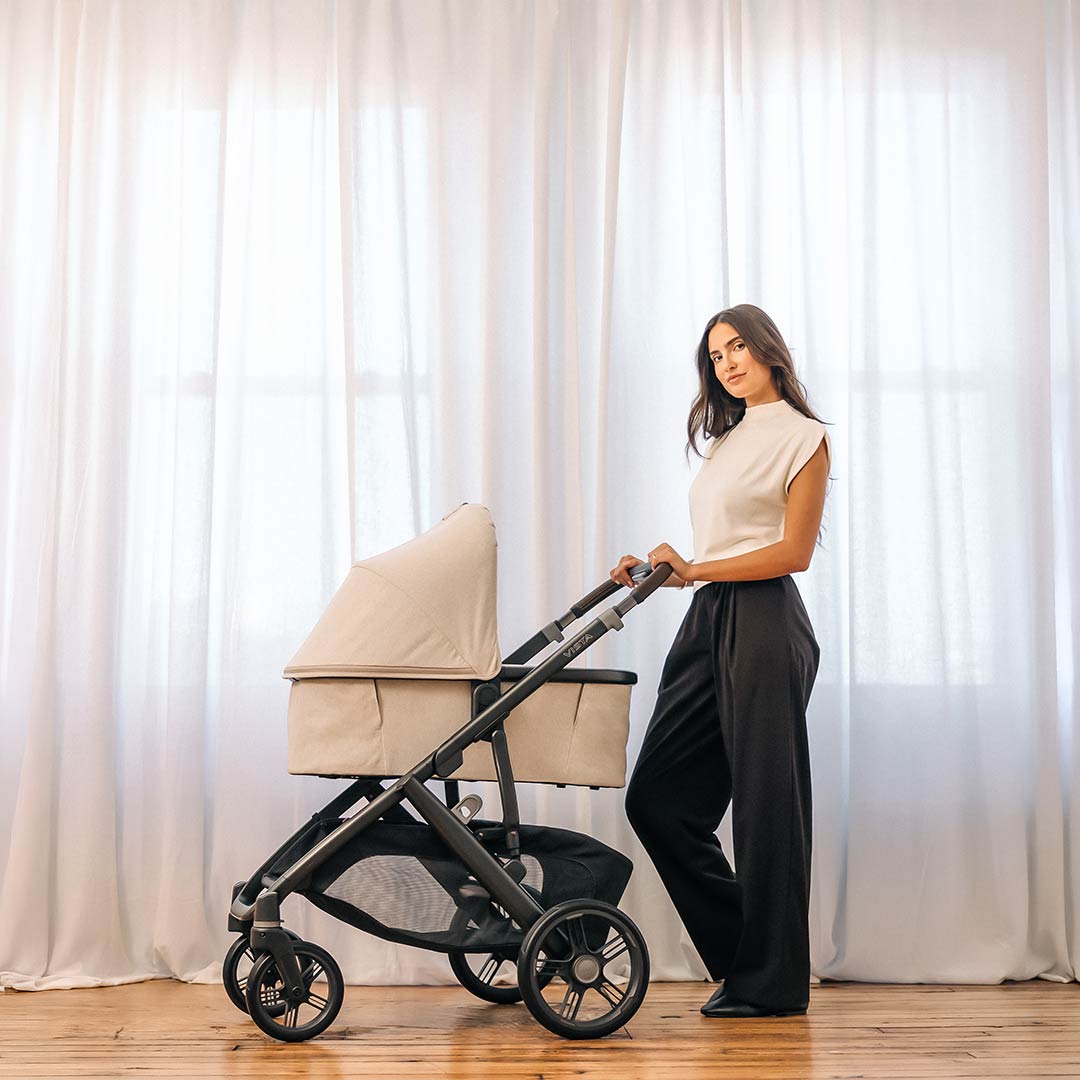
Some parents want one pushchair that works from day one and lasts for years. Others are happy to begin with a full-size model for newborn comfort, then move to a more compact pushchair later. Neither approach is wrong. For a newborn, lie-flat seating or compatibility with a carrycot is key.
Very young babies need proper support, so this is not an area to rush. A carrycot can feel especially useful if you plan long walks or want a more cocooning, sleep-friendly space in the early months. As your child grows, seat comfort, legroom and harness adjustment become more relevant. A pushchair that looks compact in the showroom can feel surprisingly small with a tall toddler in it.
Check the seat back height, calf support and hood coverage rather than relying on age labels alone. If you are planning for more than one child, it is worth thinking ahead. Some pushchairs convert into tandem or sibling options, while others stay as a single only. Even if that second seat is not needed now, future flexibility can make a higher initial spend feel more considered.
The features that matter most
When parents ask how to choose a pushchair, they are often shown a long list of technical features. The trick is knowing which ones genuinely affect daily use. Wheels make a huge difference. Small wheels tend to suit smooth surfaces and compact designs, while larger wheels offer better suspension and easier movement over kerbs, grass and uneven ground.
If your weekly routine includes park paths or older pavements, decent suspension is more than a nice extra. The fold is another big one. Some pushchairs fold neatly with one hand and stand on their own, which is ideal when you are holding a baby or juggling a changing bag.
Others are more substantial and require two steps, but reward you with a sturdier ride. Always think about how often you will need to fold it, and where it will live once folded. Storage is easy to underestimate until you start carrying muslins, snacks, spare layers, nappies and your own essentials. A roomy basket can save you from constantly hanging bags on the handlebar, which can affect balance and manoeuvrability. Then there is the seat itself. Reversible seats are popular because they allow your baby to face you early on, then switch to world-facing later.
For some families, that flexibility is non-negotiable. For others, a fixed-seat pushchair is perfectly fine if the overall design is lighter and simpler.
Test it in real life, not showroom life
A pushchair can feel excellent on a polished shop floor and very different on a busy pavement. If possible, try steering it one-handed, lifting it, folding it and checking basket access with the seat reclined. These are the small frustrations that build up over months. It also helps to be honest about your own height and stride.
Some pushchairs are wonderfully compact but awkward for taller parents, while others feel wide to navigate in tighter spaces. What feels smooth for one person may feel cumbersome for another. If you drive, measure your boot before you buy. This sounds obvious, but it is one of the most common sticking points.
Remember to factor in anything else you regularly carry, from shopping bags to a dog crate.
Travel systems and day-to-day convenience
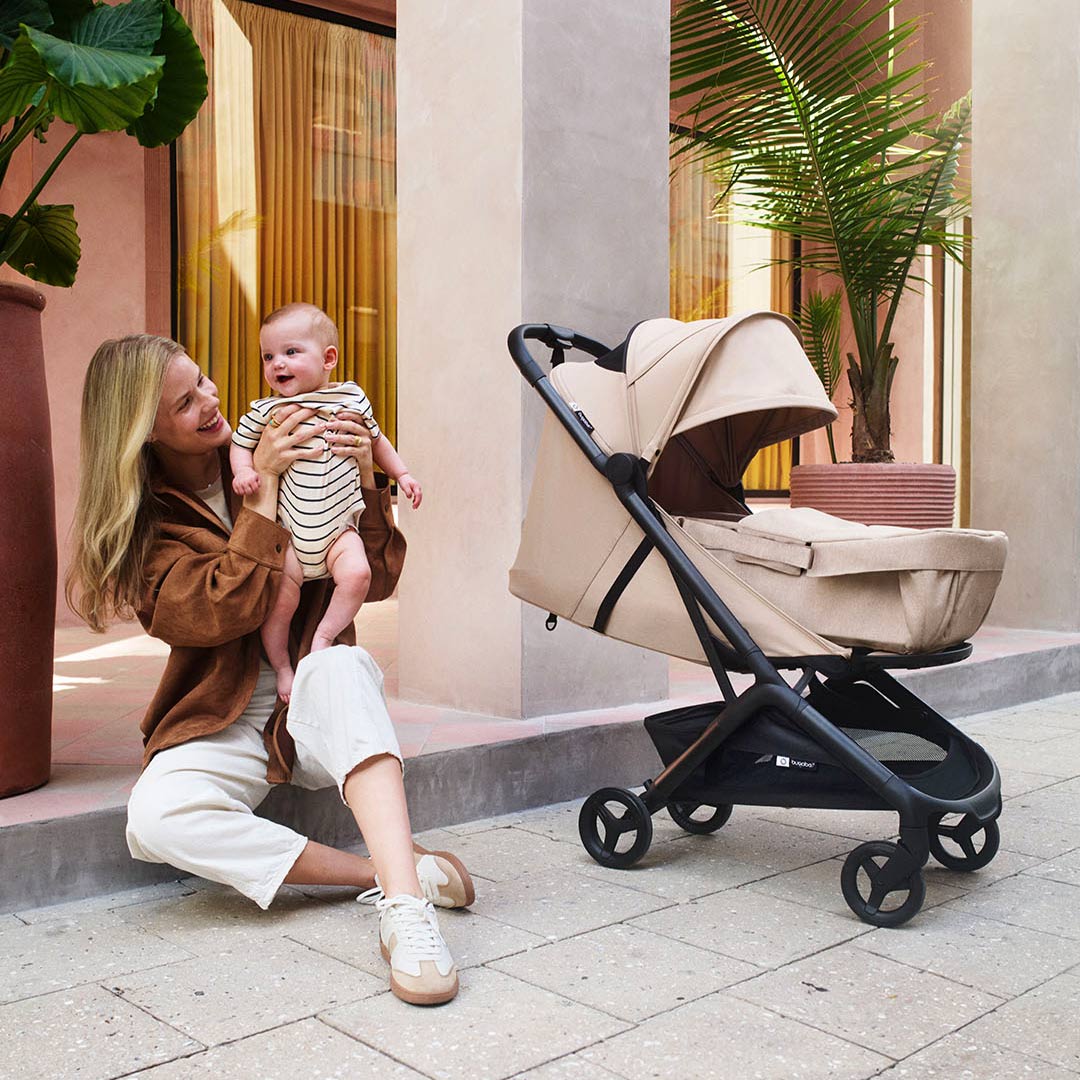
For many new parents, a travel system is the easiest route into the category. Being able to move a sleeping baby from car to chassis can be very useful for short trips, nursery drop-offs and errands.
That said, convenience depends on how you actually travel. If most outings involve long walks, a carrycot or lie-flat seat may be more useful than relying heavily on a car seat attachment. Car seats are designed for travel safety first, not extended strolling.
So while travel system compatibility is a strong feature, it should not be the only reason you choose a model. This is where curated shopping can really help. Looking at the pushchair as part of a bigger travel setup, rather than as a standalone purchase, often makes the right choice clearer.
Style, materials and sustainability
A pushchair is a practical purchase, but it is also one of the most visible baby items you will use. It is reasonable to want one that suits your personal style and feels good to use every day.
Fabric quality, finishing and handle materials all contribute to that premium feel, but they also affect longevity. Hard-wearing textiles, washable seat liners and durable frames usually pay off over time. If you plan to use the pushchair for more than one child, or pass it on later, these details matter even more.
For families shopping more consciously, consider the materials and build quality behind the design. Responsibly sourced fabrics, recyclable elements and longer-lasting construction can all support a more sustainable purchase.
Sometimes the most sustainable option is not the cheapest upfront, but the one that lasts well, adapts with your family and holds its condition. Pre-loved and refurbished options can also be worth exploring if available through a trusted retailer. They can be a thoughtful way to access premium design with a lighter environmental footprint.

Budgeting without buying twice
Pushchair prices vary widely, and the most expensive option is not automatically the best fit. A more useful question is whether the pushchair earns its place in your day-to-day life. If you need an all-rounder from newborn to toddler, use it daily and want strong materials and smooth handling, investing a little more can make sense. If you need something primarily for holidays, occasional grandparents' trips or quick errands, a simpler model may be all you need. Try to budget for the whole setup, not just the chassis. Depending on the model, you may also need adapters, a carrycot, footmuff, rain cover or car seat compatibility pieces. What looks like a lower starting price can quickly shift once those extras are added.
Questions worth asking before you decide
Rather than focusing on trends alone, ask yourself a few practical questions.
Where will you use it most? Can you lift it comfortably? Does it fit your boot and your hallway? Will your baby have enough room as they grow? And does the design feel like something you will still enjoy using in a year, not just in the newborn haze?
If a pushchair ticks the style box but misses on fold, weight or comfort, it may become frustrating quickly. If it is endlessly practical but feels too bulky or clunky for your routine, you may end up replacing it sooner than planned. The best choice usually feels balanced. It supports your daily rhythm, works with your space, and gives your child comfort from the start.
At Natural Baby Shower, that is the kind of buying decision worth taking a little time over - because once the right pushchair clicks into place, everyday outings tend to feel that bit lighter.


