


Are Baby Nests Safe for Newborn Sleep?
Are Baby Nests Safe for Newborn Sleep?
You have finally found a baby nest or lounge pod that looks beautiful in the nursery, feels soft to the touch and promises a snug, cocooned space for your newborn. Then the obvious question lands - are baby nests safe? The short answer is: not for routine sleep, especially unsupervised sleep.
That is the part worth getting right from day one. Baby products can be difficult to decode because many are designed to look comforting before they prove they are practical. Baby nests are a good example.
They are often styled as cosy, portable and useful around the home, and many parents are drawn to them for exactly those reasons. But when you look at how babies sleep safest, the guidance becomes much clearer.
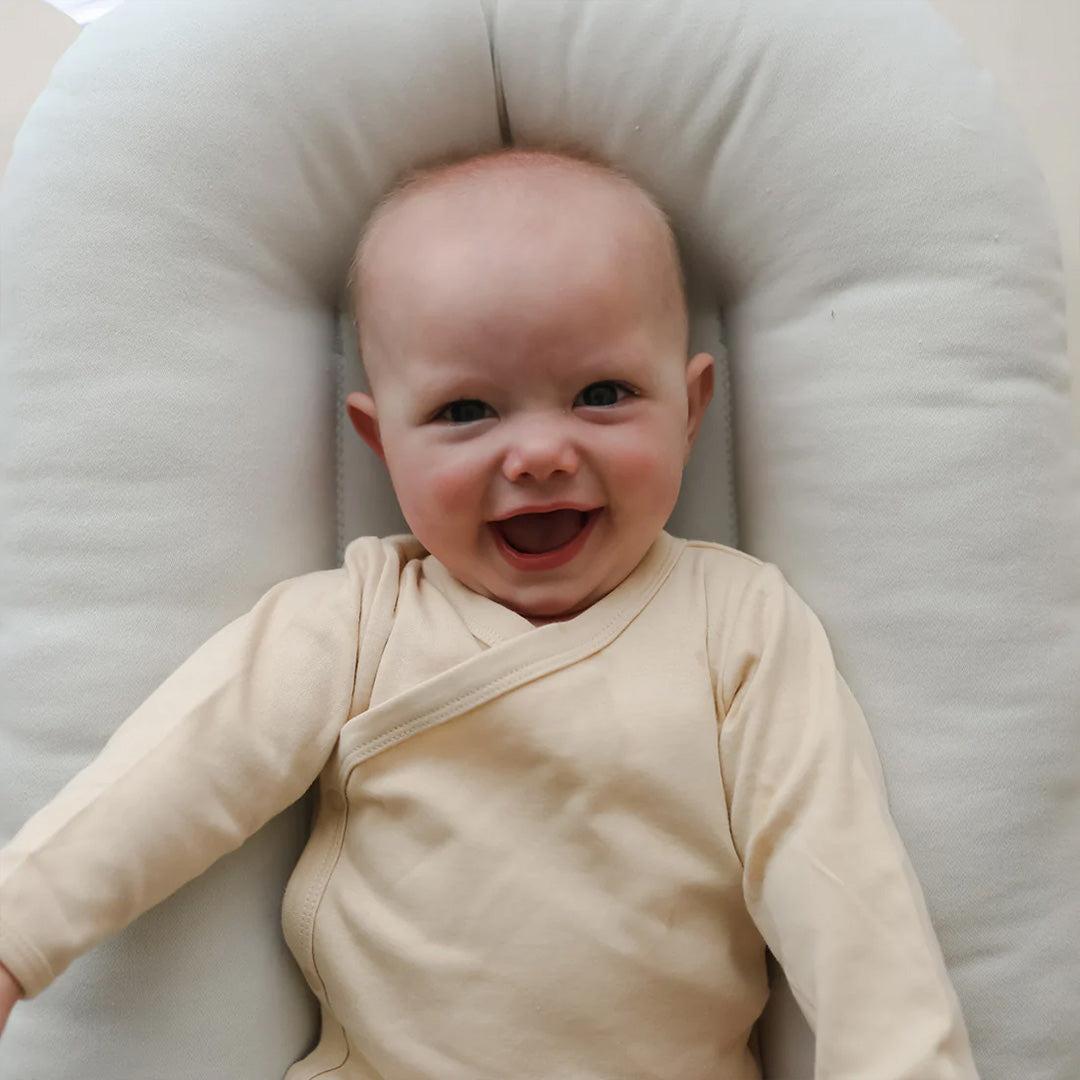
Are baby nests safe for sleep?
If you are asking whether baby nests are safe for overnight sleep, naps in a separate room or any unsupervised sleep, the safest answer is no.
A baby nest is not the same as a cot, crib or Moses basket with a firm, flat sleep surface.
The raised padded sides and cushioned design can create risks if a baby rolls, turns their face into the side, or shifts into a position where breathing becomes less clear. That matters most in the early weeks and months, when newborns have very limited head and neck control.
Even products that feel soft and secure to us can work against safe sleep guidance. Soft padding, sloped positions and enclosed edges are not considered the safest environment for a sleeping baby. This is where many parents understandably get caught out. A baby may fall asleep in a nest because they are warm, comfortable and close by.
But a baby falling asleep somewhere does not automatically make that space safe for sleep.
The NHS states that "Sleeping pods or nests are not advised as they have raised or cushioned areas." "Babies should not have anything soft around them, especially near their heads, as this can cause them to overheat and increases the risk of sudden infant death syndrome (SIDS)"
Read more - Baby safer sleep advice - Best Start in Life - NHS
Why baby nests appeal to parents
It is easy to see the appeal. Baby nests can feel like a helpful in-between product - more contained than a blanket on the floor, more portable than a Moses basket, and often more design-led than purely functional nursery essentials.
For parents moving around the house, they can seem like a simple way to keep baby nearby. There is also an emotional pull. Newborns often love that tucked-in feeling, and many parents are trying to recreate the snugness of the womb while settling into life at home.
In a modern nursery, baby nests are often presented as part of a beautifully curated newborn setup. None of that makes them inherently bad. It simply means their best use is narrower than the marketing can sometimes suggest.
When can a baby nest be used?
A baby nest may be suitable for short, supervised awake time, provided it is used exactly as intended by the manufacturer and placed on a stable, flat surface.
Some parents use them while sitting nearby during daytime moments, such as chatting to baby, reading, folding laundry or taking a few minutes to reset.
The key distinction is supervision and wakefulness. If your baby is awake and you are actively watching them, the risk profile is different from a sleep setting. Even then, you need to stay attentive.
If your baby looks drowsy or drifts off, it is better to move them to a safer sleep space. A baby nest should not be used on a bed, sofa or armchair, and it should never be carried with baby inside.
It is also not a substitute for a safe sleep product, however premium the finish or soft the fabrics may be.
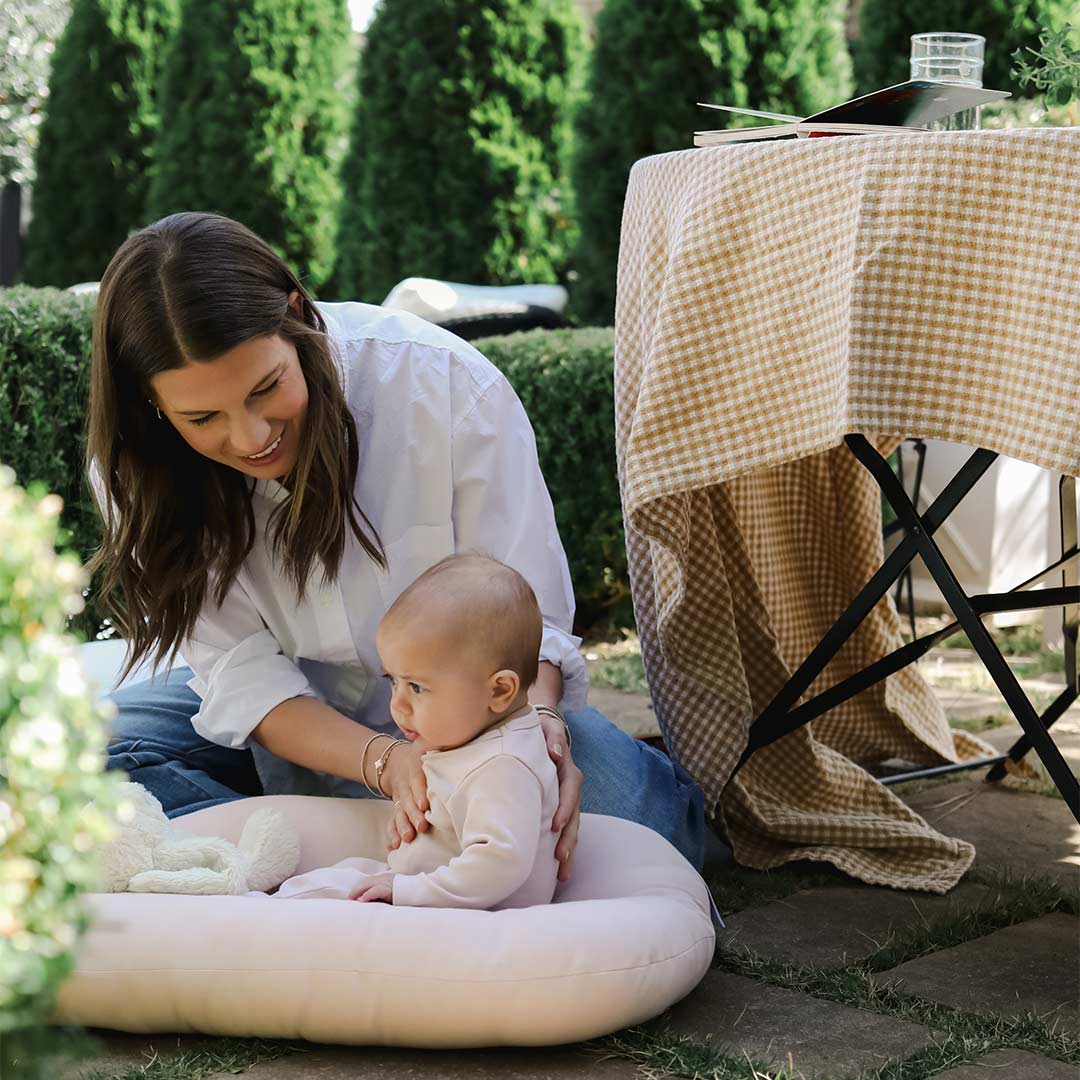
What makes baby nests risky?
The main issue is that safe sleep guidance prioritises a firm, flat, clear surface. Baby nests tend to introduce the opposite features - soft sides, padded surrounds and a more enclosed feel. Those features may look reassuring, but they can increase risk if a baby's face presses against the side or if their position changes unexpectedly.
There is also the problem of habit. If a baby regularly falls asleep in a nest during the day, it can become easy to stretch the rules when you are tired. One supervised nap turns into a quick shower, or a short rest becomes part of the evening routine.
That is often how accidental unsafe sleep setups happen - not through carelessness, but through exhaustion and convenience. For new parents especially, simple tends to be safer.
A clear cot or crib with a firm mattress may not have the same cosy aesthetic, but it is designed around the reality of infant sleep safety rather than the look of it.
Safer alternatives to a baby nest
If what you really want is a secure, practical place to put baby down, there are better options depending on the moment. For sleep, choose a cot, bedside crib, crib or Moses basket that meets current safety standards and has a firm, flat mattress.
Keep the sleep space clear, with no loose bedding, pillows, pods or padded accessories. For awake time during the day, a play mat or other flat floor-based setup can often be more useful than a nest. It gives your baby room to stretch and move, and it avoids the padded, enclosed edges that can be more problematic once they begin to wriggle and roll.
If you are trying to create a calming sleep environment, focus on the essentials that matter more: a well-fitted mattress, a breathable sleeping bag when age-appropriate, a comfortable room temperature and a consistent bedtime routine.
Those choices may feel less styled, but they are far more supportive in the long run.
Are all baby nests equally unsafe?
Parents often hope the answer depends on the brand, material or price point. In practice, the concern is usually about the category itself rather than whether one version is more luxurious than another.
Organic cotton covers, premium finishes and thoughtful design details can all be appealing, particularly for families who care about quality and sustainability, but they do not turn a nest into a safer sleep substitute.
That said, quality still matters in how a product performs for its intended use. If you choose to use a baby nest for supervised awake time, look carefully at construction, stability, care instructions and whether the product is honest about what it is for. Clear guidance is a good sign. Vague promises around sleep are not.
How to shop more confidently in the sleep category
Sleep is one of the easiest areas to overbuy for, especially when every product promises comfort. A more useful approach is to start with the non-negotiables. Your baby needs a safe sleep space first. Everything else is secondary.
That usually means investing in the essentials you will rely on daily - a cot or crib, a properly fitting mattress, fitted sheets and perhaps a baby monitor depending on your setup. Once those pieces are covered, you can think about extras for supervised daytime use.
For many families, this actually reduces decision fatigue. Instead of building a sleep setup around what looks cosy, you build it around what is designed to be safe and dependable. That tends to serve you better at 2am than any trend-led accessory.
A curated retailer such as Natural Baby Shower can be especially helpful here, because the real value is not simply having more choice. It is being able to shop by need, compare categories clearly and focus on products that fit into a safer, more practical newborn routine.
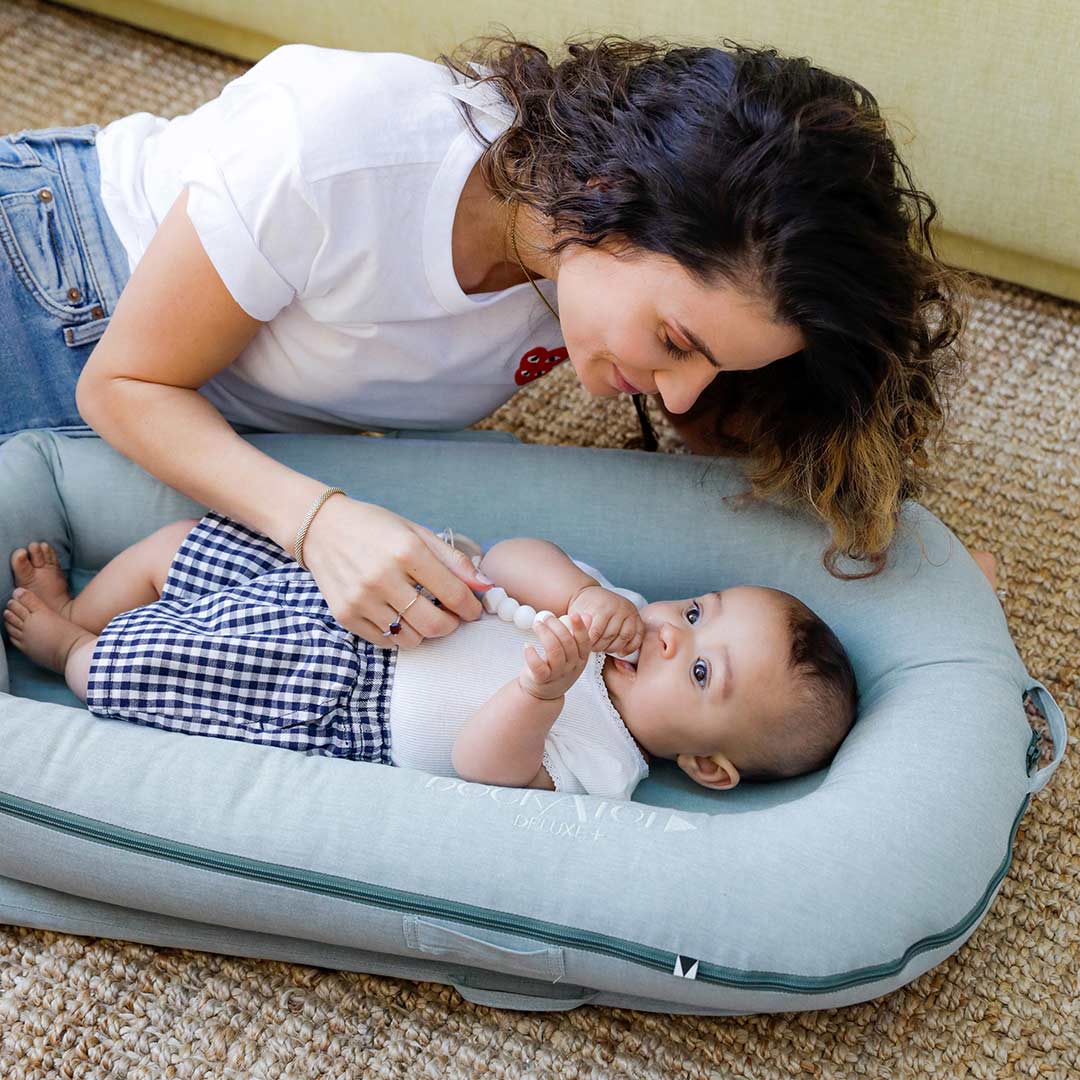
Common questions parents ask about baby nests
One of the most common questions is whether a baby nest is fine if used only in the daytime. The answer depends on whether your baby is awake and fully supervised.
As soon as sleep enters the picture, it is better to move them to a safe sleep space. Another question is whether a baby nest can go inside a cot or next to a parent in bed. Neither is a safe workaround.
Adding a nest to a cot introduces soft, padded edges into a sleep environment, and using one in an adult bed brings additional risks linked to adult bedding and sleep surfaces.
Parents also ask whether baby nests are safer for babies with reflux because they seem more supportive. In reality, babies should still sleep on a flat surface unless you have been given specific medical advice by a healthcare professional.
Trying to prop or position a baby with soft products can create new risks rather than solve the original issue.
The simplest answer is often the best one
If a product makes you ask more questions than it answers, pause before making it part of your daily routine.
Baby nests can have a place in the home for short, supervised awake moments, but they are not a safe sleep essential and should not replace a cot, crib or Moses basket.
When you are building your newborn setup, it is worth choosing products that make tired days feel simpler, not more ambiguous. Safe sleep can look plain compared with the softer, styled options filling your feed, but peace of mind is always the better finish.


