


Newborn Nursery Furniture Bundles: A Guide

The cot might be the piece you picture first, but it is often the changing routine at 2am that defines whether a nursery really works.
A thoughtful guide to nursery furniture bundles starts there: with the daily realities of sleep, nappy changes, laundry and the surprisingly fast accumulation of tiny clothes. The best bundle gives your room a calm, coordinated look while making those everyday moments easier.
For many expecting parents, a matching cot, dresser and wardrobe offers a simpler route through a big purchase. Yet a bundle is not automatically the right choice for every home.
Room size, storage needs, how long you plan to use each piece and your preferred approach to materials all matter.
What comes in a nursery furniture bundle?
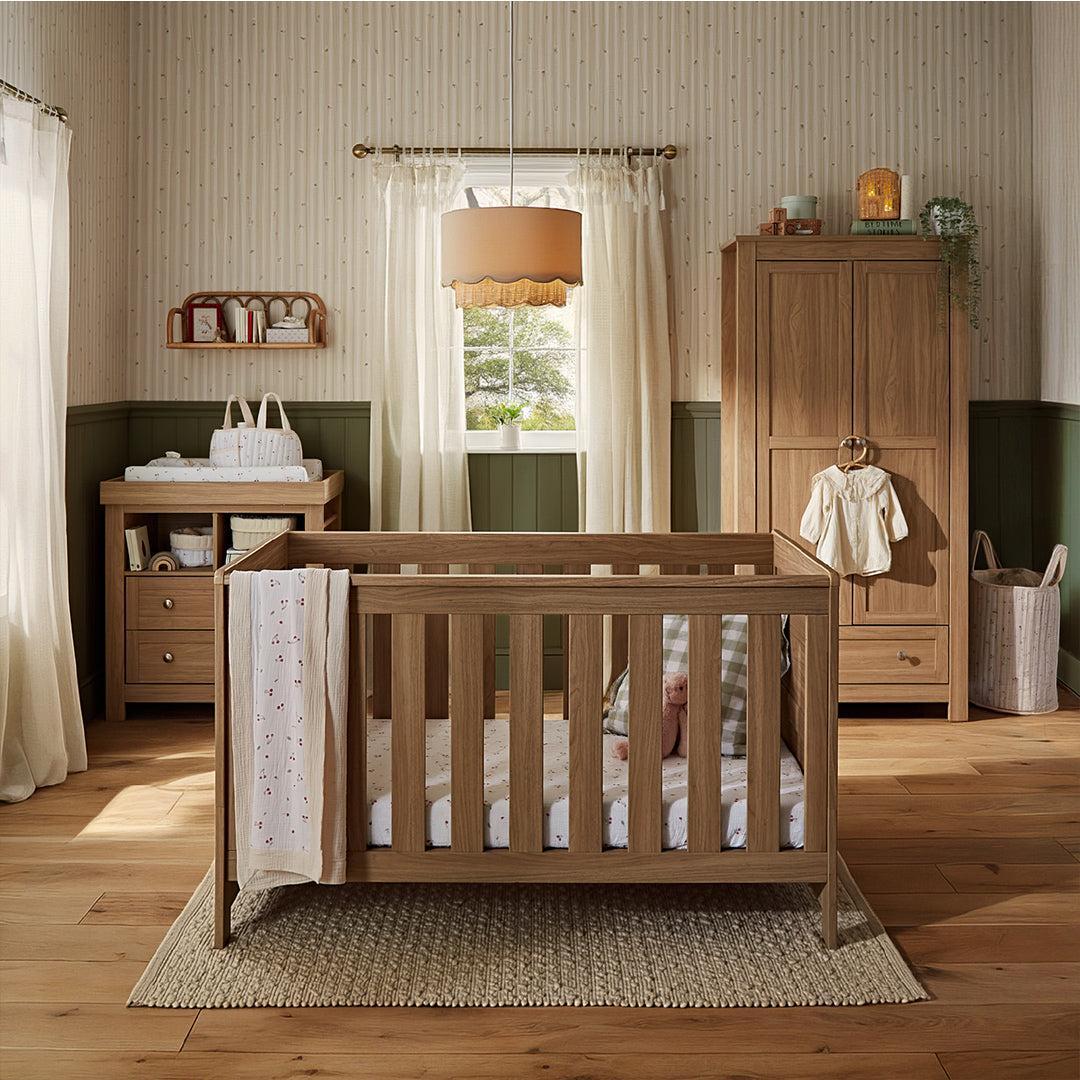
Most nursery furniture bundles pair a cot bed with a dresser or changing unit, often adding a wardrobe for a complete three-piece set. The appeal is clear: the furniture is designed to sit together, with matching finishes, proportions and handles, so you do not need to spend weeks trying to make separate pieces feel cohesive.
A cot bed is usually designed to see your child beyond the newborn stage, converting into a toddler bed when the time is right.
A dresser with a removable changing top can then continue as useful bedroom storage once nappy changes are behind you.
A wardrobe provides hanging space for sleepsuits, knitwear and occasion outfits, but it takes up the most floor area, so it is the piece worth questioning in a smaller nursery.
The mattress is commonly sold separately. This is a positive, not an inconvenience: it lets you choose the firmness, depth and materials that suit your preferences, while making sure the mattress is made for the precise cot-bed dimensions. Always check the manufacturer guidance for compatibility and safe use before buying.
How to choose a nursery furniture bundle that fits your home
Start with a tape measure, not a moodboard. Measure the room at its narrowest points, note where doors and drawers open, and leave a comfortable route from the cot to the door.
A beautiful full bundle can feel cramped if a wardrobe blocks natural light or a changing-unit drawer cannot open fully. Think about where you will actually change your baby.
Some parents prefer a dedicated changing surface in the nursery; others use a changing mat in their bedroom downstairs during the first weeks. If the changing unit will be used several times a day, consider its height and drawer layout. Deep drawers are particularly helpful for nappies, wipes, muslins and spare bedding, while an open shelf can keep frequently used essentials close by.
Storage deserves an honest assessment too. Newborn clothing is small, but it is not minimal. You may need room for multiple sizes, towels, sleeping bags, blankets and a growing supply of baby care essentials.
A two-piece cot and dresser set can be a smarter choice where built-in wardrobes already exist. In a box room, choosing fewer, harder-working pieces often creates a more peaceful space than filling every corner.
Cot bed or standard cot?
A cot bed can offer excellent longevity, converting for toddler use and reducing the need to buy another bed so soon. It is a considered option if you are creating a nursery intended to evolve over several years.
The trade-off is footprint: cot beds are generally larger than standard cots, which may make a compact room feel tight. A standard cot can be ideal if space is limited or if you expect to move house before your child needs a toddler bed.
There is no single best answer. Choose the size that allows safe, comfortable access around the furniture and suits how you expect your family life to change.
Look beyond the matching finish
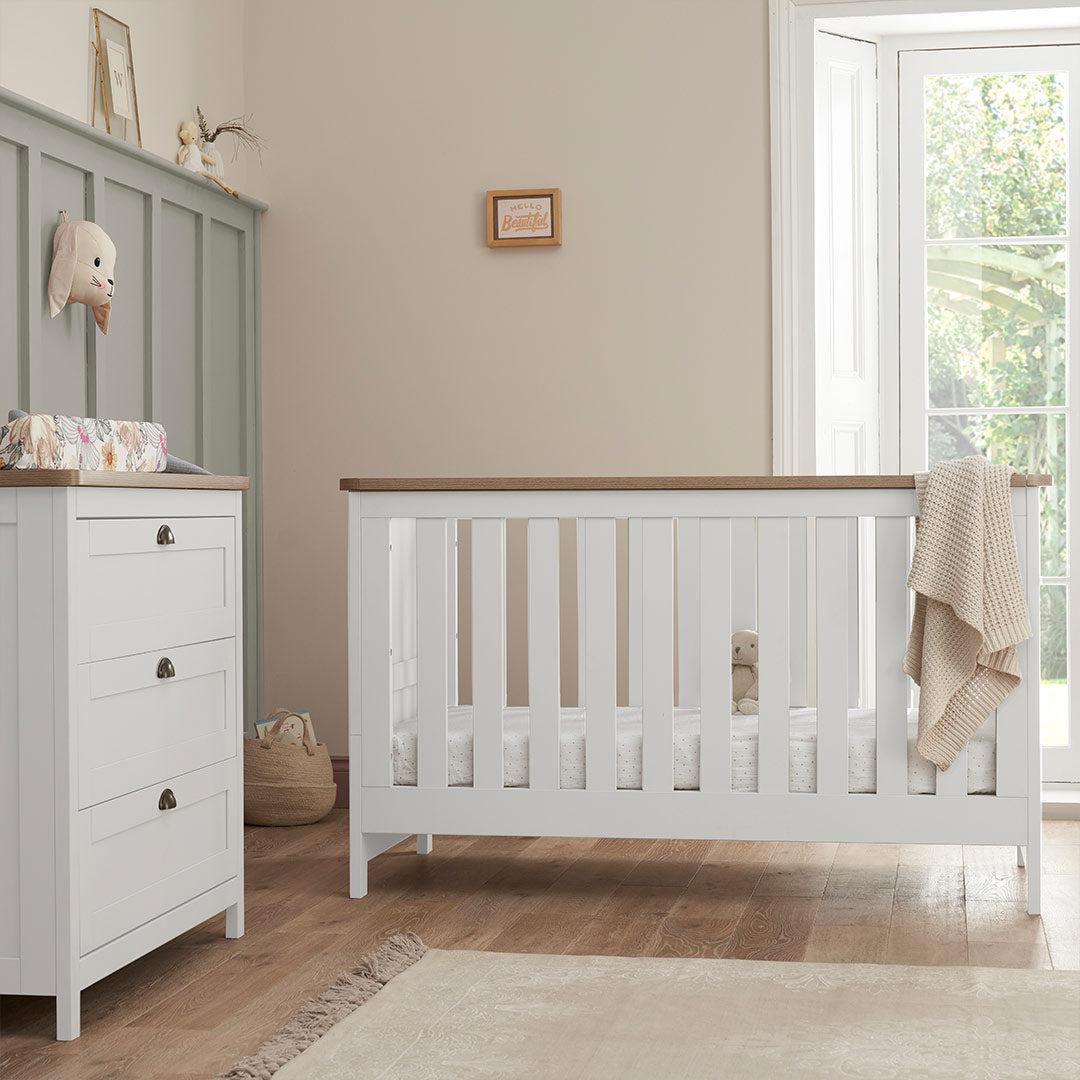
A coordinated nursery can still be individual. Warm wood tones bring a softer, nature-led feel, while pale neutrals keep a small room light and adaptable. Painted finishes can make a stronger style statement, particularly when paired with natural textiles, woven storage and gentle lighting.
The most versatile choice is often one you will still enjoy once the nursery becomes a toddler’s room. Materials matter as much as appearance. Look for clearly stated product information, durable construction and finishes suited to a family home. Furniture designed to last through more than one child, or to take on a new role elsewhere in the house, can be a more considered investment.
A dresser that later stores clothes in a child’s room, for example, has a longer life than a changing unit that only serves one short phase. For parents making sustainability-led choices, longevity is one of the most practical places to start. Buying fewer pieces that work well for longer can reduce unnecessary replacement.
You might also consider pre-loved furniture where appropriate, checking its condition carefully and following current safety guidance. For sleep, use a new mattress that fits correctly and meets the relevant manufacturer recommendations.
Safety checks to make before you order
Furniture should support a safe sleep and changing set-up, not complicate it. Read the product dimensions rather than relying on photos, and check the recommended mattress size for the cot or cot bed. A mattress should fit snugly, without gaps around the edges.
Once the furniture arrives, follow the assembly instructions exactly and secure tall or heavy pieces to the wall using the recommended fixings. This is especially important for wardrobes and drawers, which can become tempting climbing opportunities sooner than you might expect.
Keep the cot away from windows, blind cords, radiators, shelves and anything your baby could reach as they grow.
For changing units, keep your changing essentials within reach before you begin, but never leave your baby unattended on the changing surface. It also helps to plan drawer contents so you are not turning away to search for a clean vest mid-change.
Is a bundle better value than buying separately?
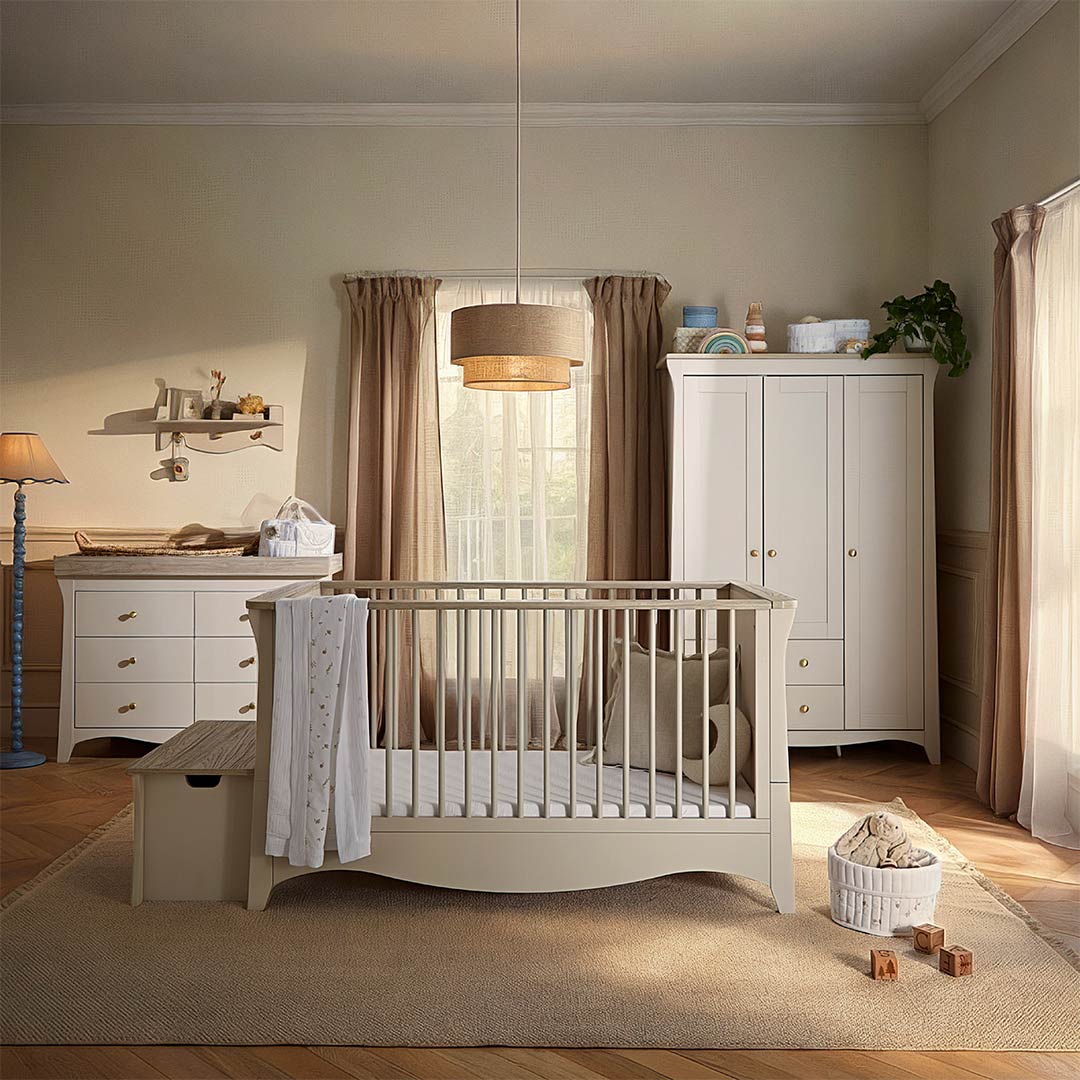
Often, yes, particularly when you know you want every piece included. A nursery furniture bundle can offer better value than purchasing the cot bed, dresser and wardrobe individually, while removing the uncertainty of whether finishes will match. It can also make planning easier when friends and family are asking what is still needed ahead of your baby shower.
But value is not just the headline saving. A smaller bundle that fits your room and gets used every day is better value than a larger set with an unused wardrobe. Before committing, write down what you already own, what storage the room provides and what your first six months are likely to look like.
If your baby will sleep in your room initially, you may have more time to choose a full nursery setup, rather than buying quickly for a room you have not properly planned. It is also worth checking delivery access. Measure stairways, tight hallways and door frames, especially in period properties or flats.
Large furniture is an investment, and a little practical planning helps ensure it reaches the room where it belongs.
A simple way to plan your bundle
Choose the cot or cot bed first, as it sets the room’s scale and determines the mattress you need. Next, decide whether a changing dresser is essential for your routine. Finally, add a wardrobe only if it solves a genuine storage gap.
This approach keeps the focus on function while still leaving space to choose a finish you love. The aim is not to create a picture-perfect room overnight, but to build a space that supports the quiet, ordinary moments you will share there.
Choose furniture that makes room for real life: the laundry basket by the dresser, the extra muslins in the drawer and the bedtime stories that eventually replace the changing mat. A well-chosen bundle should feel just as considered then as it does on day one.


