




10 Best Baby Carrier Features

That first outing with a newborn can make even a quick walk feel like a major operation.
When the buggy feels too bulky, the car seat too heavy, and your baby only settles when held close, the best baby carriers for newborns start to make a lot of sense. A good newborn carrier does two jobs at once.
It keeps your baby snug, supported and close enough to feel secure, while giving you your hands back for everyday life.
But this is one of those baby categories where the right choice depends on more than looks alone. Your baby’s size, your recovery, the season, how often you plan to wear them, and whether both parents will use it all matter.
What makes the best baby carriers for newborns?
For the newborn stage, fit and support come first. Babies need a carrier that keeps their spine naturally curved, their legs in a healthy spread-squat position, and their head and neck properly supported.
That usually means choosing a carrier specifically designed for newborn use, rather than a larger style that only becomes comfortable once your baby is bigger. Softness matters too, but not in isolation. A carrier can feel beautifully padded and still be awkward to adjust or too bulky for a tiny baby.
The best options balance gentle fabrics with structure in the right places, especially through the waistband, shoulder straps and seat. Ease of use is another deciding factor. Some parents love the cocooning feel of a wrap and do not mind a short learning curve. Others want buckles, clips and a more intuitive fit from day one.
Neither is better in every case. It depends on whether you value simplicity, closeness, adjustability or all-day support most.
The main types of newborn carrier
Wraps
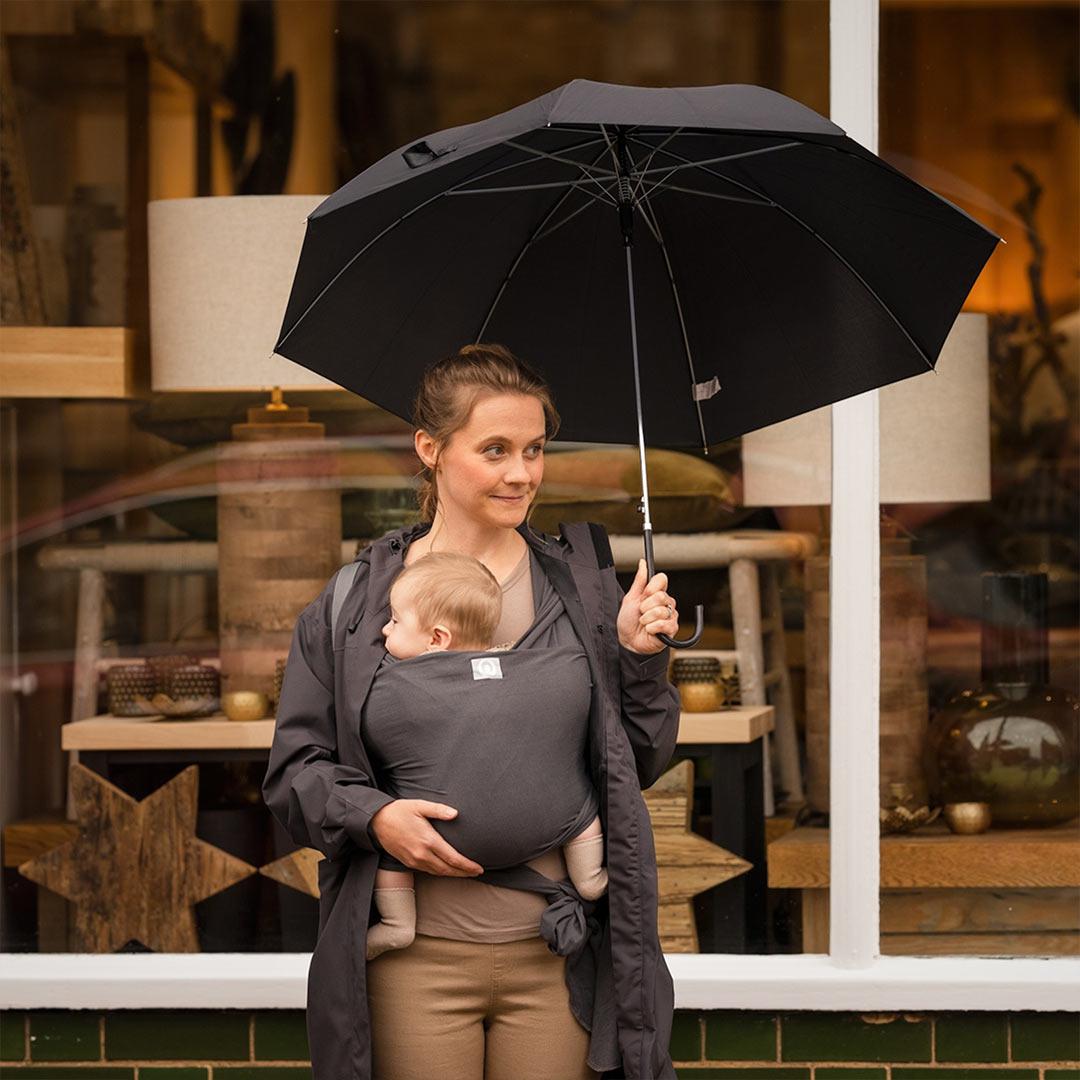
Stretchy wraps are often the starting point for early babywearing. They are soft, lightweight and especially lovely in the fourth trimester, when your baby wants constant contact.
Because the fabric moulds around your body, wraps can feel less structured and more natural than a traditional carrier. The trade-off is practice.
Tying a wrap is not difficult, but it can feel fiddly when you are sleep-deprived or heading out in a hurry. They also tend to become less supportive as your baby gets heavier, so they are often best for the earliest months rather than long-term use.
Sling-style carriers
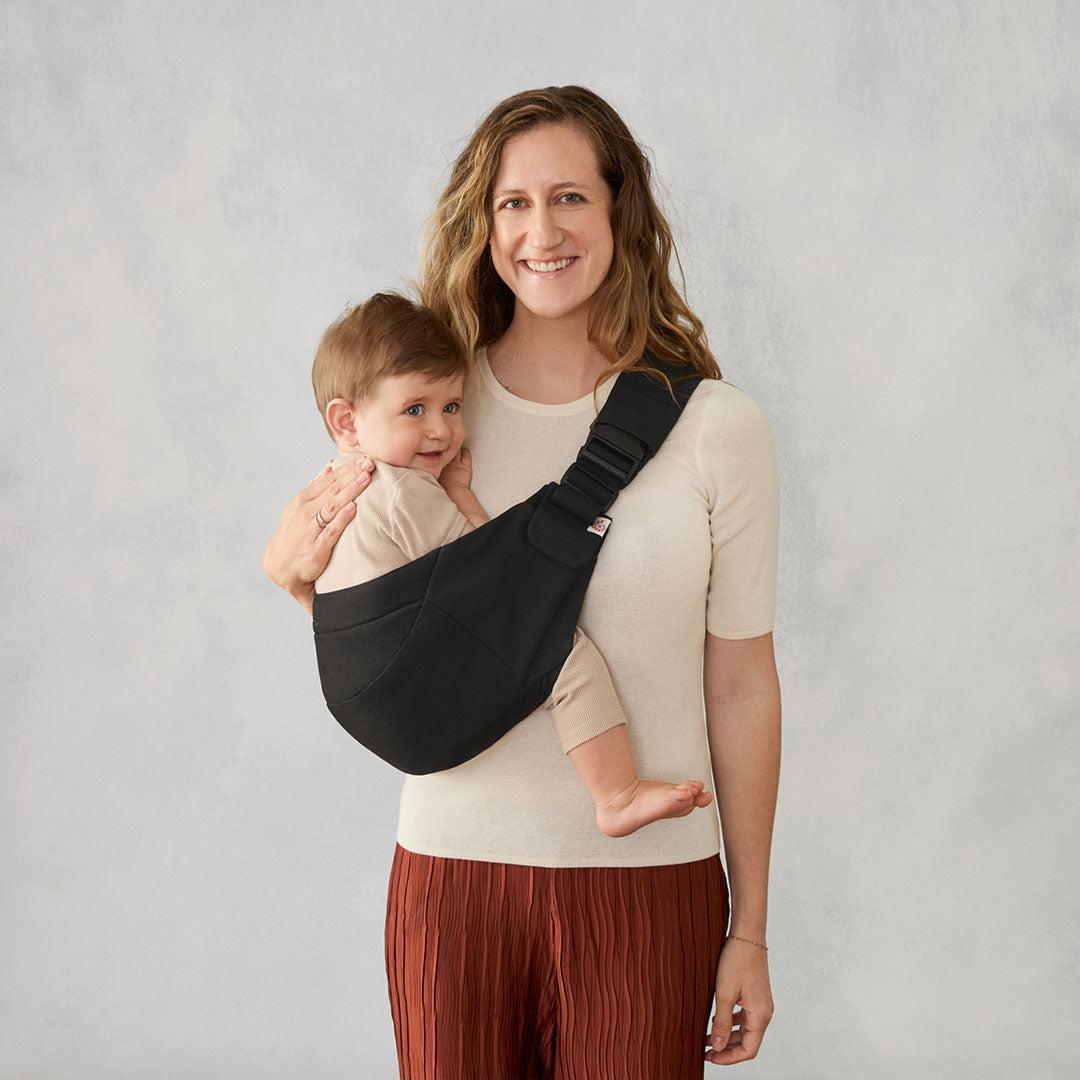
Ring slings and close-fitting slings appeal to parents who want something compact and easy to keep in the changing bag. They can be ideal for quick ups and downs around the house, school run pickups or a baby who wants to be held between naps.
They do, however, place more weight on one shoulder, so they are not always the best choice for longer wear.
Fit also matters a great deal. A well-adjusted sling can feel brilliant, while a poorly adjusted one can feel like hard work very quickly.
Structured baby carriers
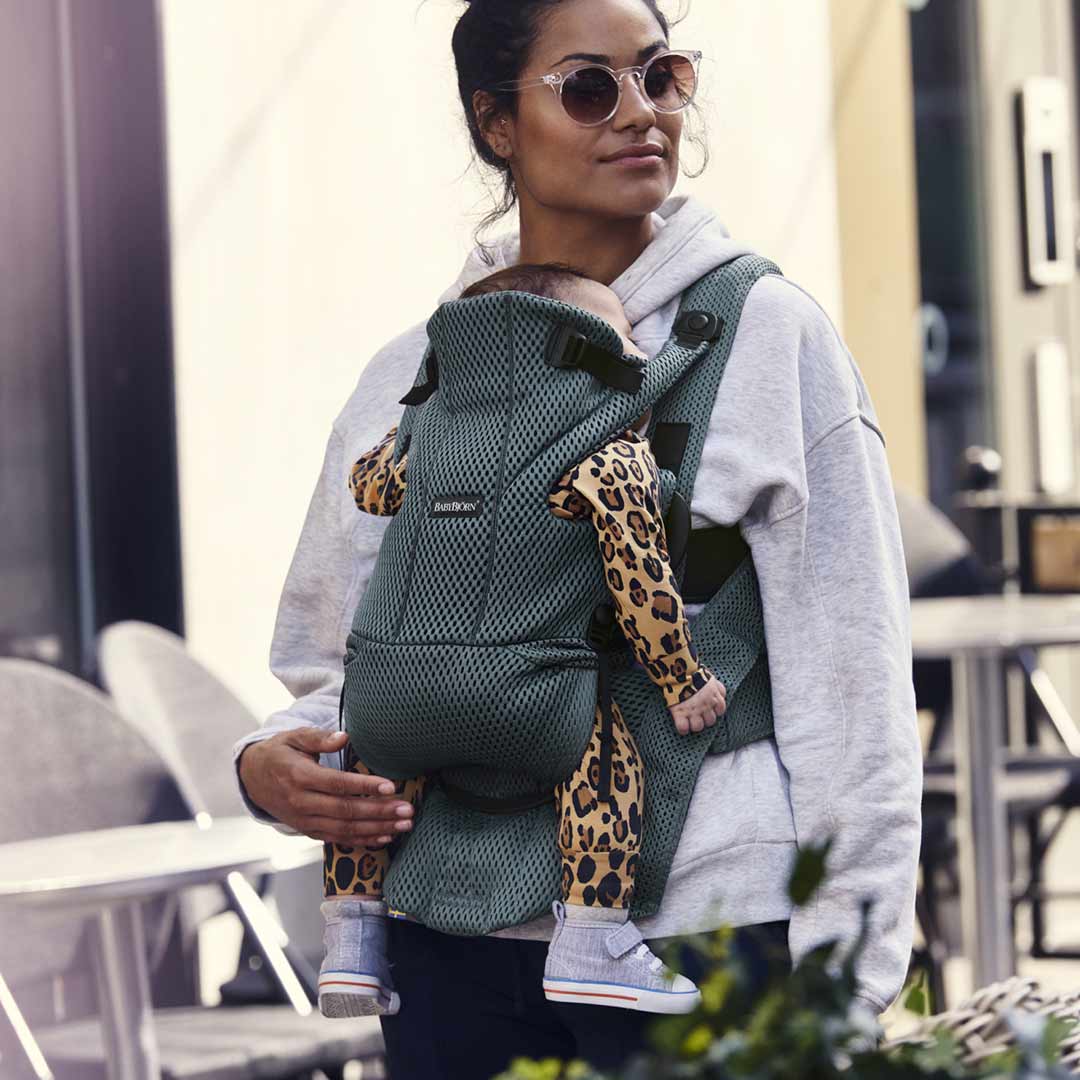
Structured carriers tend to be the most versatile. They usually feature padded shoulder straps, a waistband and adjustable panels, giving more support for longer walks, travel days and daily use.
Many premium designs now come with newborn settings built in, either through integrated adjustments or dedicated infant inserts. This is often the category parents move into when they want one carrier to last well beyond the newborn stage.
The downside is that some structured styles can feel too substantial for a very tiny baby, so it is worth checking the minimum weight and how the newborn fit is achieved.
10 features worth looking for
1. Newborn-ready support
Not every carrier marketed for babies is genuinely suitable from birth without adaptation. Look for a design that clearly supports newborn positioning from day one, especially through the neck, seat and back panel.
2. An adjustable seat
A good seat width helps keep your baby’s knees higher than their bottom, supporting healthy hip positioning. Adjustable seats are especially useful if you want the carrier to grow with your baby.
3. Head and neck support
Newborns need support while still being able to keep their airway clear. A carrier should hold them close and upright, with fabric or panel height that supports without covering the face.
4. Soft, breathable fabrics
Natural fibres, organic cotton and breathable blends are popular for good reason. They feel gentler against delicate skin and can be more comfortable for everyday wear, especially indoors or in warmer months.
5. Easy adjustments
If both parents plan to wear the carrier, quick adjustments make a real difference. Some styles are excellent once fitted but a nuisance to resize between wearers.
6. Supportive straps and waistband
This matters more than many first-time parents expect. If you are carrying your baby for more than ten minutes at a time, weight distribution becomes a big part of comfort.
7. Compact design
A bulky carrier can still be a good one, but if you want something for travel, coffee runs or nursery drop-off later on, packability is useful.
8. Machine-washable materials
Milk dribbles, reflux and general baby life mean washability is never a small detail. Easy-care fabrics often win in the long run.
9. Long-term value
Some of the best baby carriers for newborns are brilliantly suited to the early weeks but quickly outgrown. Others convert as your baby grows, giving better value over time.
10. Thoughtful design
For many parents, aesthetics are part of the decision. Neutral tones, elevated finishes and responsibly sourced fabrics can make a practical purchase feel more considered, especially if it becomes part of daily life.
How to choose the right one for your family
If you are expecting your first baby, start with how and where you will actually use the carrier. For short periods at home and those very early newborn cuddles, a soft wrap may be exactly what you want.
If you plan to wear your baby on walks, while travelling, or as part of everyday errands, a more structured carrier often proves more practical. Your own comfort matters just as much as your baby’s. After birth, especially if you are recovering from a caesarean or finding your feet physically, some waistbands may feel too firm across the stomach. In that case, a wrap or a softer apron-style carrier can feel more comfortable at first.
Season also plays a part. A beautifully padded carrier can be a dream in colder weather and feel too warm in summer. If your baby is due in spring or summer, breathable fabrics and lighter construction may climb higher on your wishlist.
Then there is longevity. Some parents are happy to buy a dedicated newborn carrier and switch later. Others want one considered investment that works from birth and carries on into babyhood.
Neither route is wrong. It depends on whether you value that ultra-soft newborn fit or prefer fewer pieces to buy overall.
Common mistakes when buying a newborn carrier
One of the biggest mistakes is choosing based on style alone. Premium finishes and modern colours are lovely, but they should sit alongside proper newborn support, not replace it. Another is assuming more structure automatically means more safety.
A carrier still has to fit your baby properly. If the panel is too wide, too tall or too loose for a newborn, it can be less supportive than a simpler design. It is also easy to overestimate how much patience you will have for complicated set-up.
If you know you prefer straightforward products in every other area of parenting, trust that instinct here too. The best carrier is often the one you will actually use.
Safety matters more than any trend
However design-led the category has become, safe positioning remains the priority. Your baby should be upright, close enough to kiss, with their chin off their chest and their face visible at all times.
Fabric should support, not obstruct. It is worth doing a fit check every time you wear your baby, especially in the early weeks when they are so small. Tiny adjustments to strap tension, seat width or panel height can make a noticeable difference.
When a premium carrier is worth it
If you plan to babywear regularly, investing in a well-made carrier can pay off quickly. Better fabrics, more refined adjustment points and stronger ergonomic design usually translate into more comfort and a longer usable life.
For many families, that makes a premium carrier feel less like an extra and more like a daily essential.
It can also be a more sustainable choice. Buying one beautifully made carrier that lasts through multiple stages, or even for future siblings, often feels more aligned with thoughtful shopping than replacing a cheaper option a few months later. The right newborn carrier should make life feel lighter, not more complicated.
Choose the one that fits your baby safely, feels good on your body, and suits the way your days actually look - because the easiest products to love are usually the ones that quietly earn their place from the very beginning.


