


Best Baby Bottle Steriliser Machine for Your Routine

At 2am, the best baby bottle steriliser machine is not necessarily the one with the longest feature list. It is the one that fits on your worktop, keeps enough bottles ready for the next feed and feels simple to use when everyone is short on sleep.
For families combination feeding, expressing or bottle feeding from day one, this small appliance can make a surprisingly big difference to the rhythm of the day.
Sterilising bottles, teats and feeding equipment is recommended for babies under 12 months. A machine can remove some of the repeated washing-up and draining-board clutter from that routine, but choosing well means looking beyond the headline cycle time. Capacity, drying, storage and the practical realities of your kitchen matter just as much.
What makes the best baby bottle steriliser machine?
A bottle steriliser machine uses steam to sterilise clean feeding equipment. Most models work by adding a measured amount of water to a heating plate, arranging bottles and smaller parts in a basket, then running a steam cycle. The key word is clean: sterilising does not replace washing.
Bottles and components should always be washed thoroughly first, with milk residue removed from threads, valves and teats. The best choice depends on how your household feeds. If you use a few bottles each day, a compact unit with room for four to six bottles can be more than enough.
If you are expressing regularly, preparing feeds across the day or caring for twins, a larger steriliser that holds bottles, pump parts and accessories together may save repeated cycles.
Drying is often the feature parents value most after the first week. A steam-only machine sterilises effectively, but items may emerge wet and need to air dry on a clean surface. A steriliser and dryer keeps the process contained and gives you dry bottles ready for assembly, which is particularly useful in kitchens without much draining-board space. The trade-off is a larger footprint, a higher price and usually a longer cycle.
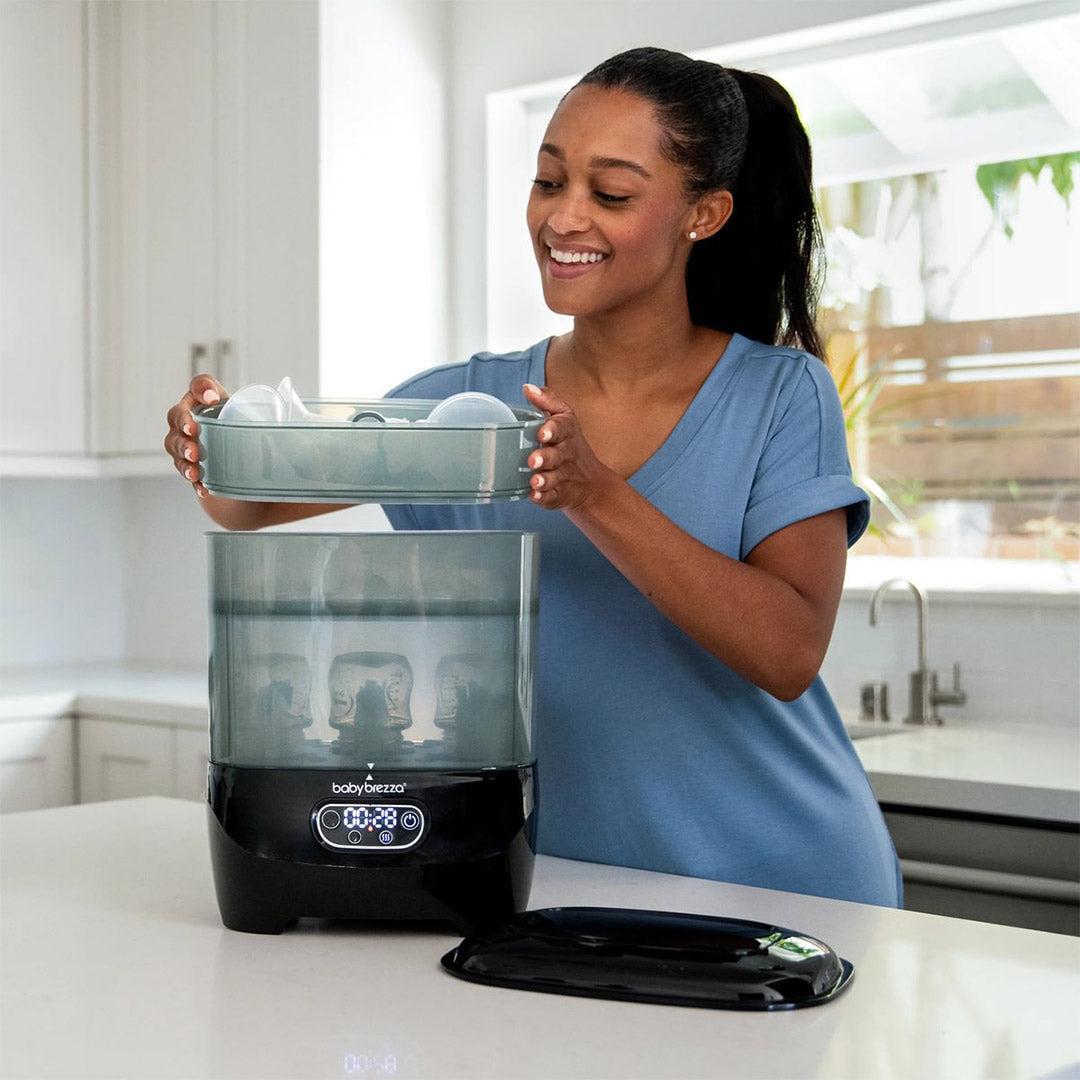
Choose around your real feeding routine
Before comparing finishes or presets, picture the busiest point in your day. How many bottles do you get through between washes? Are you using wide-neck bottles, slim bottles or glass bottles? Will breast pump components need to fit too?
These details prevent the common frustration of buying a machine that technically has a generous capacity but does not accommodate your own equipment comfortably.
For occasional or mixed feeding
A smaller steam steriliser is often the most sensible option for families using one or two bottles a day. It is quicker to load, easier to store and uses less worktop space. Look for a simple layout with a separate tray or basket for teats, caps and small parts, so everything is held securely during the cycle.
If you will only sterilise occasionally, consider whether an appliance earns its place in your kitchen. Cold-water sterilising or microwave sterilising can suit lower-volume routines, especially in a compact home or when travelling. A machine is about convenience, not an essential upgrade for every family.
For daily bottle feeding and expressing
For frequent use, prioritise capacity and drying over a very short sterilising cycle. A six-bottle model can be a practical sweet spot for many households, while larger machines suit parents who prefer to run one full load rather than several smaller ones.
Check that the stated capacity includes the bottle shape you use, not just a best-case arrangement shown in product photography. A drying function can also help maintain a tidier feeding station.
Once the cycle is complete, leave the lid closed until you need the items. Many models keep contents sterile for a set period while unopened, though this varies by design, so always follow the instructions supplied with the machine.
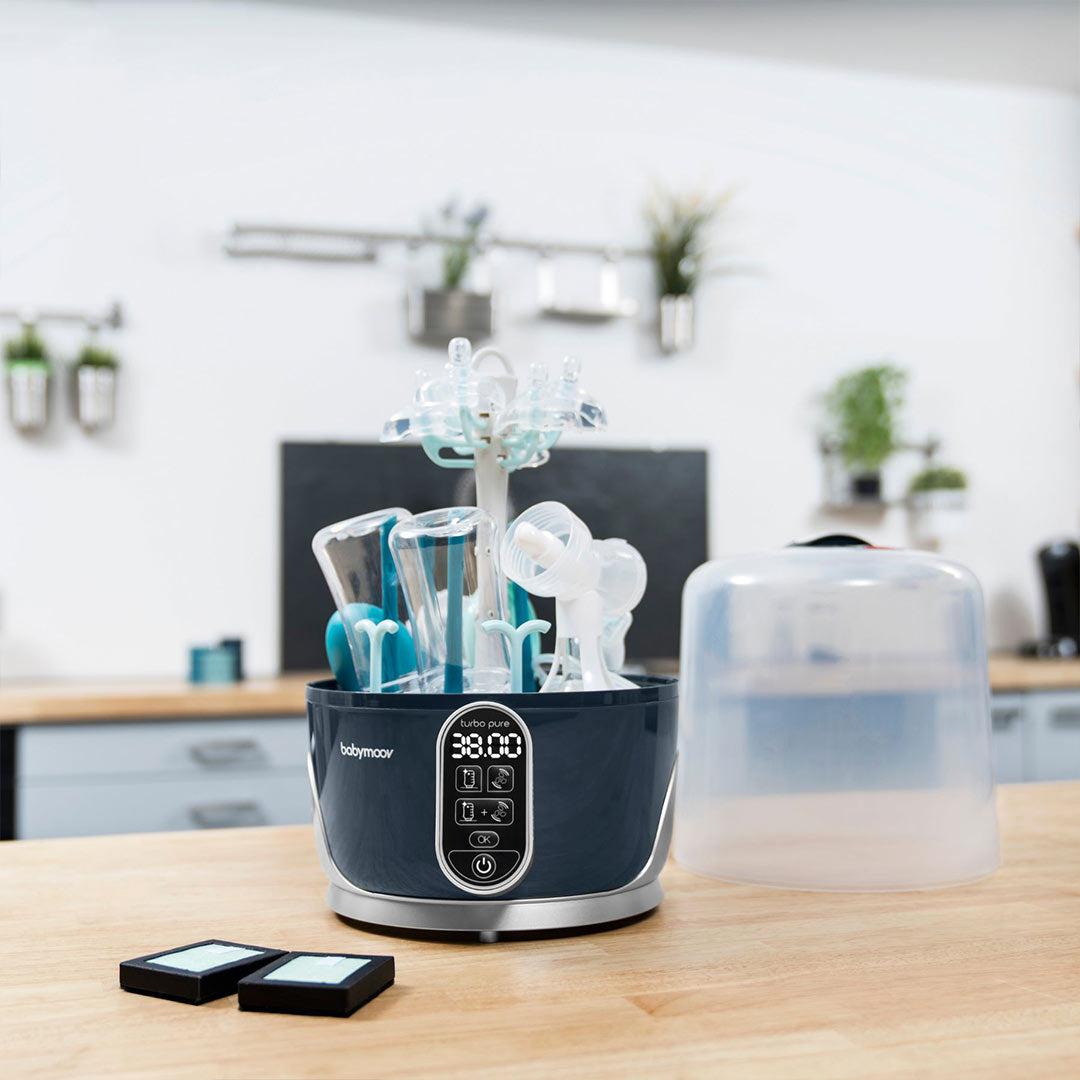
For small kitchens and shared spaces
Measure your worktop before you buy. Account for the lid height when it opens, clearance under cupboards and room to lift bottles in and out safely.
A tall steriliser can look compact from the front but may not work beneath wall cabinets; a wider design can be easier to load but take up valuable preparation space.
Cord storage, a removable basket and dishwasher-safe accessories can make everyday care easier. If you expect to pack the steriliser away between uses, weight and the number of separate pieces will matter more than they do for a permanent worktop appliance.
Features worth paying for
Not every extra setting will improve your routine. Focus on features that remove a genuine daily task rather than adding buttons you are unlikely to use. A combined sterilise-and-dry programme is valuable for high-frequency feeding.
Automatic shut-off is a useful reassurance, while a clear indicator for low water or the end of a cycle stops guesswork. Some machines offer storage modes or filtered-air drying, which may appeal if you want bottles kept enclosed between feeds.
Adjustable configurations are another considered feature. Being able to use a full-size arrangement for bottles, then a smaller setting for pump parts or dummies, helps an appliance stay useful as your feeding needs change.
A dedicated accessory basket is particularly helpful, as tiny valves and teats are easy to misplace. There are also features that deserve a pause. Digital displays and multiple modes can be useful, but a straightforward machine with a reliable cycle may be the better long-term choice if several caregivers will use it. The most premium-looking option is not always the most intuitive at 5am.
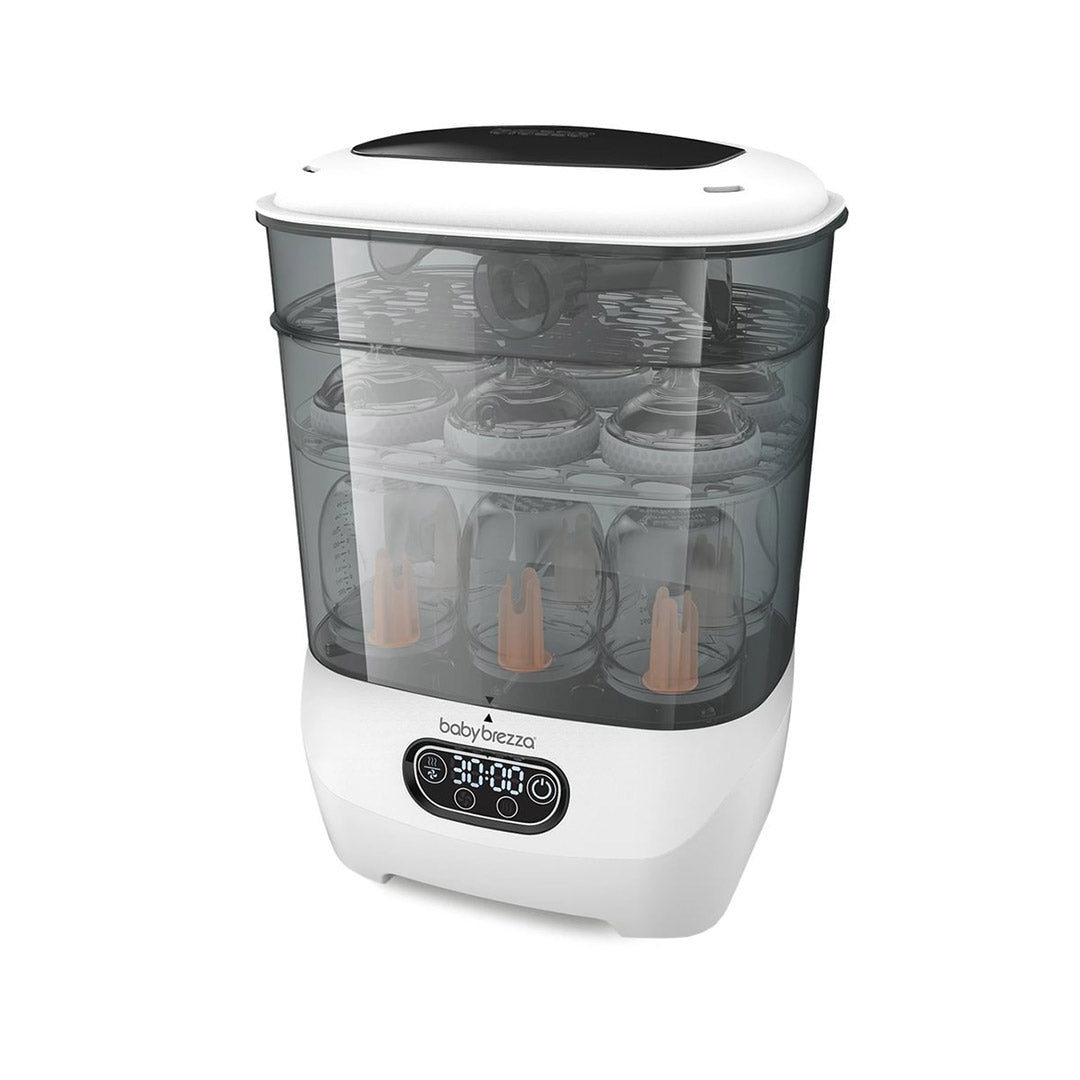
Steam, drying and energy use
Steam sterilisers are designed to use a small amount of water for each cycle, but energy use rises when drying is added. If running costs are a priority, look at the cycle lengths you will actually use rather than relying on a single advertised figure.
A short steam cycle followed by air drying may suit some homes; others will find the time saved by drying worth it. Limescale is another practical consideration in many UK areas. Minerals can build up on the heating plate and affect performance if left unchecked.
Choose a model with clear descaling guidance and make it part of your regular kitchen routine. Depending on your water hardness and how often you run the machine, this may be needed more frequently than expected. For a lower-waste approach, a durable appliance that matches your routine is generally a better investment than a feature-heavy model that sits unused.
Select the right capacity rather than automatically buying the largest option, and use it for compatible feeding accessories where the manufacturer permits. This can reduce repeated single-use sterilising solutions without creating unnecessary energy use.
Safety and everyday care
Steam is extremely hot, so position the machine on a stable, heat-resistant surface away from the edge of the worktop. Keep it out of reach of children, allow it to cool as directed and open the lid carefully to avoid a burst of steam.
Never overfill the water reservoir or pack bottles so tightly that steam cannot circulate. Clean the machine regularly, including baskets, lids and the heating plate. Use the amount of water specified by the manufacturer, as too little may interrupt the cycle and too much can cause spills.
If a component looks worn, cracked or difficult to clean, replace it rather than relying on sterilising to compensate. It is equally useful to keep the wider feeding setup clean.
Wash hands before handling sterilised equipment, assemble bottles on a clean surface and avoid touching the inside of teats or bottle rims. These small habits preserve the benefit of the sterilising cycle.
A considered choice for your home
The right steriliser should support your feeding plans without taking over your kitchen. A compact steam model may be ideal for occasional bottles, while a larger steriliser and dryer can bring welcome calm to frequent feeds and expressing sessions.
Look for the capacity, configuration and care requirements that feel manageable now, while leaving a little room for your routine to evolve.
When the days are busy, a well-chosen bottle steriliser is less about another appliance and more about having one reliable task taken care of - leaving a little more space for the moments that matter.


