


Pram Footmuff Temperature Guide
Pram Footmuff Temperature Guide
Cold mornings have a way of making every pram walk feel slightly more complicated. You want your baby cosy, but not sweaty. Protected from wind, but not overwrapped. And when the weather shifts from frosty at breakfast to mild by lunchtime, getting the layers right can feel like guesswork.
A good footmuff takes much of that pressure off. It creates a warm, sheltered space in the pushchair, reduces the need for bulky blankets, and makes everyday outings far simpler. Still, there is no single setting that works for every baby, every pram or every forecast.
This pram footmuff temperature guide is designed to help you judge what your child actually needs, rather than relying on the thermometer alone.
How to use a pram footmuff temperature guide
The most useful way to think about a footmuff is as one part of your baby’s outdoor layering system. It is not just an extra cover. In many cases, it replaces one or two outer layers because it traps warmth around the body and shields against cold air far more effectively than a loose blanket.
That matters because prams can be deceptive. A still, sunny morning may look pleasant, but if there is a sharp breeze your baby is sitting still while exposed to colder air than you realise. Equally, a thick footmuff on a milder day can quickly become too warm, particularly if the hood is up and the rain cover is on as well.
Start with the basics: the outside temperature, whether it is wet or windy, how long you will be out, and how warm your baby tends to run. Some babies are naturally toastier than others.
Age matters too. A small newborn in a carrycot usually needs more insulation than an older baby in a seat unit who is more sheltered and better able to regulate their temperature.
A practical pram footmuff temperature guide by weather
Rather than treating this as a strict rulebook, use it as a flexible starting point.
Around 15°C and above
In this kind of weather, many babies do not need a footmuff at all, especially during brighter spring or early autumn days. A standard outfit with a light cardigan or thin outer layer is often enough.
If your footmuff has a zip-off front, you might use the back panel only for comfort and remove the top section. If the sun is out, be particularly careful. A pram can hold heat surprisingly quickly, and babies can overheat even when the air feels fresh to you.
Around 10 to 15°C
This is where lighter footmuffs or adaptable styles come into their own. A baby in a long-sleeved sleepsuit or daywear, plus a jumper or light jacket, may be comfortable in a footmuff that can be partially unzipped. If the walk starts chilly but warms up later, open the front as needed rather than adding and removing multiple blankets.
Around 5 to 10°C
For many UK parents, this is classic footmuff weather. A well-padded footmuff combined with everyday clothes and one warm mid-layer is usually sufficient. You do not always need a snowsuit on top.
In fact, too many bulky layers inside a cosy footmuff can leave your baby damp and flushed. Wind and damp make a noticeable difference here. A cloudy 8°C day with a cold breeze can feel much colder than a still 5°C morning.
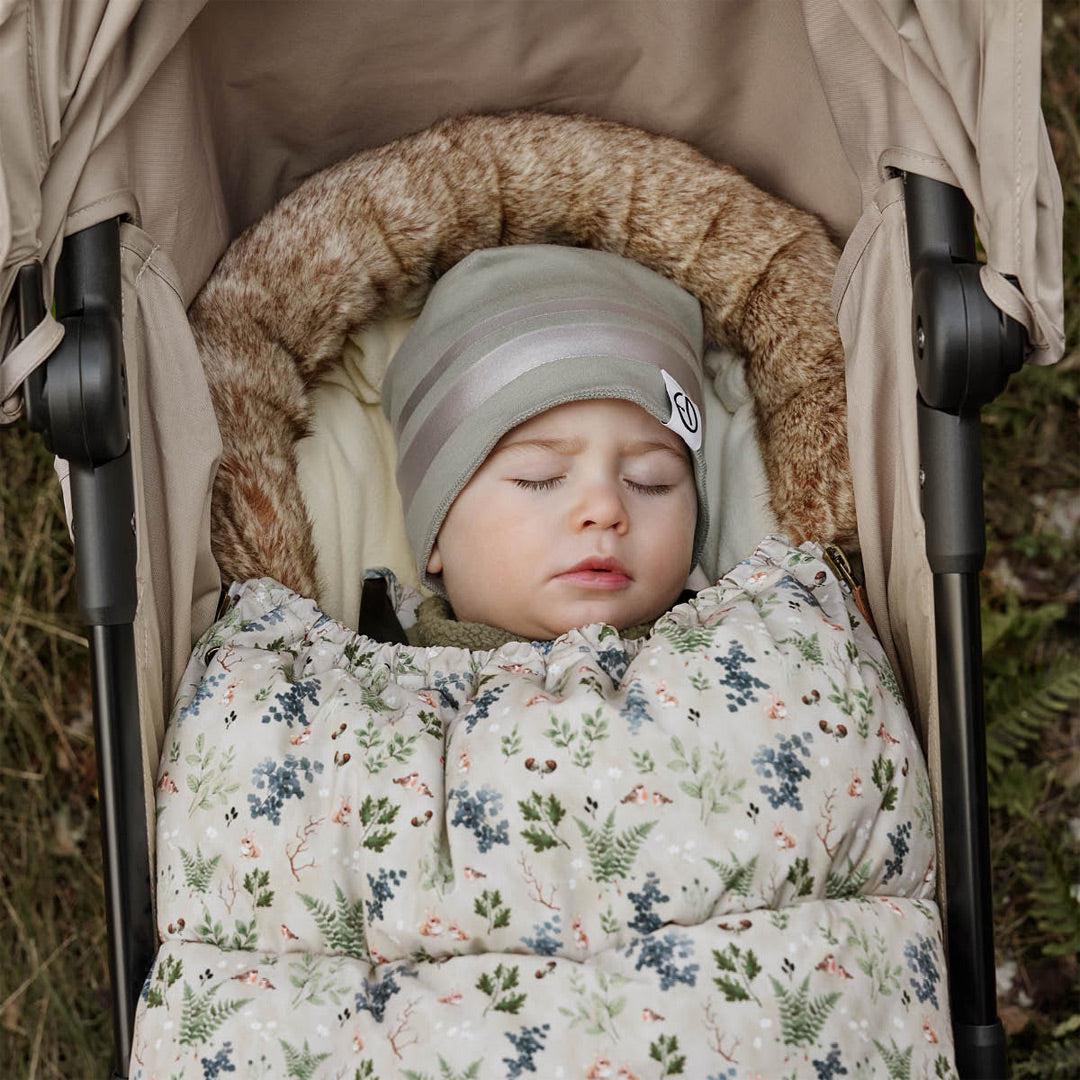
Around 0 to 5°C
This is when a winter footmuff earns its place. Think warm base layers, knitwear or fleece, hat, socks or booties, and a properly insulated footmuff.
Depending on the model, that may be enough on its own. If your baby is very young, in a carrycot, or you are out for a long stretch, you might add a blanket over the top, but only if you can keep checking their temperature.
Below 0°C
For very cold days, use your footmuff as part of a more considered winter setup. Start with soft, breathable layers close to the skin, then add warmer clothing and a premium winter footmuff with good insulation and weather protection.
Pay attention to exposed areas such as hands, head and feet. If conditions are icy, bitter or prolonged, it may be better to keep walks shorter.
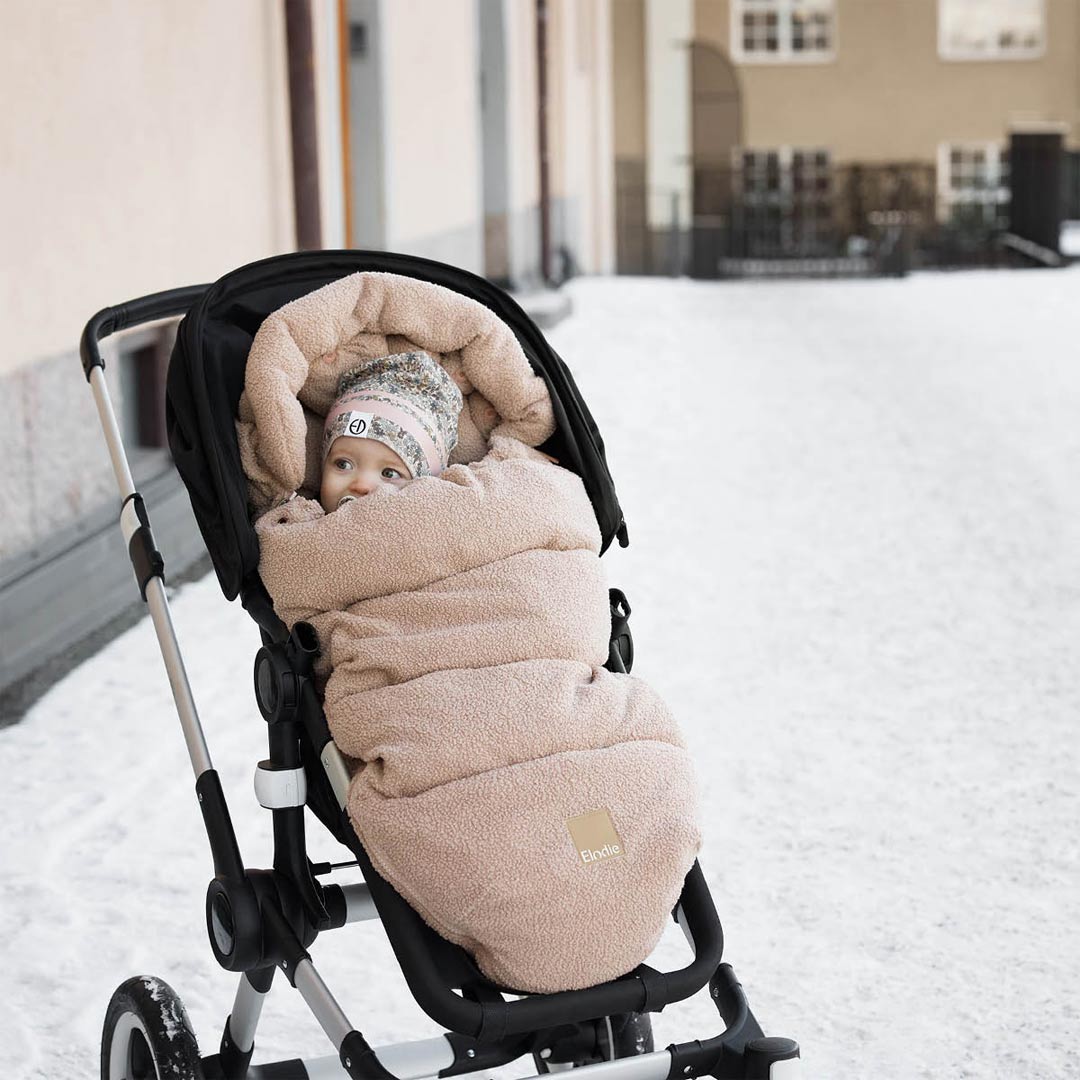
What your baby should wear with a footmuff
The temptation is often to dress your baby for the weather and then add the footmuff on top. In practice, that can be too much. A footmuff is already doing a lot of the work. Breathable layers tend to perform best.
Cotton next to the skin helps with comfort, while a knit or fleece mid-layer adds warmth without making your baby feel stiff or over bundled. For many outings, that combination plus the footmuff is enough.
A padded coat or pramsuit can be helpful on very cold days, but it depends on the thickness of the footmuff. If you are using a generously lined winter footmuff, a huge outer layer may simply trap too much heat. This is especially true if your child is in a snug seat unit with the canopy extended.
Hats are useful in colder weather, but avoid covering your baby so much that you lose the ability to monitor them easily. Their chest or the back of their neck will give you a far better indication of comfort than cold hands alone.
Signs your baby is too hot or too cold
This is the part that matters most, because no guide can replace checking your child. If your baby is too warm, they may have a hot chest or neck, look flushed, develop damp hair, or seem unusually sleepy and unsettled. In that case, open the footmuff, remove a layer, or both.
Do not wait until you get home. If they are too cold, their chest may feel cool rather than warm, and they may seem uncomfortable or harder to settle. Cold hands and cheeks are not always a reliable sign by themselves, particularly in winter air. It is worth checking little and often when the weather is changeable.
One of the biggest advantages of a well-designed footmuff is adjustability - two-way zips, fold-over fronts and removable covers all make it easier to respond quickly.
What changes the temperature inside a footmuff
Not all footmuffs feel the same, even in identical weather. Fabric, lining, fit and pushchair design all affect warmth. A fleece-lined footmuff will usually feel warmer than a lighter jersey or brushed cotton option.
Water-resistant outers help in damp weather, but if the material is less breathable your baby may heat up faster. The shape matters too. A roomy footmuff allows more airflow, while a close-fitting style can feel cosier. Your pushchair also plays a part. A carrycot can retain warmth better than an open seat unit.
A large hood, wind protection and rain cover can all increase the temperature around your baby. On drizzly days, many parents pop the rain cover on and forget that it also reduces ventilation. For that reason, a pram footmuff temperature guide should always be read alongside the real conditions in your pushchair, not just the weather app.
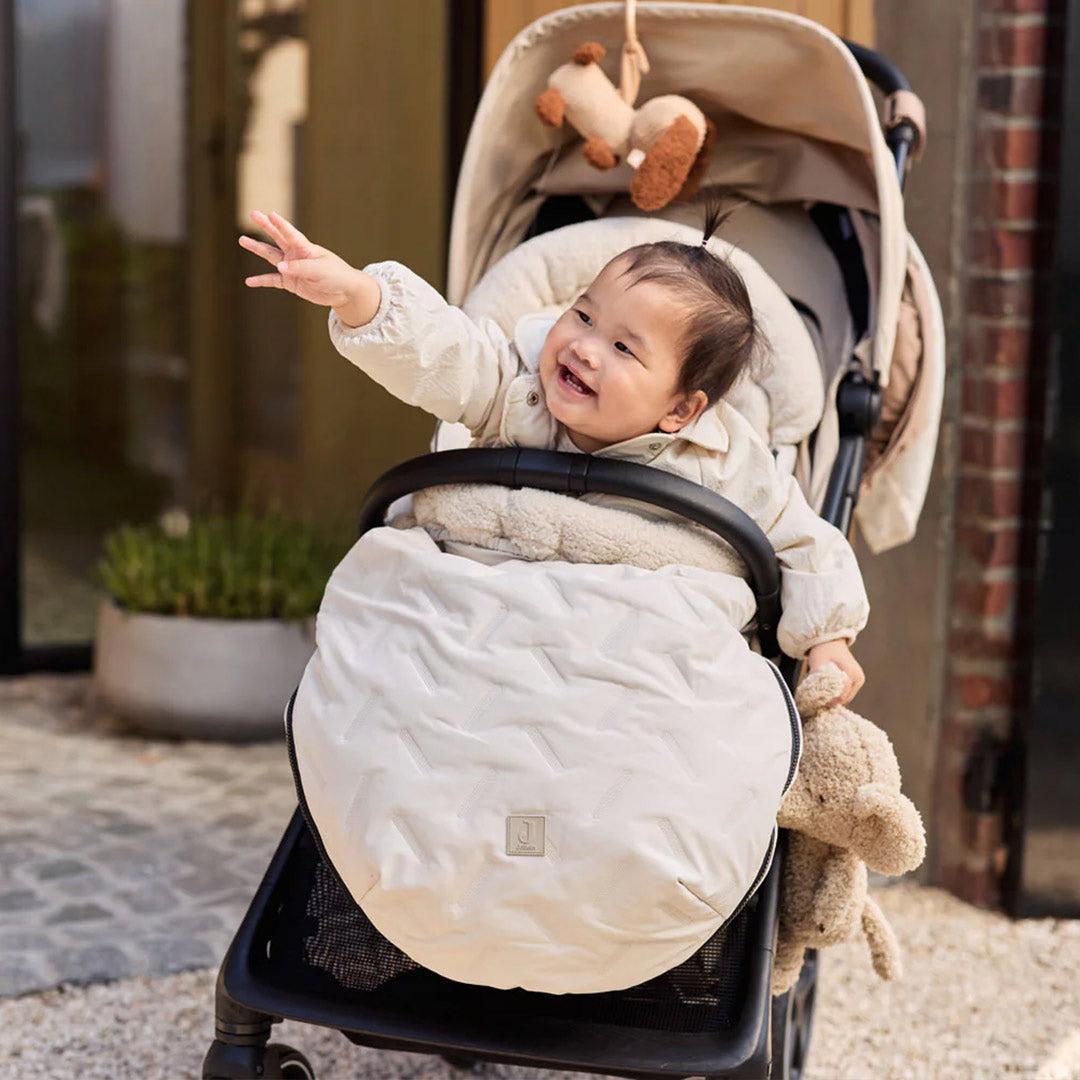
Choosing a footmuff that works across the seasons
If you are buying with longevity in mind, look for versatility rather than the thickest option available. A footmuff that opens fully, has a removable apron, and works neatly with your pushchair harness will be easier to use from autumn through spring.
Premium designs often justify the investment because they are more adaptable. Better fabrics, thoughtful ventilation and a cleaner fit can make the difference between something you use constantly and something that only works for a few weeks of the year.
For style-conscious parents, there is also the practical benefit of choosing a footmuff that integrates neatly with your travel setup. A design-led pushchair paired with a well-matched footmuff looks polished, but more importantly it tends to function better too. Less slipping, less bunching, and less fiddling on cold pavements.
If you are building out your colder-weather travel essentials, curated edits from retailers such as Natural Baby Shower can make the decision easier by narrowing the field to trusted, premium options.
The easiest rule to remember
Dress your baby for one warm, breathable layer less than you think, then let the footmuff do its job. You can always unzip, vent or add a blanket if needed, but it is much harder to cool down an overheated baby once they are uncomfortable. Most winter walks do not need endless extras. They need the right combination of layers, weather protection and regular checks.
Once you get a feel for your baby and your pushchair, using a footmuff becomes far less about guesswork and far more about confidence. If the forecast is changing by the hour, trust what you see in front of you more than the number on your phone.
A comfortable baby, warm at the chest and settled in the pram, is your best guide every time.


