


Organic Baby Clothing Essentials to Buy First
Organic Baby Clothing Essentials to Buy First
Those first tiny vests and sleepsuits are often the easiest baby buys to fall in love with - and the hardest to buy well. When you are choosing organic baby clothing essentials, the aim is not to fill drawers for the sake of it. It is to build a small, hard-working edit that feels soft on delicate skin, washes well, and keeps everyday dressing simple from the newborn days onwards.
For most parents, clothing sits somewhere between practical necessity and emotional purchase. It is one of the first ways you picture your baby arriving home, meeting family, napping in the Moses basket or heading out in the pram. But it is also a category where overbuying happens fast. A better approach is to start with a curated foundation, then add pieces as your routine, your season and your baby’s growth become clearer.
What counts as organic baby clothing essentials?
At its core, this is the wardrobe you will reach for on repeat. Think breathable basics, easy layers and pieces designed for frequent changing, sleeping and feeding. Organic cotton tends to be the standout fabric because it is soft, breathable and gentle against newborn skin, while also appealing to parents who want more considered, lower-impact choices.
That does not mean every item needs to be organic, nor that the most expensive option is automatically the best one. What matters more is how the clothing performs day to day. Stretch, softness, simple fastenings and shape retention after washing all make a real difference when you are changing outfits several times in 24 hours.
Start with the pieces you will use most
Newborn wardrobes work best when they are built around repetition rather than variety. In practice, that usually means bodysuits, sleepsuits, a few layering pieces and weather-appropriate extras.
Bodysuits and vests
Short-sleeved and long-sleeved bodysuits are the base layer you will use constantly. They sit neatly under sleepsuits, cardigans and trousers, and they help regulate warmth without bulk.
Envelope necklines and popper fastenings make changes quicker, especially in the early weeks when babies are dressed and changed often. For a baby due in cooler months, long-sleeved versions may get more wear. For spring and summer babies, a mix is often enough. The key is not choosing between style and practicality - it is finding both in one piece.
Sleepsuits
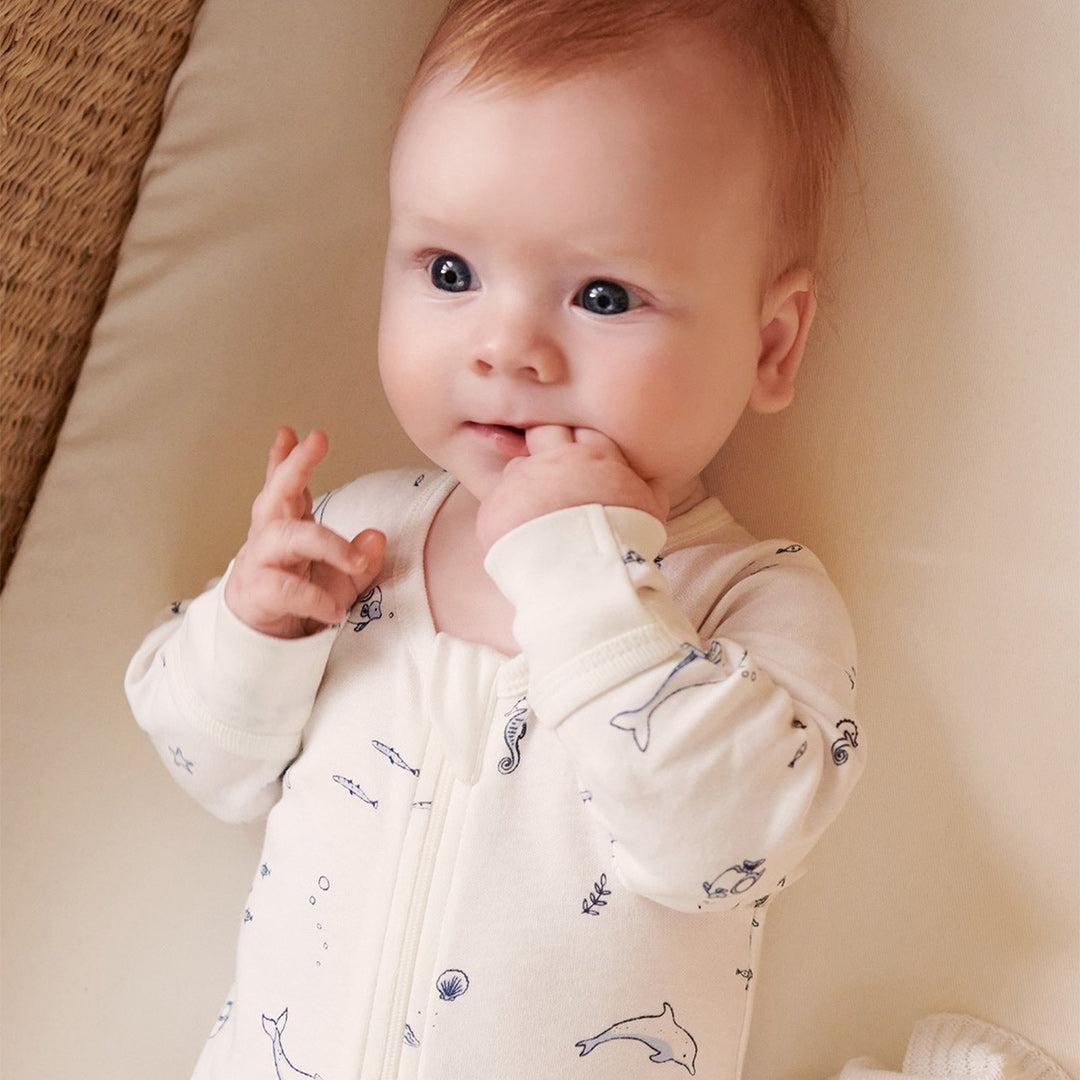
If there is one category worth buying well, it is sleepsuits. Newborns spend much of their time sleeping, feeding and being held, so all-in-one styles simplify dressing and keep little bodies comfortably covered. Two-way zips or well-placed poppers can make night-time changes less disruptive, while built-in feet are useful for younger babies who do not keep socks on for long.
Parents often buy too many "outfits" and not enough sleepsuits. In reality, a small rotation of beautiful, well-made sleepsuits will carry you much further than occasion pieces that are worn once.
Leggings, joggers and soft trousers
Once you are moving beyond the very earliest newborn stage, soft separates start to earn their place. Organic cotton leggings and pull-on trousers work well because they are easy to layer over bodysuits and allow room for movement. Anything with a gentle waistband tends to be more comfortable than structured styles, especially for babies who are spending a lot of time lying down or being carried.
Cardigans and knit layers
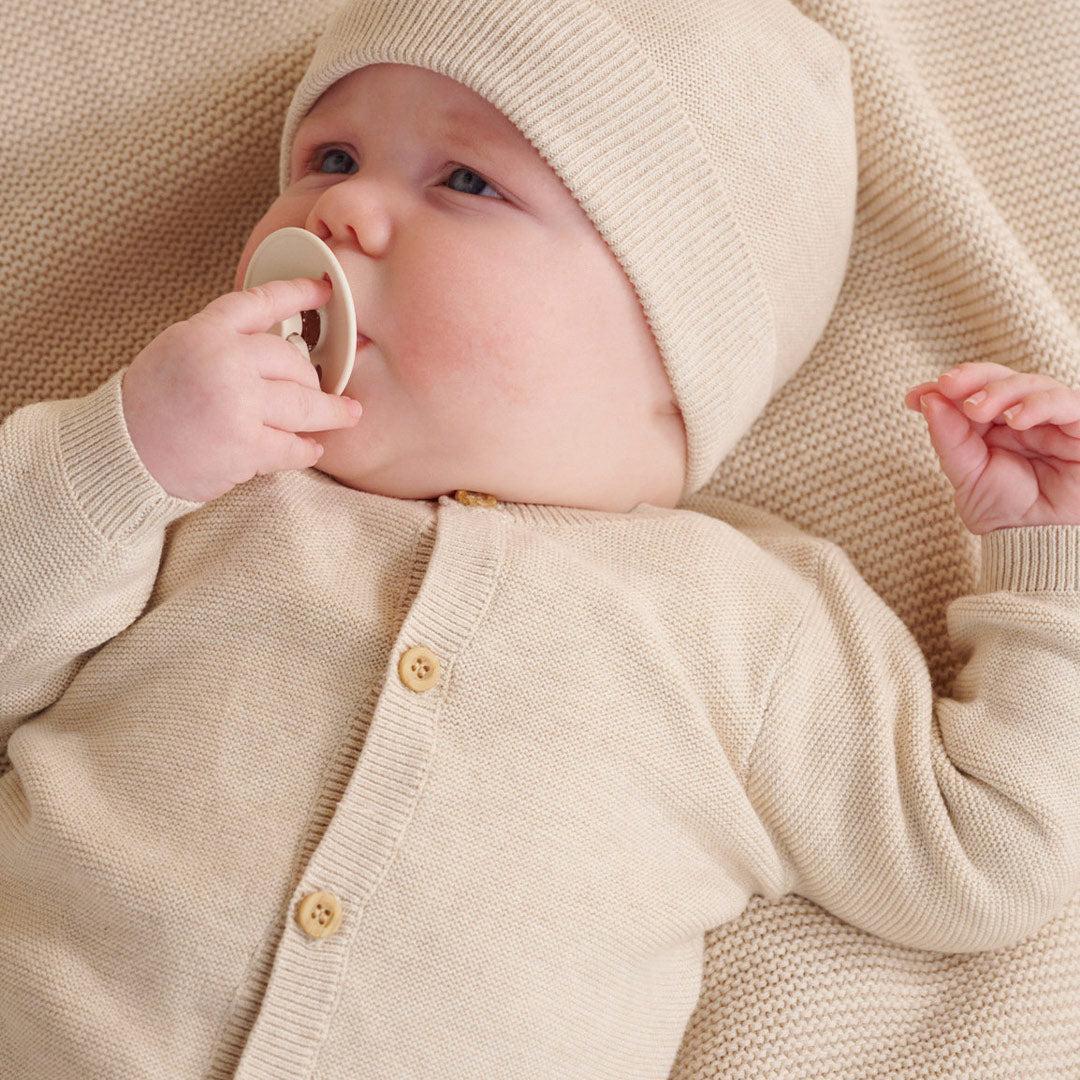
Layering is where British weather really comes into play. A lightweight cardigan, knitted jumper or wrap-style top gives you flexibility when temperatures shift through the day. Rather than relying on one heavy layer, several lighter pieces usually make more sense for babies, especially when moving between home, car journeys and centrally heated spaces.
Organic baby clothing essentials by season
Season matters, but not as much as many first-time parents expect. Babies generally need one more light layer than an adult in the same environment, though this always depends on room temperature, activity and the individual baby.
In autumn and winter, you are likely to use long-sleeved bodysuits, sleepsuits, cardigans, hats for outdoor use and warm outer layers more frequently. In spring and summer, breathable short-sleeved vests, lighter sleepsuits and airy daywear come into their own. Even then, layering stays important because early mornings, evenings and UK weather can shift quickly.
This is one reason organic cotton works so well across the year. It is breathable in warmer temperatures but still useful as a base in colder months. If you are due in one season but know your baby will move through the next size as the weather changes, it makes sense to buy with that transition in mind rather than only for the current forecast.
How much do you actually need?
This depends on two things: how often you plan to do washing, and how prone your baby is to spills, leaks and outfit changes. Some families are happy washing every day or two. Others want a little more breathing room.
A sensible starter wardrobe often includes enough bodysuits and sleepsuits to cover several changes across a few days, plus a handful of leggings or trousers, a couple of cardigans and a hat. You do not need a packed wardrobe from day one. In fact, leaving some room is often smarter because babies grow quickly, gifted clothing may fill gaps, and you will soon learn which shapes and fastenings you prefer.
If you are building a hospital bag or planning for the first fortnight at home, focus on immediate-use pieces first. It is far more useful to have enough soft basics in the right size than a wardrobe full of special outfits that are fiddly to put on.

Sizing is rarely straightforward
One of the biggest frustrations in baby clothing is that sizes are only ever a guide. One brand’s newborn may fit like another’s first size, and some babies skip newborn completely while others wear it for several weeks.
That is why flexibility matters. Buying a concentrated edit in newborn and 0-3 months is usually more practical than committing heavily to one size. Fold-over cuffs, stretchy fabrics and relaxed fits can also help clothes last a little longer. If you are choosing gifts, sizing up slightly is often appreciated, particularly for premium everyday pieces parents can use once the first flurry of newborn gifting has passed.
What to look for beyond the label
Organic certification matters, but it should not be the only thing you assess. Construction, ease of care and real-life practicality all count.
Soft, breathable fabric is the obvious starting point, especially for babies with sensitive skin. Flat seams, comfortable neck openings and gentle waistbands help too. Then there is the less glamorous but very real question of laundering.
Baby clothes need to cope with frequent washing, and a beautiful piece that twists, shrinks or loses shape quickly is rarely a good buy. Fastenings are another detail worth checking. Popper placement, zip guards and wide openings can make the difference between a smooth change and a wrestling match at 2am.
Premium does not need to mean fussy. In fact, the best-designed baby clothing often looks refined because it has been simplified.
Style still matters - just differently
Practical does not have to mean plain. For many parents, part of the appeal of organic baby clothing essentials is that they often come in calm palettes, timeless prints and beautifully considered textures that sit effortlessly within a modern nursery and family wardrobe.
The most useful style choices are usually the easiest to mix. Soft neutrals, muted tones and understated patterns make layering straightforward and help a smaller wardrobe feel more versatile. This is especially helpful if you are shopping across seasons, preparing for hand-me-downs or simply trying to keep purchases intentional.
At Natural Baby Shower, that blend of elevated design and everyday usefulness is exactly what makes baby clothing feel worth investing in. The best pieces look lovely in a drawer or gift box, but they earn their place by being worn on repeat.
When it makes sense to buy more later
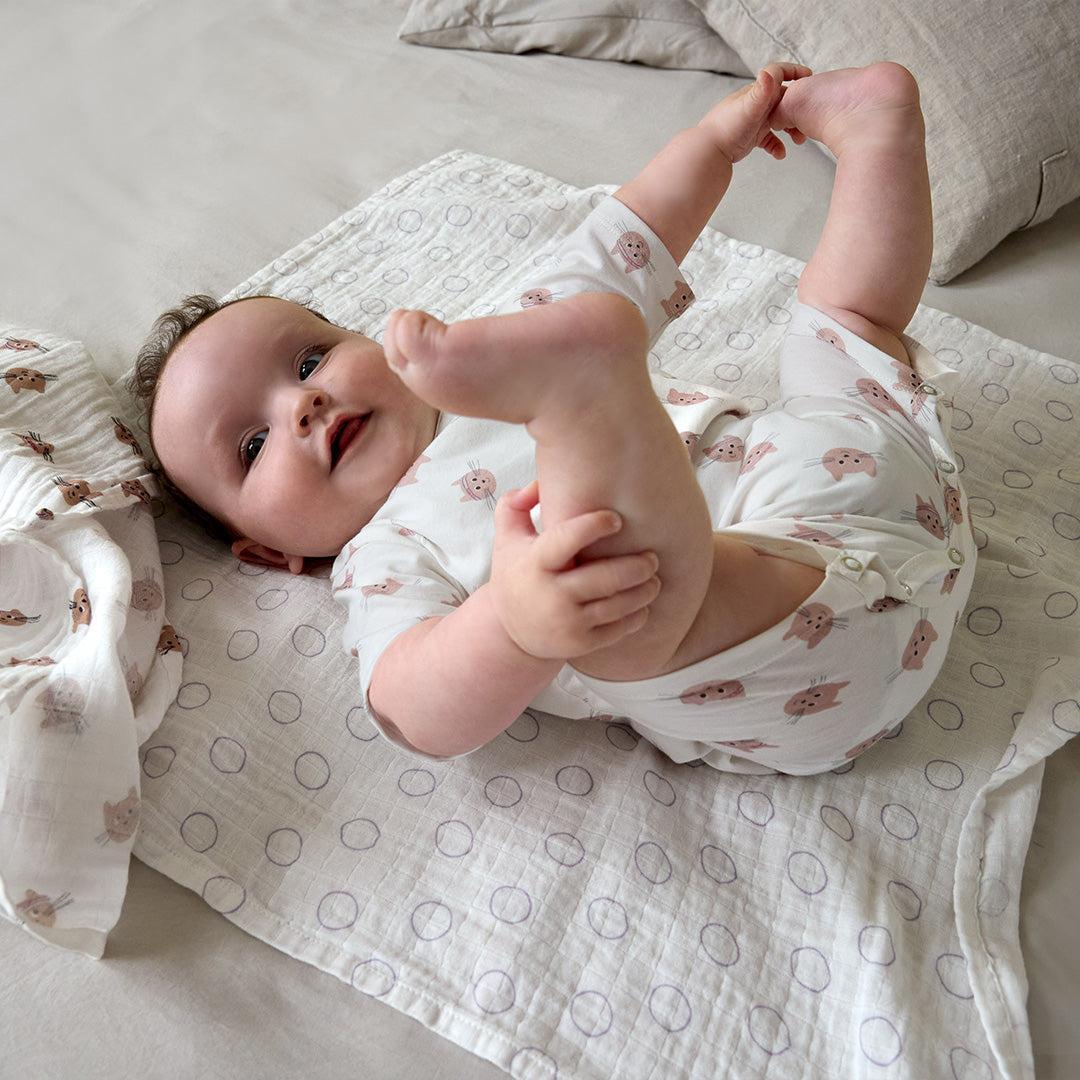
There is no prize for finishing your entire baby wardrobe before birth. Once your baby arrives, you will have a much better sense of sizing, your home temperature, your laundry rhythm and which clothing formats suit your routine.
Some parents quickly realise they want more zip-up sleepsuits.
Others prefer separates after the newborn stage, or need more layers because they are often out with the pram.
If your baby has reflux, frequent leaks or particularly sensitive skin, your clothing needs may shift again. It is perfectly reasonable to start with the essentials and top up thoughtfully.
The smartest wardrobe is not the biggest one. It is the one that supports daily life, feels good to use and aligns with how you want to shop as a family. When you choose organic pieces with comfort, seasonality and longevity in mind, you create a baby wardrobe that feels calmer from the start - and far easier to build on as your little one grows.


