


How to Dress Baby For Summer Days and Nights
How to Dress Baby For Summer Days and Nights
A baby in a vest at 7am can be too warm by 9, chilly after a pram nap, and sweaty again by lunchtime. That is usually the puzzle behind how to dress baby summer - not finding one perfect outfit, but getting the balance right as the day shifts.
Summer dressing is really about temperature, fabric and flexibility. Babies do not regulate their body temperature as efficiently as adults, so the smartest wardrobe is light, breathable and easy to adjust. Think soft layers you can add or remove without fuss, especially when you are moving between the nursery, the car, the pram and the garden.
How to comfortably dress your baby for summer
If you are deciding what your baby should wear in warm weather, start with breathable natural fabrics. Cotton, organic cotton, bamboo blends and linen-rich pieces tend to feel lighter against delicate skin and allow better airflow than heavy synthetic materials.
Premium fabrics can also hold their shape and softness better after frequent washing, which matters when summer outfits are in constant rotation. A short-sleeved bodysuit or vest is often the best base layer.
On milder days, that may be enough with lightweight leggings, bloomers or loose trousers.
On hotter days indoors, especially for a young baby who is not yet mobile, a single lightweight layer can be more comfortable than a full outfit designed to look dressed up.
The trade-off is sun protection. Bare arms and legs can feel cooler, but direct sun on young skin is not ideal. In practice, that means lightweight long sleeves and loose trousers can sometimes be a better choice outdoors than less clothing, as long as the fabric stays airy and your baby is not overheating.

What babies should wear in different summer temperatures
There is no single number that works for every baby. Room temperature, humidity, airflow, shade and your baby's age all make a difference. Still, a few general guidelines make summer dressing simpler.
On warm days, around the low twenties, many babies are comfortable in a short-sleeved vest with light bottoms or a romper. If there is a breeze, or you are heading out early in the morning, keep a cardigan or muslin blanket nearby rather than putting on too many layers from the start.
When temperatures climb further, a lightweight cotton bodysuit or sleeveless romper may be enough indoors. If your home traps heat, less is often more. Babies can quickly become uncomfortable in fitted waistbands, thick socks or layered outfits that look lovely but do not breathe well.
For very hot weather, shade and airflow matter as much as clothing. Loose-fitting garments, a wide-brimmed sun hat when outdoors, and regular checks on your baby's temperature are usually more useful than adding extra pieces. If your baby feels sweaty at the neck or upper back, it is a sign to strip things back. A simple way to check comfort is to feel your baby's chest or the back of their neck. Hands and feet often feel cooler than the rest of the body, so they are not the best guide. If their chest feels hot or damp, remove a layer. If it feels cool and your baby seems unsettled, add one.
How to dress baby for sleep in summer
Summer sleepwear can feel more complicated because every room is different. Bedrooms that seem pleasant at bedtime can become stuffy overnight, particularly during a heatwave. The safest approach is to dress for the room temperature, not the season on the calendar. A lightweight short-sleeved bodysuit may be enough for a warm room. In hotter conditions, some babies will be most comfortable in just a nappy or nappy with a very light vest, depending on the guidance you are following and your room temperature.
If you use a sleeping bag, check its tog rating carefully.
A lower tog is designed for warmer nights, while heavier options can quickly become too much in summer. This is one area where parents often overcompensate. We tend to worry that babies will be cold while sleeping, but in summer, overheating is usually the greater concern.
Breathable sleepwear, fitted sheets in natural fabrics and a well-ventilated room can make a noticeable difference. If your baby's room cools down towards the early hours, it is more practical to have a light extra layer ready before bedtime than to start with a thick sleep setup. A soft cardigan or an additional sleep layer can be added if needed, but it is harder to fix an overheated baby once they are already unsettled.

Dressing baby for pram walks, car journeys and days out
One of the biggest summer dressing mistakes happens when babies are dressed for the weather outside but not for the heat they build up in travel gear. Prams, slings and car seats all retain warmth, and babies can overheat faster in them than parents expect. For pram walks, keep outfits light and avoid padded liners or blankets unless the temperature genuinely calls for them.
If your carrycot or seat already has snug fabric around the baby, you may need fewer layers than usual. Sun protection should come from shade and appropriate clothing rather than heavy covers that restrict airflow. Car seats need particular care. Babies should not travel in bulky or heavily padded clothing because it can affect harness fit, and cars can become very warm very quickly.
Dress your baby in thin, fitted layers and cool the car before setting off where possible. Once inside, check them regularly, especially on longer journeys. For babywearing, assume your body heat counts as an extra layer. A baby in a sling often needs less clothing than they would in a pram.
Light fabrics, exposed legs where safe to do so, and frequent temperature checks help keep things comfortable.
Fabrics, fit and the pieces worth reaching for
If you are curating a summer baby wardrobe, focus less on outfit variety and more on pieces that work across different moments of the day. Soft bodysuits, rompers, lightweight leggings, airy dresses, sun hats and a thin cardigan or knit are the staples most parents reach for again and again.
Fit matters as much as fabric. Tight elastics, thick seams and close-fitting synthetic blends can trap heat and irritate skin, especially if your baby is prone to eczema or heat rash. Looser silhouettes give a more breathable feel and leave room for movement, whether your little one is stretching out on a blanket or crawling at speed across the lawn.
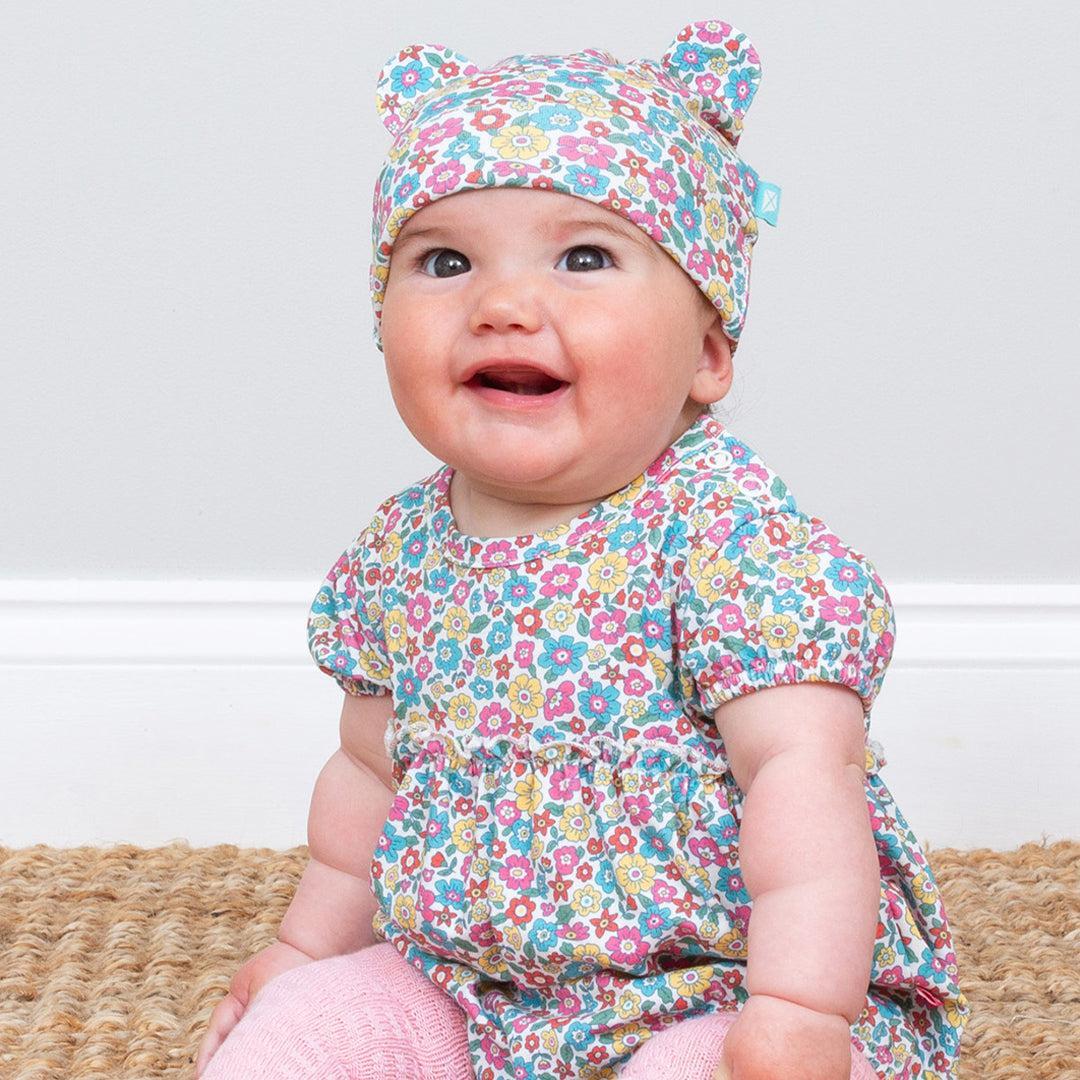
This is where a thoughtful, premium edit really earns its place. A few well-made essentials in breathable fabrics can be more useful than a drawer full of novelty summer outfits that only work in one exact temperature.
Signs your baby is too hot or too cold
Most parents second-guess themselves in summer because babies cannot tell us when an outfit feels wrong. A few signs are worth watching.
If your baby is flushed, sweaty, more sleepy than usual, unusually irritable or breathing faster, they may be too hot. If they are cool on the chest, unsettled and seem unable to settle even after a feed or cuddle, they may need an extra layer. Heat rash can also appear in hot weather, especially around the neck, chest and nappy area. Keeping clothing light and breathable, changing damp outfits promptly, and avoiding overdressing usually helps. It also depends on the baby.
Newborns often need a bit more support with temperature regulation, while older babies on the move can generate plenty of warmth themselves. A baby who sleeps hot may need different nightwear from one who runs cooler, even in the same home.

A practical summer dressing mindset
The easiest way to approach summer is to dress your baby for the current setting, then keep one light layer in reserve. That could be a cardigan for a breezy evening, a muslin for shade, or a fresh bodysuit if the first one becomes damp. You do not need an overstuffed changing bag - just a few reliable pieces that layer well and wash beautifully.
If you are unsure, start lighter than you think and reassess after ten minutes. Babies rarely enjoy being overwrapped in warm weather, and summer comfort usually comes from simplicity rather than styling.
The best summer wardrobe is not the biggest one. It is the one that lets you adapt with ease, keeps delicate skin comfortable, and helps the whole day feel a little less guesswork-heavy.


