


When Do Babies Need Shoes?

A tiny pair of baby shoes is hard to resist, especially when every soft leather bootie and miniature trainer looks gift-worthy. But if you’re wondering when do babies need shoes, the answer is usually later than many parents expect. For most babies, shoes are not a daily essential until they are walking confidently outdoors.
That can feel surprising when baby wardrobes are filled with first outfits, occasion wear and cosy accessories from the earliest days. Yet when it comes to healthy foot development, less is often more. In the early months and through the cruising stage, bare feet or soft socks are usually the best option because they allow your baby’s feet to move, stretch and grip naturally.
When do babies need shoes for the first time?
Babies generally need proper shoes once they are walking outside on regular surfaces such as pavements, playgrounds or the garden path. Before that point, shoes are mostly about warmth or style rather than support. This matters because baby feet are still developing. Bones are soft, feet are wide, and movement plays a big part in building balance and strength.
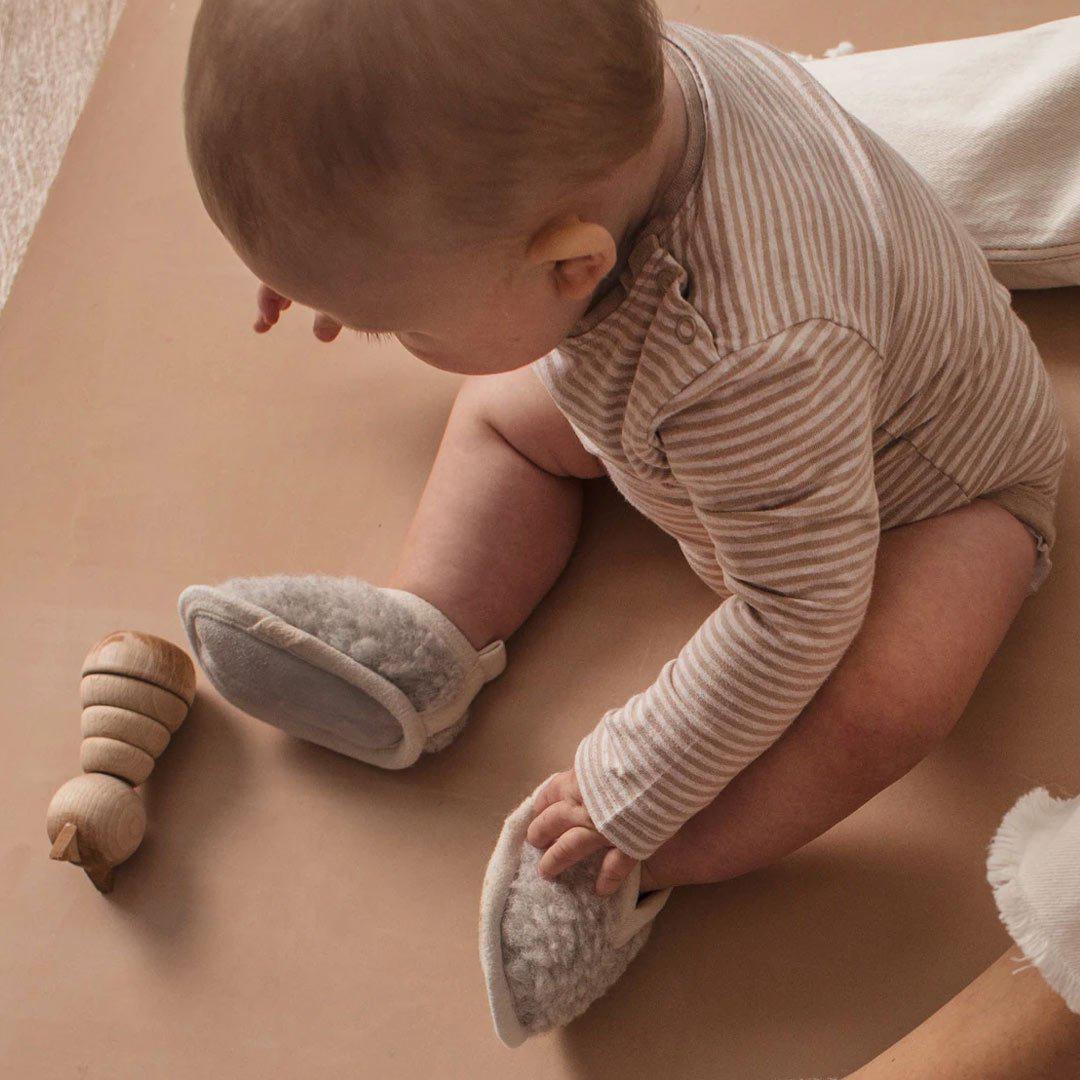
Walking barefoot indoors helps babies learn how to spread their toes, grip the floor and find their footing. Soft booties or non-slip socks can be useful for warmth, but stiff shoes too early can get in the way rather than help.
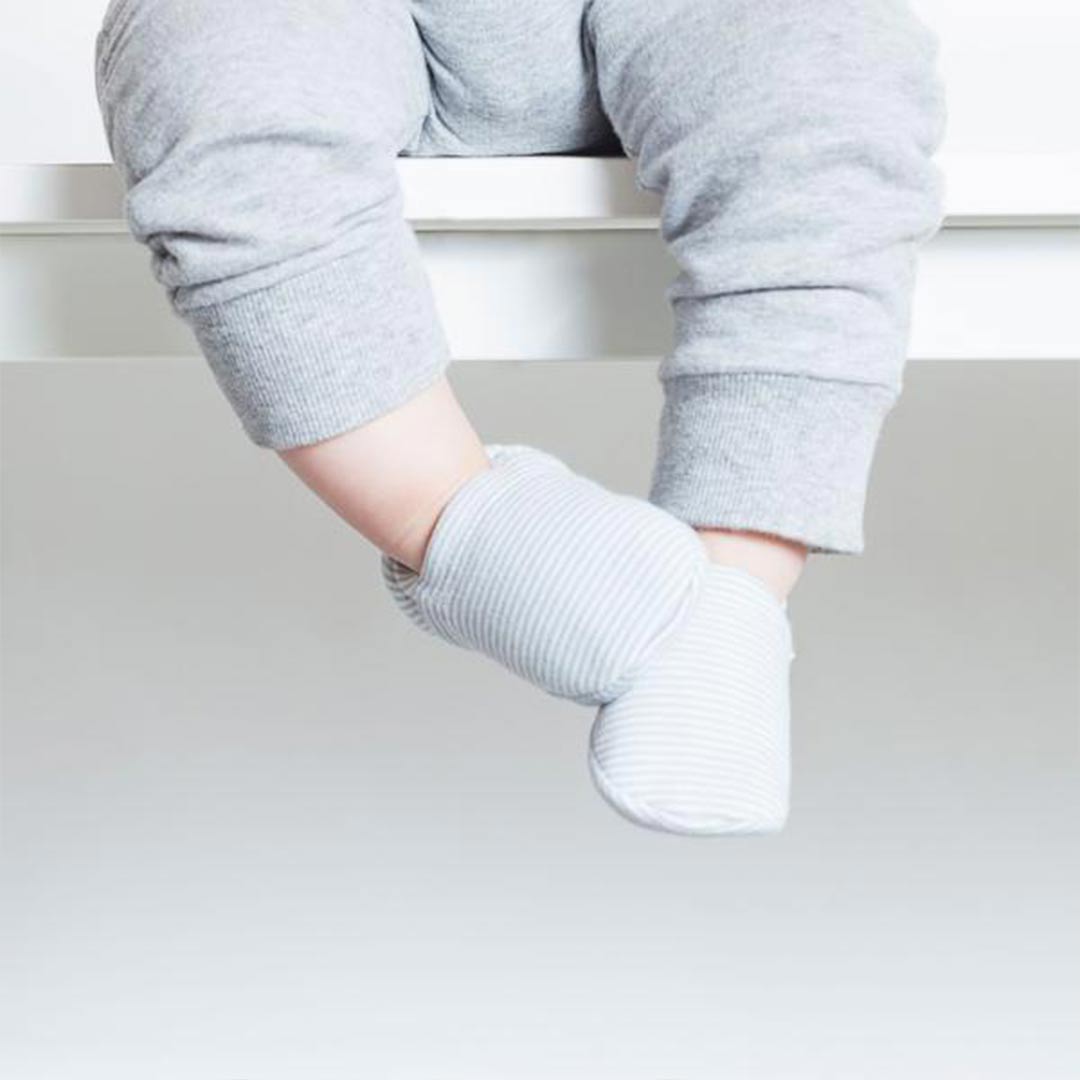
There is no exact age for first shoes because every child develops differently. Some babies take first steps at nine or ten months, while others wait well past their first birthday. The better question is not how old your baby is, but how they move. If they are cruising along furniture, standing with support or taking a few wobbly steps indoors, they still may not need structured outdoor shoes just yet.
Why early walkers usually do better barefoot
It is easy to assume shoes help babies walk. In reality, early walkers often do best with as little between their feet and the floor as possible. Barefoot movement gives them better sensory feedback, which simply means they can feel the ground beneath them and respond more naturally. That feedback supports balance, coordination and posture. Think of it as your baby learning the shape and rhythm of walking without extra interference.
Indoors, where surfaces are safe and warm enough, bare feet are ideal. If you prefer a little coverage, flexible socks with grips or soft pre-walker shoes can work well, as long as they do not restrict movement. This is one of those parenting decisions where buying later can actually be the smarter choice.
Instead of rushing into first shoes at the first sign of standing, it is often worth waiting until your baby truly needs protection from outdoor surfaces.
What counts as a first proper shoe?
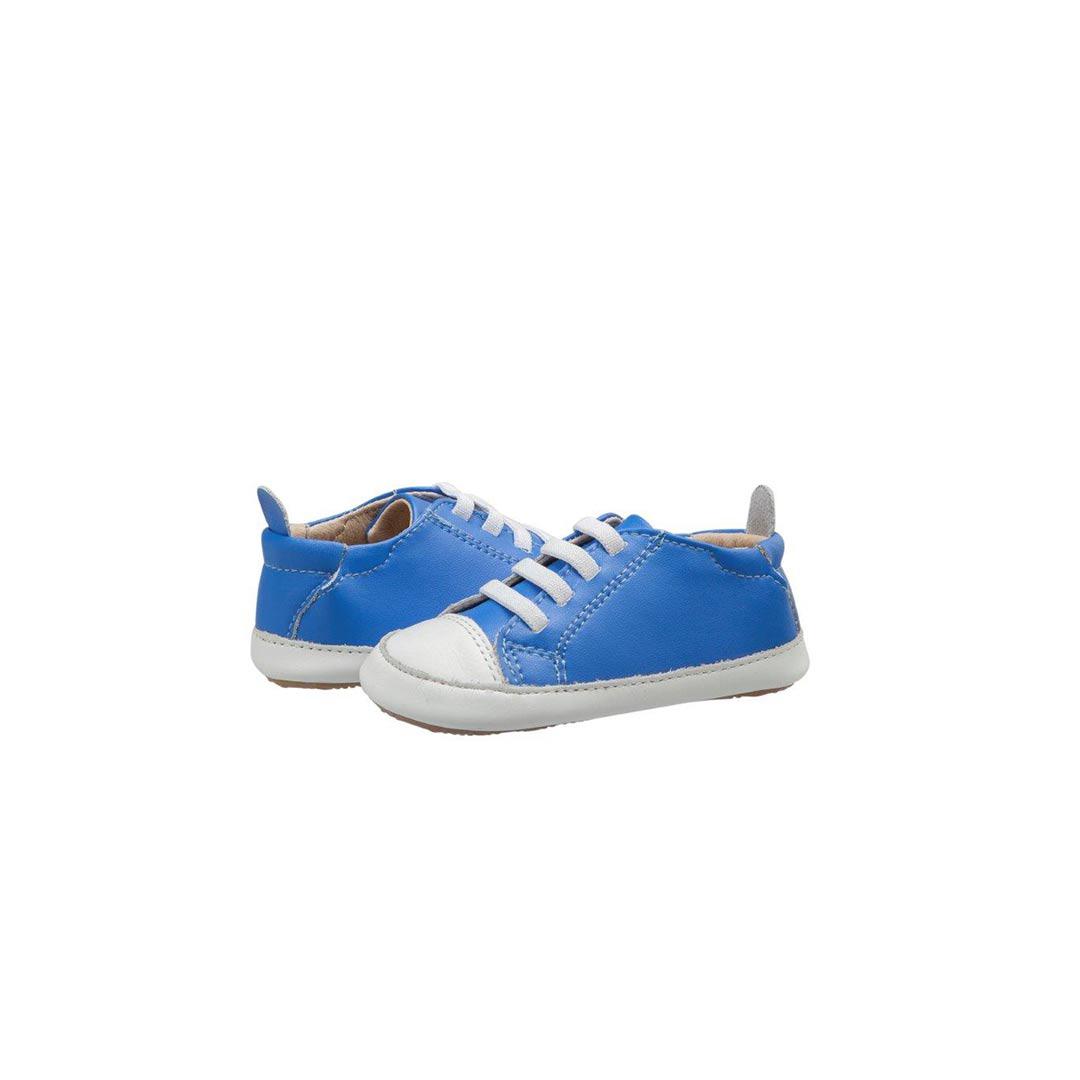
When your baby is ready for shoes, look for a pair designed to protect rather than control the foot. A good first shoe should feel light, flexible and secure, with enough room for natural movement. The sole should bend easily, especially at the ball of the foot. The upper should be soft and breathable, and the shoe should stay on without squeezing. Wide toe space is important because babies need room to spread their toes as they balance. A non-slip sole is helpful outdoors, but heavy, rigid shoes are best avoided.
Parents are often told to look for support, but support can be misunderstood. Your baby does not need a hard shoe to force their foot into place. What they need is a well-fitting shoe that protects from rough ground, keeps them comfortable, and allows them to move as naturally as possible.
Signs your baby is ready for shoes
Readiness is usually more obvious in practice than on paper. If your baby is walking outside regularly, even for short stretches, it is time to consider a proper pair. If they are only taking a few indoor steps between the sofa and coffee table, you can usually hold off a little longer.
You may also notice that soft booties no longer offer enough grip or protection once your child starts heading for the patio, nursery drop-off or park. That transition from indoor explorer to outdoor toddler is often the real cue. It also depends on the season and your routine.
A summer baby taking first steps across warm indoor floors may need less footwear than a winter walker heading out in colder, wetter weather. The need for shoes is not just developmental - it is practical too.
How to choose baby shoes without overbuying
First shoes can feel like a milestone purchase, so it is tempting to buy several pairs at once. In reality, babies’ feet grow quickly, and fit matters far more than quantity. Start with one well-fitting everyday pair if your child is newly walking outdoors.
If needed, add a weather-specific option such as something warmer for colder months or lighter for summer. There is little benefit in building a large shoe collection at this stage, especially if some pairs may only fit for a few weeks. This is where a more curated approach makes sense. Prioritise quality materials, practical fastening, and a flexible design that works with your day-to-day routine.
Parents who value buying well the first time often find that one excellent pair is more useful than several less suitable ones.
Common mistakes when buying first shoes
One of the most common mistakes is choosing shoes too early, before they are actually needed. Another is buying based on appearance alone. Baby shoes are undeniably charming, but the cutest pair is not always the most comfortable or development-friendly.
Sizing can also trip parents up. Shoes that are too tight can restrict movement, while shoes that are too big may cause slipping and instability. Because babies cannot tell you when something feels off, it is worth checking fit carefully and regularly.
A third mistake is assuming harder means better. Many parents understandably reach for shoes with thick soles and a sturdy feel, thinking they offer extra protection. But for early walkers, stiffness can make walking harder rather than easier.
When do babies need shoes indoors?
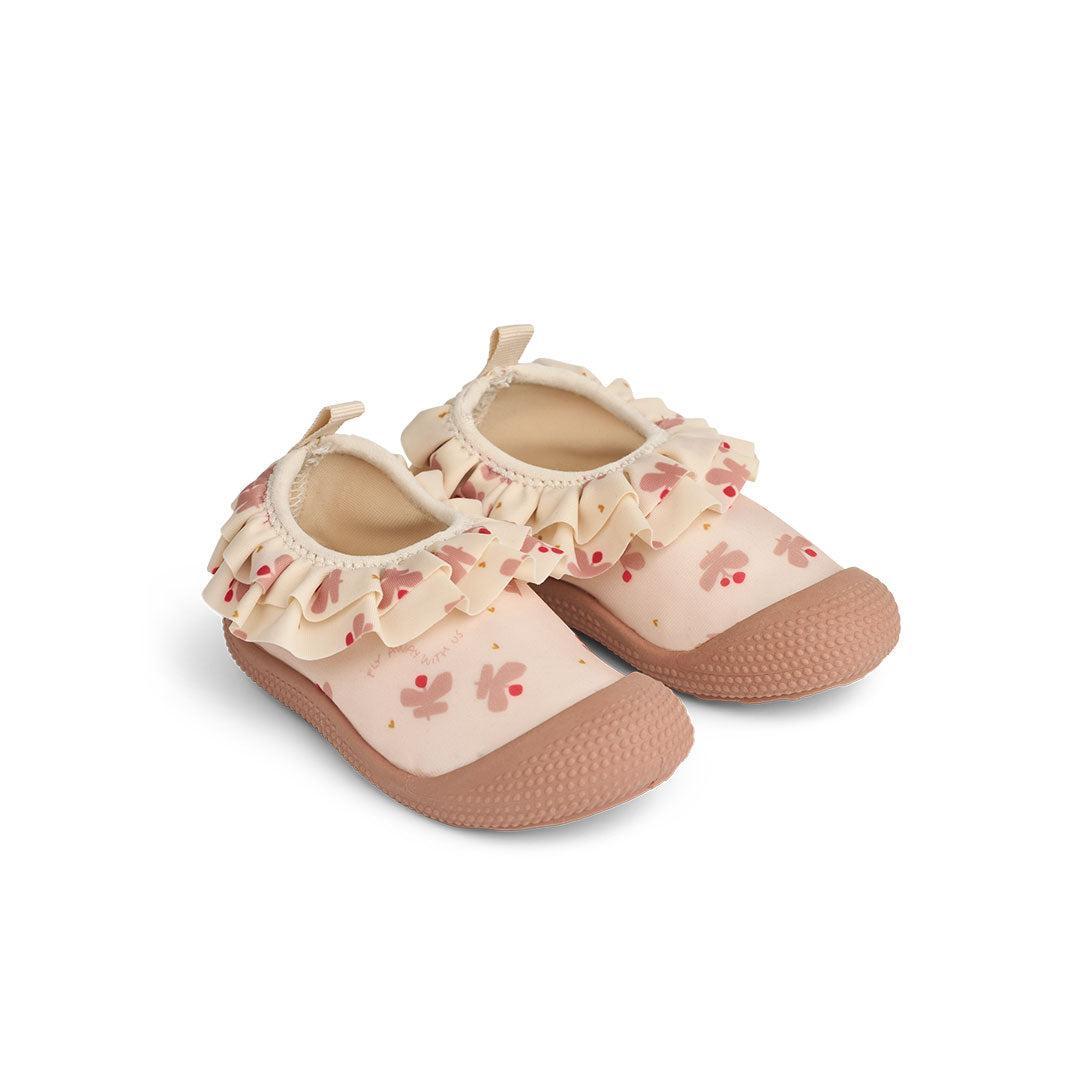
In most homes, babies do not need shoes indoors at all. Bare feet are usually best, provided the floor is safe, clean and warm enough. If warmth is the main concern, socks or soft slippers with grip can be a better option than a full shoe. There are, of course, exceptions.
If your home has particularly cold floors, or if your child is in a childcare setting where footwear is expected, indoor shoes may be practical. Even then, choose something soft and flexible rather than structured and heavy.
This balance between development and day-to-day life is often what matters most. The best choice is the one that supports healthy movement while fitting naturally into your routine.
How often should you check the fit?
More often than you might think. Babies and toddlers can outgrow shoes quickly, sometimes in just a couple of months. Shoes that fitted perfectly at the start of the season may suddenly feel snug.
A regular fit check helps avoid discomfort and supports more natural walking. Look out for red marks, difficulty getting the shoes on, or your child seeming reluctant to walk in them.
Those small changes can signal it is time for a new size. If you are investing in premium baby essentials, this is one area where thoughtful timing matters. Buying at the right stage, in the right fit, is far more useful than buying early and hoping your child grows into them.
The bottom line on when do babies need shoes
Babies need shoes when they are walking outdoors often enough to need protection from the ground. Until then, barefoot is usually best for healthy development, balance and confidence.
Soft socks or pre-walker styles can fill the gap when warmth is needed, but proper shoes are for outdoor walking, not for learning to walk in the first place.
For many parents, that shift is a helpful reminder that not every baby milestone needs to be rushed. Sometimes the best choice is simply to wait, watch how your little one moves, and choose a first pair when they are truly ready. A well-timed, well-fitted shoe will do far more for comfort and confidence than an early pair ever could.


