


Best Bedside Crib for a Newborn
Best Bedside Crib for a Newborn
Those first few weeks tend to make every parent surprisingly specific about sleep. Not just whether the baby sleeps, but where, how close, how easy it is to lift them for a feed at 2am, and whether the whole setup actually works in a real bedroom rather than a perfectly styled nursery.
That is exactly why choosing the best bedside crib for newborn life deserves a little more thought than simply picking the prettiest option. A bedside crib can make nights feel more manageable. It keeps your baby close for feeding, settling and reassuring checks, while still giving them their own safe sleep space.
For many families, that balance is the appeal. You get proximity without bed-sharing, and a setup that feels practical from night one.
What makes the best bedside crib for newborn sleep?
The answer is not one single feature. It is a combination of safety, fit, ease and how well the crib works with your room and routine. A good bedside crib should sit securely next to your bed, with a height range that lines up properly with your mattress.
That sounds obvious, but it is one of the details that matters most in daily use. If the crib does not align well, lifting your baby in and out becomes more awkward, especially after a C-section or when you are running on very little sleep. Breathable mesh sides are another key feature many parents look for.
They help with visibility and airflow, and they can make those middle-of-the-night check-ins feel easier. You can glance over and see your baby without fully getting up, which is often exactly the kind of convenience new parents need. The mattress should be firm, flat and specifically designed for the crib.
This is not a category where extra padding is a bonus. Softer does not mean safer for a newborn. The best choices prioritise a supportive sleep surface and a design that follows current safe sleep guidance.
Then there is the practical side. Some bedside cribs include drop-down sides, incline options for supervised comfort, wheels for moving between rooms, or storage underneath for muslins and essentials.
None of these extras automatically make one model the best. They simply become useful if they suit the way you live.
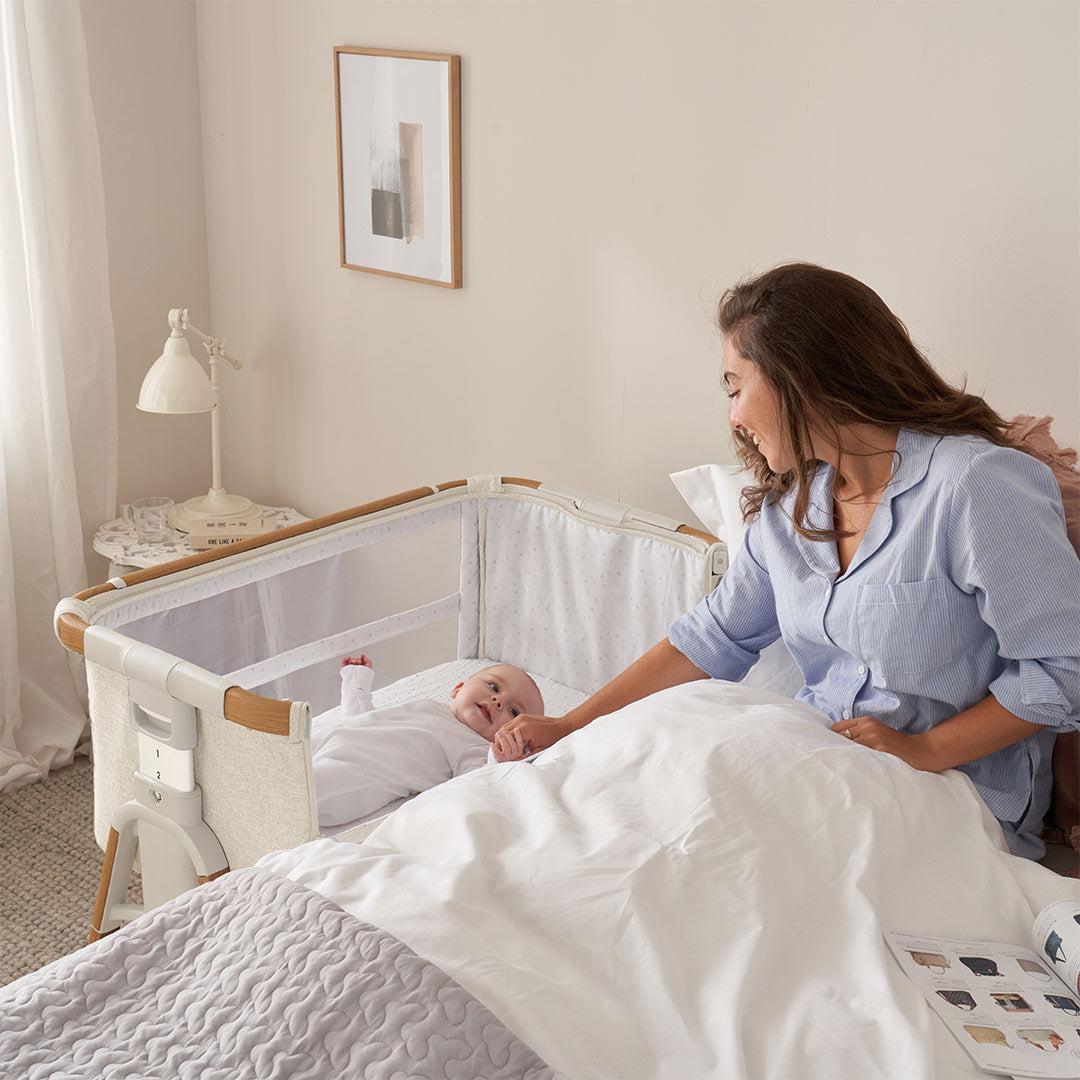
Bedside crib or Moses basket?
This is where it often depends on your priorities. A Moses basket can be beautifully lightweight and easy to move around the house. It often suits parents who want a simple newborn sleep solution for daytime naps in different rooms.
A bedside crib, on the other hand, is usually the stronger choice if your focus is overnight sleep next to your bed. It is designed for that exact use case and often offers more adjustability, sturdier attachment and better access during the night.
If your bedroom is compact, a smaller bedside crib might still work brilliantly, but dimensions become essential. If you want one product to handle both bedroom use and daytime flexibility, you may prefer a design with wheels or a lightweight frame.
The best choice is less about trends and more about what will genuinely make your days and nights easier.
Features worth paying for and those you may not need
Premium bedside cribs can be a very worthwhile investment, but only when the features match your needs. Height adjustability is one of the most useful upgrades because bed heights vary so much. It can be the difference between a crib that feels easy to use and one that never quite fits properly.
A secure bedside attachment system is just as important. If a crib is marketed for bedside sleeping, it should feel stable and reliable once in position. Breathable fabrics, washable covers and a well-made frame are also worth prioritising.
Newborn sleep spaces work hard very quickly. Milk spills, nappy leaks and general day-to-day use mean easy-clean materials are more valuable than they might first appear. By contrast, some parents find they do not use every setting or add-on included in a more expensive model.
Rocking functions, for example, can be lovely, but not every baby responds to them and not every family wants movement in a bedside sleep setup. The same goes for built-in storage. Useful, yes, but probably not the deciding factor if the crib itself is not the right fit.
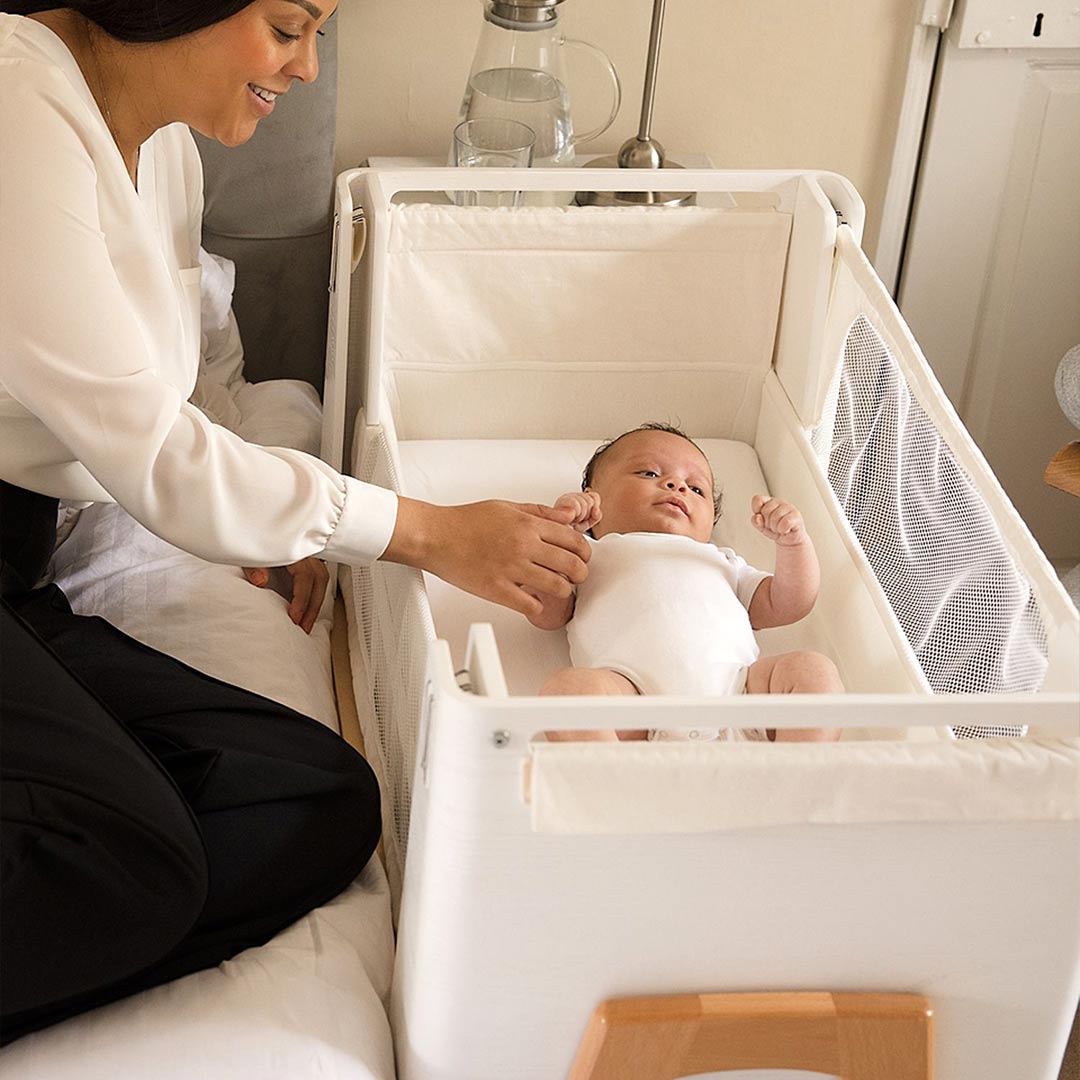
How long will a bedside crib last?
Most bedside cribs are designed for the newborn stage and the first few months after birth, though the exact timeframe varies by model and your baby’s development. Some babies outgrow them because of weight limits, while others become more mobile and need a larger sleep space sooner than expected.
That shorter usage window can make some parents hesitate, especially when choosing a more premium design-led option. But it is worth thinking about cost in terms of use rather than lifespan alone. If a bedside crib helps everyone get more rest, streamlines feeding and makes recovery easier in the early weeks, it often earns its place very quickly.
For families trying to shop more consciously, it is also worth considering quality and longevity beyond your own household. A well-made crib in durable materials can often be kept for future siblings or passed on, provided it remains in excellent condition and still meets current safety guidance. That is where choosing well the first time matters.
Finding the best bedside crib for newborn needs in a smaller bedroom
Some bedrooms are not always generous on space, especially once you add a full-sized bed, drawers and all the newborn essentials you never realised you would need within arm’s reach. If space is tight, focus on footprint first.
Measure the exact area beside your bed, including skirting boards, radiators and whether drawers or wardrobe doors need room to open. Then look at the shape of the crib legs and base.
A slim sleeping area does not always mean a small overall footprint. Some cribs have wider frames than you might expect. Compact designs are often the most practical choice here, but do not sacrifice bedside access just to save a few centimetres.
A crib that fits the room but is difficult to use at night is not the right answer. The best compact options balance a neat frame with enough room for your newborn to sleep comfortably in those early months.
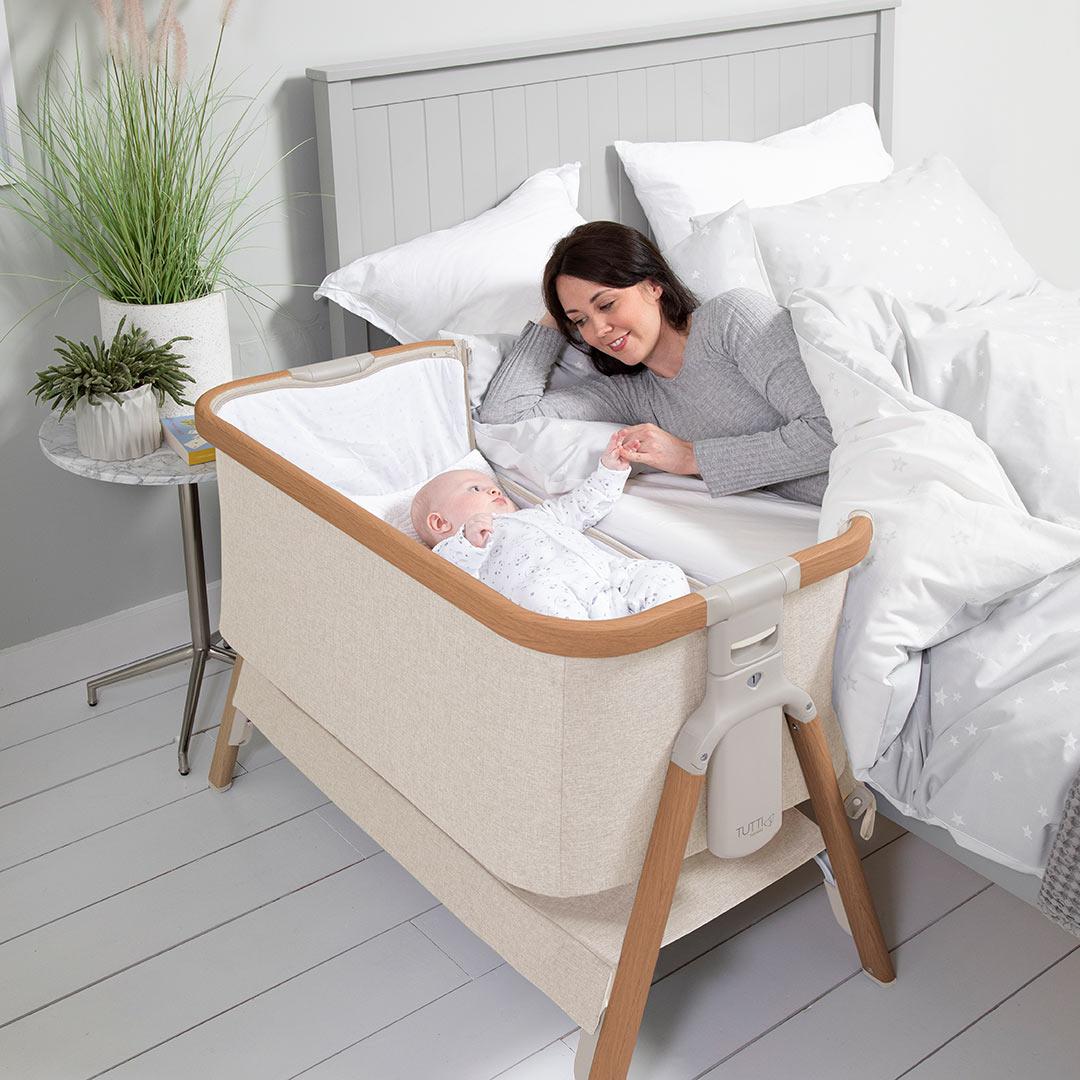
Style matters, but not more than sleep
There is nothing wrong with wanting a bedside crib that looks beautiful in your bedroom. For many modern parents, nursery and sleep products need to feel at home within the wider style of the house. Soft neutrals, natural finishes and premium fabrics all have their place. That said, aesthetics should come after function.
A minimalist frame, sustainable materials and a refined finish are all welcome, but the crib still needs to be easy to clean, practical to access and genuinely secure beside your bed. The strongest products manage both.
They feel elevated without forgetting that this is a piece of kit you will be using in the dark, while tired, and often one-handed. This is one reason curated retailers such as Natural Baby Shower can be especially helpful in the sleep category.
When the product selection is already filtered for trusted brands, premium design and practical performance, it becomes easier to narrow down your shortlist without feeling overwhelmed.
Questions to ask before you buy
Before choosing, it helps to picture your actual evenings rather than an ideal version of newborn life. Will you be breastfeeding and wanting the easiest possible night-time access? Are you recovering from birth and likely to appreciate less bending and lifting? Do you need a crib that can move from bedroom to living space during the day? Is sustainability high on your list, whether through material choices, long-term durability or the option to pass it on later?
These details shape what the best bedside crib for newborn life looks like for your family. A parent in a small city flat may need something compact and mobile. Someone furnishing a full nursery and master bedroom setup may prioritise design and premium finishes.
A family focused on longevity may be happier spending more upfront on quality construction and trusted craftsmanship. There is no single perfect answer, only the crib that best fits your home, your values and those very particular early-parenting hours.
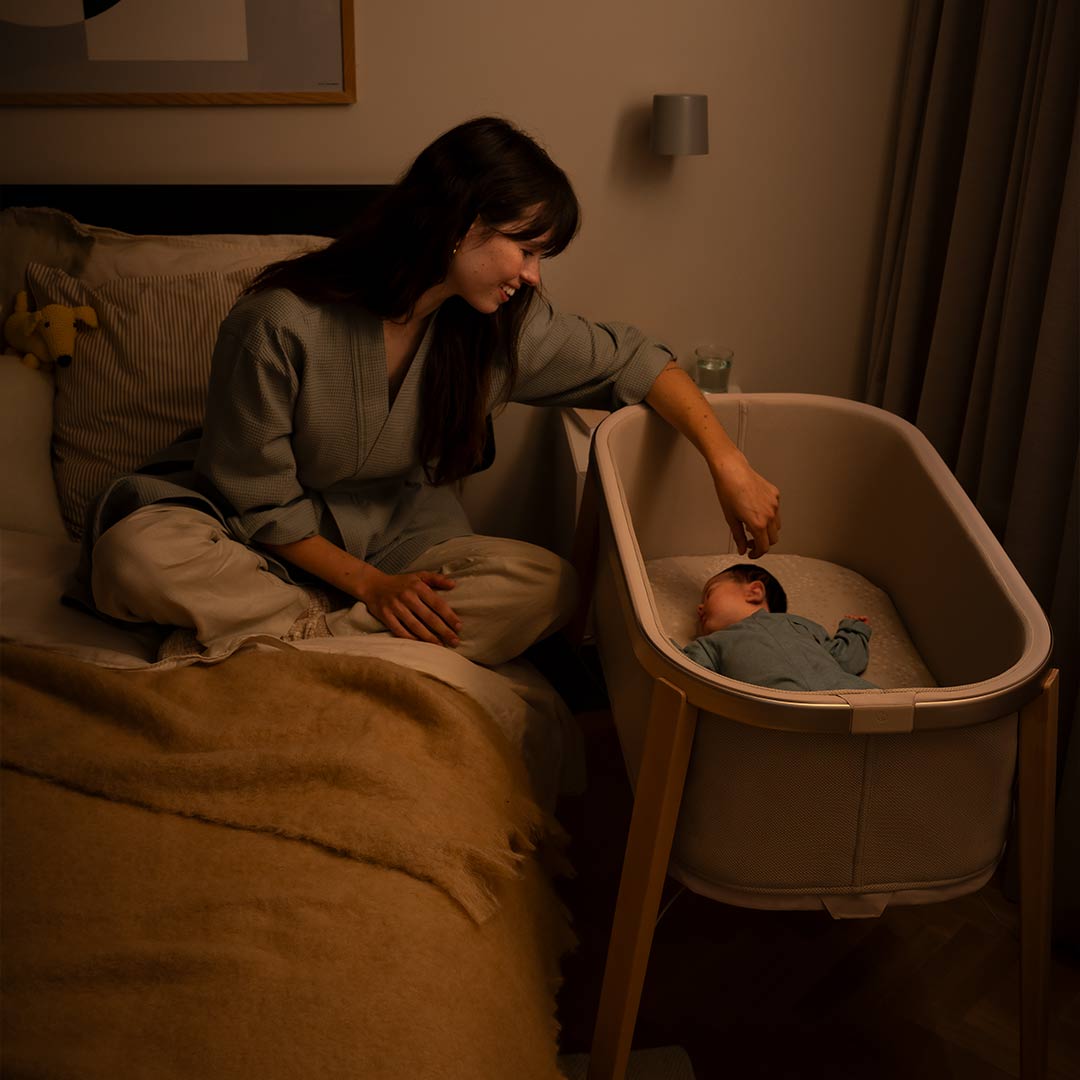
A smart shortlist starts with safety and fit
If you are comparing options, begin with the non-negotiables. Make sure the crib is suitable from birth, designed for bedside use if that is how you plan to use it, and compatible with your bed height and room layout.
From there, look at materials, adjustability, ease of cleaning and the finer design details that matter to you. It is easy to get distracted by styling or a long list of features, but the best bedside crib is usually the one that feels intuitive from the start.
It supports safer sleep, simplifies night feeds and gives you that reassuring sense that your baby is close by, without compromising on their own sleep space.
When you find that balance, the whole room tends to feel calmer. And in the newborn stage, calmer is often exactly what you are shopping for.


